

Regular commercial floor maintenance reduces slip-and-fall risk, preserves your property’s appearance, and extends floor life — cutting total cost of ownership significantly. For facility managers and business owners in Huntington, hardwood floor refinishing and broader floor care programs are not optional line items. They are engineering controls that protect people and capital assets simultaneously. Saverawoodfloorrefinishing works with commercial properties across Long Island to deliver exactly this kind of structured care, using dust-free sanding, UV-cure finishes, screen & recoat systems, deep cleaning, wax removal, and engineered hardwood refinishing.
Why this matters at a glance:
- Safety: Falls, slips, and trips accounted for 479,480 cases (22.6%) of nonfatal occupational injuries in private industry, making floor condition a direct injury-prevention lever.
- Appearance: Worn, stained, or dull floors signal neglect to tenants, customers, and inspectors — first impressions are formed in seconds.
- Longevity: Professional maintenance can notably extend flooring life, in many cases substantially increasing it, deferring expensive replacement projects.
- Cost efficiency: Deferred maintenance typically costs 3–8x more to correct than consistent prevention.
Key Takeaways
Consistent commercial floor maintenance reduces injury risk, extends surface life, and lowers total lifecycle cost — making it one of the highest-return facility investments available.
| Point | Details |
|---|---|
| Safety is the first reason | Falls, slips, and trips account for 22.6% of nonfatal occupational injuries; floor condition is a direct control. |
| Deferred maintenance multiplies cost | Skipping maintenance can make correction cost 3–8x more than consistent prevention. |
| Professional care extends floor life | Industry data shows professional maintenance can extend flooring life by roughly 50–100%. |
| Match chemistry to surface | Wrong cleaning products can permanently damage polished concrete, epoxy, and hardwood finishes. |
| Saverawoodfloorrefinishing for Long Island | Dust-free sanding, UV-cure finishes, and screen & recoat services for commercial properties across Long Island. |
Table of Contents
- What commercial floor care actually covers
- 8 measurable benefits of maintaining your commercial floors
- Floor types and the right care techniques for each
- How often should you schedule maintenance?
- In-house team or professional vendor: how to decide
- What the data says about maintenance and risk
- Huntington hardwood floor refinishing and commercial services from Saverawoodfloorrefinishing
- Sources
- FAQ
What commercial floor care actually covers
Commercial floor care spans three distinct tiers, and confusing them leads to either overspending or underprotecting your surfaces.
Routine maintenance is the daily and weekly work: dust mopping, damp mopping, vacuuming, and spot cleaning. It removes abrasive grit before it grinds finish layers down and keeps contaminants from bonding to porous surfaces.
Restorative maintenance addresses finish degradation and embedded soil that routine cleaning cannot reach. This tier includes dust-free sanding and refinishing for hardwood, deep carpet extraction, strip-and-wax or burnish cycles for vinyl composition tile (VCT), diamond polishing or crystallization for terrazzo, densifying and resealing for polished concrete, and epoxy topcoat refreshes for industrial areas. Screen and recoat falls here too — it’s the most cost-efficient way to restore a hardwood finish before full sanding becomes necessary.
Replacement is what happens when the first two tiers are skipped long enough. It costs multiples more and causes far greater operational disruption.
One often-overlooked point: most flooring manufacturers require documented maintenance records to honor warranty claims. Skipping routine logs does not just hurt your floors — it can void the warranty entirely.
8 measurable benefits of maintaining your commercial floors
1. Slip-and-fall risk drops sharply
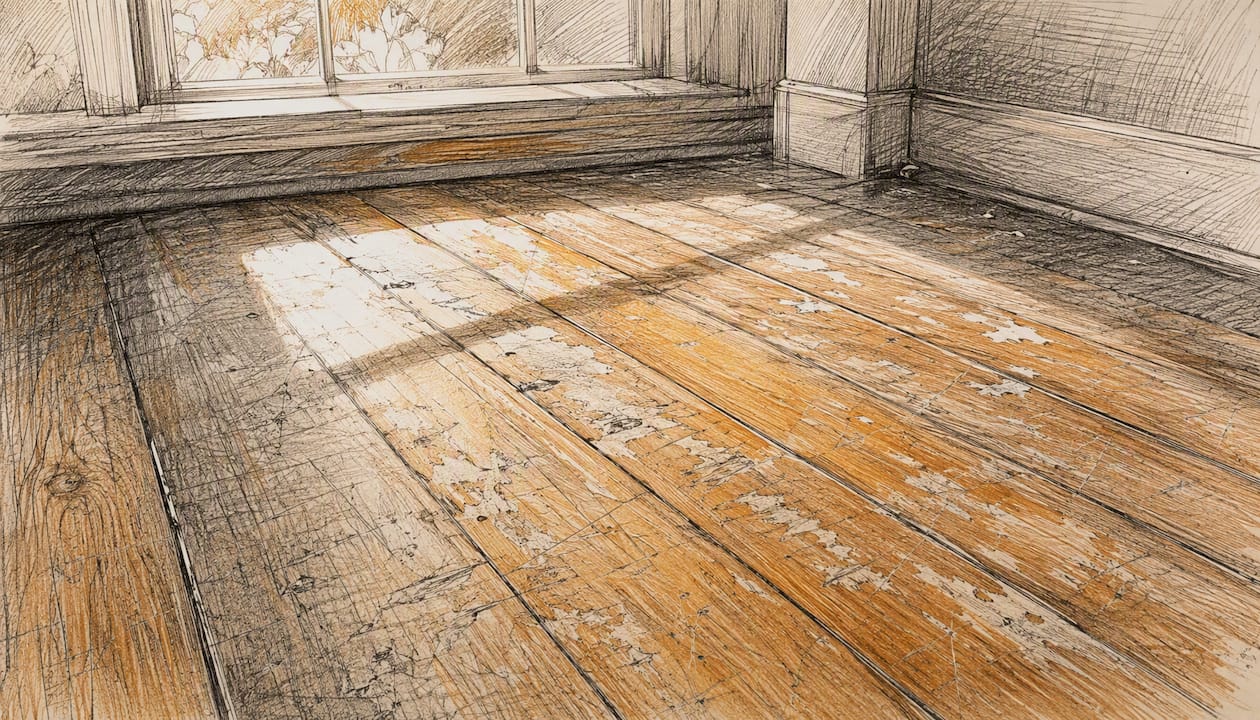
Floor condition is one of the most controllable variables in workplace safety. OSHA identifies falls as a consistently leading source of severe workplace injuries and recommends addressing floor-related hazards as a primary control. Keeping surfaces clean, dry, and free of finish degradation directly reduces the conditions that cause incidents.
2. Liability exposure shrinks
A documented maintenance program creates a paper trail showing due diligence. Without records, a single slip-and-fall claim can cost far more than years of professional floor care. The National Safety Council recommends keeping traffic areas clear, well lit, and properly maintained as core prevention measures.
3. Professional image stays intact
Customers and tenants form opinions about your business within seconds of walking through the door. Dull, scratched, or stained floors communicate the same message as a dirty restroom. Regular burnishing and periodic restorative work keep surfaces looking intentional, not neglected.
4. Floor lifespan extends by years
Industry data shows professional maintenance can double the usable life of many commercial surfaces. A hardwood floor that might need full replacement at year 10 without care can realistically reach year 18–20 with consistent screen and recoat cycles and dust-free sanding when needed.

5. Replacement costs get deferred
A practical example: a 5,000 sq. ft. VCT floor costs roughly $0.35–$0.65 per sq. ft. annually for routine strip-and-wax maintenance. Full replacement of that same floor runs several dollars per square foot. Consistent maintenance at the lower cost avoids a capital event that can reach tens of thousands of dollars.
6. Operational downtime shrinks
UV-curable finishes allow commercial spaces to resume normal use the same day in many cases, compared to traditional oil-based finishes that require 48–72 hours of cure time. For restaurants, retail floors, and medical offices, that difference in downtime is a real operational cost.
7. Staff morale and productivity improve
Clean, well-maintained environments reduce employee complaints and signal that management cares about working conditions. Facilities with documented cleaning programs report fewer health-related absences tied to dust, allergens, and contaminants embedded in flooring.
8. Compliance with health and safety regulations stays current
OSHA standards, local fire codes, and lease agreements often include flooring condition requirements. A scheduled maintenance program keeps you ahead of inspections rather than scrambling before them.
Floor types and the right care techniques for each
Different surfaces need different chemistry, equipment, and frequency. Using the wrong approach does not just fail to clean — it can permanently damage the floor.
| Floor Type | Routine Tasks | Restorative Tasks | Recommended Frequency |
|---|---|---|---|
| Hardwood / Engineered Hardwood | Dust mop, damp mop (pH-neutral cleaner) | Dust-free sanding, screen & recoat, wax removal | Daily/weekly routine; recoat every 2–5 years |
| VCT / LVT / LVP | Dust mop, damp mop, burnish | Strip-and-wax, full recoat | Daily routine; strip-and-wax 1–2x/year |
| Carpet | Vacuum, spot treat | Hot-water extraction, encapsulation | Daily vacuum; extraction every 3–6 months |
| Tile & Grout | Sweep, damp mop | Grout steam cleaning, resealing | Weekly routine; reseal annually |
| Polished Concrete | Dust mop, auto-scrub | Diamond polishing, densifier application | Daily/weekly; polish every 1–3 years |
| Epoxy / Industrial | Sweep, damp mop | Epoxy topcoat refresh | Weekly; recoat every 3–5 years |
| Terrazzo | Dust mop, neutral cleaner | Crystallization, diamond polishing | Daily; polish every 1–2 years |
| Rubber / Athletic | Sweep, damp mop | Deep scrub, conditioner | Daily; deep scrub monthly |
Pro Tip: Always verify that your cleaning chemistry is compatible with the specific surface and finish. Acid-based or solvent cleaners can etch polished concrete and cause epoxy systems to delaminate. Request the manufacturer’s approved product list before your crew starts — one wrong product can cause permanent damage that no restorative process can fully reverse.
For hardwood and engineered hardwood specifically, wood floor protection techniques matter as much as cleaning frequency. Finish compatibility and pH-neutral chemistry are non-negotiable.
How often should you schedule maintenance?
Traffic level is the single most useful variable for building a maintenance calendar. Here is a practical framework:
Light traffic (back offices, storage areas, private suites):
- Daily dust mopping
- Weekly damp mop
- Restorative work every 3–5 years
Medium traffic (retail front of house, corporate offices, showrooms):
- Daily cleaning
- Weekly burnish or spot extraction
- Monthly deep clean
- Restorative cycles every 1–2 years
Heavy traffic (hospitality, healthcare, retail entrances, warehouses, school corridors):
- Daily cleaning and spot treatment
- Weekly burnish or extraction
- Quarterly restorative inspection
- Annual full restorative cycle (strip-and-wax, diamond polish, or screen and recoat depending on surface)
A traffic-based schedule with documented logs is the baseline for any serious floor care program. Beyond routine cadence, schedule at least one annual floor condition assessment with zone scoring — this catches deferred maintenance before it becomes a capital replacement event.
In-house team or professional vendor: how to decide
The right answer depends on your facility’s size, surface complexity, and budget structure.
In-house maintenance works well when:
- Traffic is light to medium and surfaces are standard (VCT, LVP, basic carpet).
- You have trained staff and access to commercial-grade equipment.
- Routine cleaning is the primary need, with occasional vendor support for restorative cycles.
Hire a professional when:
- Surfaces include hardwood, engineered hardwood, polished concrete, terrazzo, or epoxy — specialty surfaces where wrong technique causes irreversible damage.
- Finish failure is widespread or embedded soil has built up beyond routine cleaning.
- Warranty compliance requires documented professional service records.
- High-traffic or high-risk areas (healthcare, food service) demand consistent, verifiable results.
Vendor vetting checklist:
- Ask for experience with your specific floor types and request references from comparable facilities.
- Confirm dust-free sanding capability and UV-cure options for hardwood surfaces.
- Request safety data sheets for all cleaning chemicals used.
- Verify insurance certificates and ask about service documentation practices.
- Ask whether they provide before/after photos and written maintenance logs.
- Check for red flags: vague scopes of work, no written proposals, reluctance to share chemical specs.
A commercial floor care checklist can help you structure vendor conversations and internal audits.
What the data says about maintenance and risk
Falls, slips, and trips accounted for 479,480 cases — 22.6% of all nonfatal occupational injuries in private industry. Floor condition is not a peripheral concern; it sits at the center of workplace injury prevention.
OSHA’s injury data consistently places falls among the leading sources of severe workplace injuries, and the National Safety Council ties floor housekeeping directly to prevention outcomes. Treating floor condition as an engineering control — not just a cosmetic concern — is the framing that separates reactive facilities from proactive ones.
On the financial side, deferred maintenance costs 3–8x more to correct than prevention. A floor that could have been screen-and-recoated for a few hundred dollars per zone instead requires full sanding, subfloor repair, or outright replacement when neglect compounds over years. The commercial floor restoration cost and sustainability analysis at Saverawoodfloorrefinishing walks through this math in detail for hardwood surfaces specifically.
A practitioner’s perspective on starting early
We restored a worn hardwood foyer in Huntington using dust-free sanding and UV-cure finishes — the business was back to full operation the same day, with zero dust disruption to adjacent office spaces. The owner had waited five years past the ideal recoat window, which meant a full sand was necessary instead of a simple screen and recoat. Starting a maintenance log on day one of installation, and scheduling a screen and recoat at the first sign of finish wear, would have cut the project cost by more than half.
Pro Tip: Log every restorative event with date, product used, and zone treated. That record protects your warranty, guides future scheduling, and gives any incoming vendor a clear picture of the floor’s history.
Huntington hardwood floor refinishing and commercial services from Saverawoodfloorrefinishing
When your floors need more than routine cleaning, Saverawoodfloorrefinishing offers the full range of commercial restoration services: dust-free sanding, UV-curable finishes, screen and recoat, deep cleaning, wax removal, and engineered hardwood refinishing. Our UV-cure system lets most commercial spaces return to normal use the same day, which matters when downtime costs money.

We serve commercial properties across Long Island, including Huntington hardwood floor refinishing projects for restaurants, offices, retail spaces, and property managers. Whether you need a floor condition assessment, a one-time restorative cycle, or an ongoing maintenance partnership, we can help you build a plan that fits your budget and your schedule.
To schedule a site assessment or get a floor condition score for your property, call us at 631-866-1972 or visit Saverawoodfloorrefinishing. You can also explore our hardwood floor restoration methods to understand which service fits your current floor condition.
Sources
- TABLE 2. Number, annualized incidence rate, and median days of nonfatal occupational injuries and illnesses involving days away from work, restricted activity, or job transfer (DART) by selected event or exposure, private industry, 2023-24
- OSHA 2023 Work-Related Injury and Illness Summary
- Slips, trips and falls – National Safety Council
- Does Professional Cleaning Extend the Life of Commercial Flooring? — RBM Building Services
- The Cost of Deferred Floor Maintenance
FAQ
Why is floor maintenance important for commercial properties?
Regular maintenance reduces slip-and-fall injuries, preserves professional appearance, and extends floor life — directly lowering replacement costs and liability exposure for facility managers and business owners.
How often should commercial floors be cleaned?
Routine cleaning should happen daily to weekly depending on traffic level; restorative cycles such as extraction, strip-and-wax, or screen and recoat are typically scheduled monthly to annually based on surface type and use intensity.
Why is commercial cleaning important beyond appearance?
Clean floors reduce health risks from embedded contaminants, support OSHA compliance, protect warranty coverage, and improve staff morale — outcomes that go well beyond how a floor looks on a given day.
What happens if you skip commercial floor maintenance?
Can Saverawoodfloorrefinishing handle commercial hardwood floors in Huntington?
Yes. Saverawoodfloorrefinishing provides dust-free sanding, UV-cure finishes, screen and recoat, and engineered hardwood refinishing for commercial properties across Long Island, including Huntington. Call 631-866-1972 or visit Saverawoodfloorrefinishing to schedule a site assessment.
Recommended
- Commercial floor restoration: cost, durability, and sustainability – Expert Wood Floor Refinishing Company | Savera Hardwood Services
- Protect your floors: maintenance tips that save money – Expert Wood Floor Refinishing Company | Savera Hardwood Services
- Commercial Floor Care Checklist for Property Managers – Expert Wood Floor Refinishing Company | Savera Hardwood Services
- Maximize floor lifespan: Maintenance strategies for hardwood longevity – Expert Wood Floor Refinishing Company | Savera Hardwood Services