

Expect to pay roughly $3–$8 per square foot to refinish hardwood floors, with most national projects landing near $1,800 total. That range covers a standard sand-and-refinish on solid hardwood in average condition. These are the factors that shape the low and high ends:
- Low end ($3–$4/sq ft): Screen and recoat or basic single-coat refinish on a large, open room with no stain change, minimal damage, and standard water-based finish.
- High end ($6–$8/sq ft): Full sand-and-refinish with dustless containment, color change, multiple finish coats, stair work, or engineered hardwood requiring careful veneer management.
Refinishing almost always costs less than one-third of a full replacement install, and solid hardwood can be refinished multiple times over its life. If your floors have structural damage, deep cupping, or veneer under 2mm thick, replacement becomes the more honest conversation. For most worn or scratched floors, refinishing is the smarter investment.
Key Takeaways
Refinishing hardwood floors typically costs $3–$8 per square foot, with most projects landing between $1,101 and $2,666 depending on method, room count, and finish choice.
| Point | Details |
|---|---|
| National per-sq-ft range | Most refinishing projects run $3–$8/sq ft; screen and recoat is $1–$2.50/sq ft. |
| Typical project totals | A 400 sq ft room runs roughly $1,200–$2,600 depending on method and finish tier. |
| Biggest cost drivers | Room count, floor condition, method, containment, stain change, and regional labor rates. |
| DIY savings vs. risk | DIY materials run $340–$1,000, but finish failures and uneven sanding often cost more to fix than hiring a pro. |
| Saverawoodfloorrefinishing | Veteran-owned Long Island team offering dustless sanding, UV-cure finishes, and free on-site estimates at 631-866-1972. |
Table of Contents
- How much does hardwood floor refinishing cost per square foot?
- What factors change your refinishing quote the most?
- Which refinishing method fits your floor and your budget?
- What does a typical refinishing invoice actually include?
- DIY vs. hiring a pro: what does each actually cost?
- How to get accurate local quotes and what to ask contractors
- What is the typical project timeline and how should you prepare?
- Why dust-free sanding and UV-cure finishes deliver better value
- One thing most homeowners overlook before refinishing
- Ready to get a quote for your Long Island floors?
- Sources
- FAQ
How much does hardwood floor refinishing cost per square foot?
The table below shows typical per-square-foot ranges by method and budget tier, followed by worked examples for common room sizes.
| Method | Budget Tier | Per Sq Ft | 200 sq ft | 400 sq ft | 600 sq ft | 1,000 sq ft |
|---|---|---|---|---|---|---|
| Screen & recoat | Budget | $1.00–$1.50 | $200–$300 | $400–$600 | $600–$800 | $1,000–$1,800 |
| Screen & recoat | Mid | $1.50–$2.50 | $300–$700 | $600–$1,000 | $850–$1,800 | $1,500–$2,000 |
| Full sand & refinish | Mid | $3.00–$4.00 | $600–$1,000 | $1,200–$2,000 | $1,800–$3,000 | $3,000–$4,200 |
| Full sand & refinish | Premium | $5.00–$8.00 | $1,000–$1,800 | $2,000–$2,600 | $3,000–$3,600 | $5,000–$6,400 |
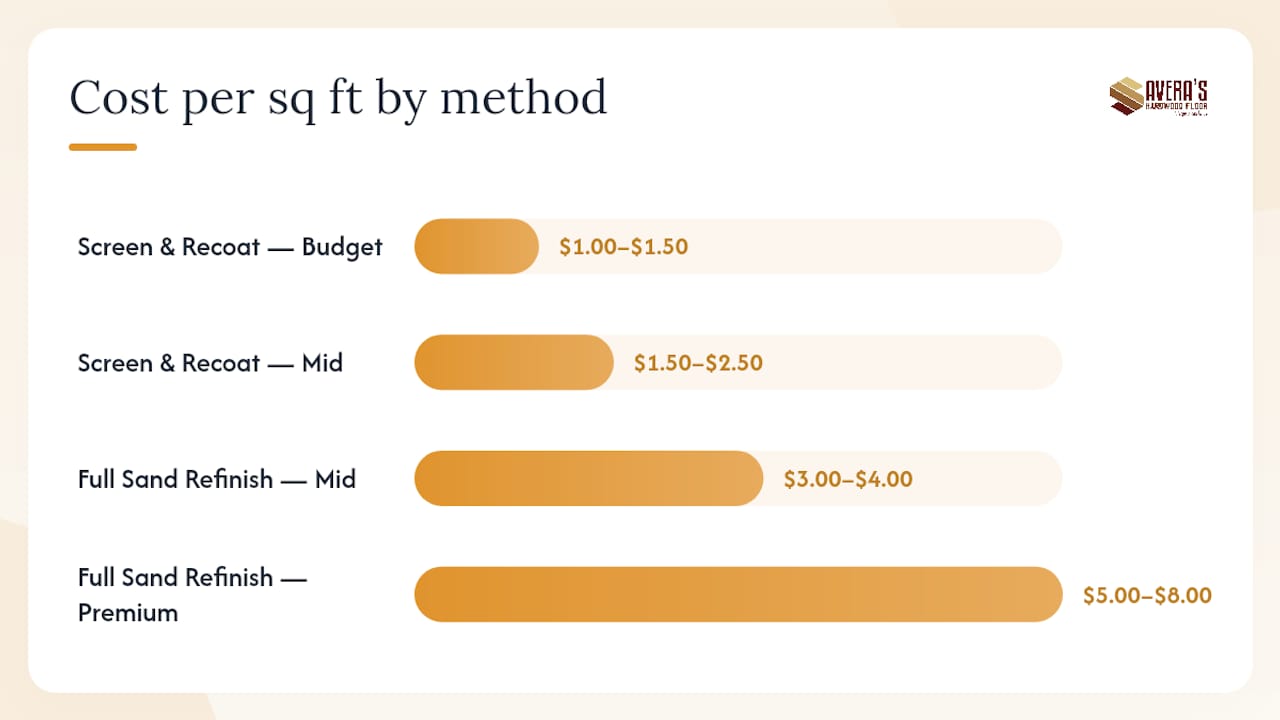
National averages have been reported near $1,883, with a typical project range of roughly $1,101–$2,666. A 400 sq ft living room at a mid-tier full sand typically costs several thousand dollars, which is the most common scenario homeowners face.
Stair pricing callout: Stairs are priced per step, with the total depending on method and additional details like nosing or handrail areas. Minimum project charges from most contractors run $300–$700, so a small stair-only job often hits that floor regardless of square footage.
What factors change your refinishing quote the most?
Understanding these variables helps you compare estimates side by side and ask the right questions before signing anything.
-
Room size vs. room count. Larger, open areas cost less per square foot because setup and equipment time is spread over more floor. Many small rooms with lots of transitions, closets, and tight edges take more labor per square foot than one open great room of the same total area.
-
Floor condition and species. Deep scratches, cupping, pet stains, or old wax require extra sanding passes and prep time. Harder species like hickory or Brazilian cherry dull abrasives faster than red oak, adding to labor and material costs.
-
Engineered hardwood veneer thickness. Equipment choice and containment matter especially here. Thin veneers (under 2mm) cannot survive aggressive drum sanding and require a gentler approach, which affects both method selection and price. See Saverawoodfloorrefinishing’s engineered hardwood refinishing guide for what to check before scheduling.
-
Method and equipment. Dustless containment systems with HEPA filtration cost more to operate than open drum sanders. Planetary sanders produce a finer, more consistent scratch pattern but take longer. Both quality variables justify higher quotes.
-
Finish product and coat count. Single-component water-based finishes are the most common and affordable. Two-component commercial finishes and UV-curable systems carry higher material costs but deliver greater durability and, in the UV case, near-instant cure times.
-
Staining and color changes. Staining adds $0.50–$3.00 per sq ft depending on whether you are changing color or staying close to the original tone. A full color change requires more prep and a test patch before committing.
-
Service add-ons. Additional services such as furniture moving, molding work, and prep tasks may incur extra charges.
-
Regional labor rates. Labor is often the largest single share of a refinishing estimate, and rates vary substantially by market. A Detroit-area project typically runs $850–$2,975, roughly 15% below the national average, while coastal metro markets often run above it.
Pro Tip: Before requesting quotes, measure your total square footage and note how many separate rooms are involved. Contractors price room count differently, and knowing your layout lets you compare apples to apples across estimates.
Which refinishing method fits your floor and your budget?
Choosing the right method is the single biggest lever on both price and downtime. Here is how the four main approaches compare.
Screen and recoat ($1–$2.50/sq ft) is a light scuff-sand of the existing finish followed by one or two fresh topcoats. No wood fiber is removed. It works only when the existing finish is intact, not peeling or worn through to bare wood. The cost advantage is real, but it cannot fix scratches that have penetrated the finish layer.
Traditional full sand and refinish ($3–$8/sq ft) removes the old finish and a thin layer of wood with a drum or belt sander, then applies stain and multiple finish coats. This is the right choice for floors with visible scratches, worn-through areas, or a color you want to change. Downtime with oil-based finishes can run 3–5 days before furniture returns; water-based finishes typically cure in 24–48 hours.
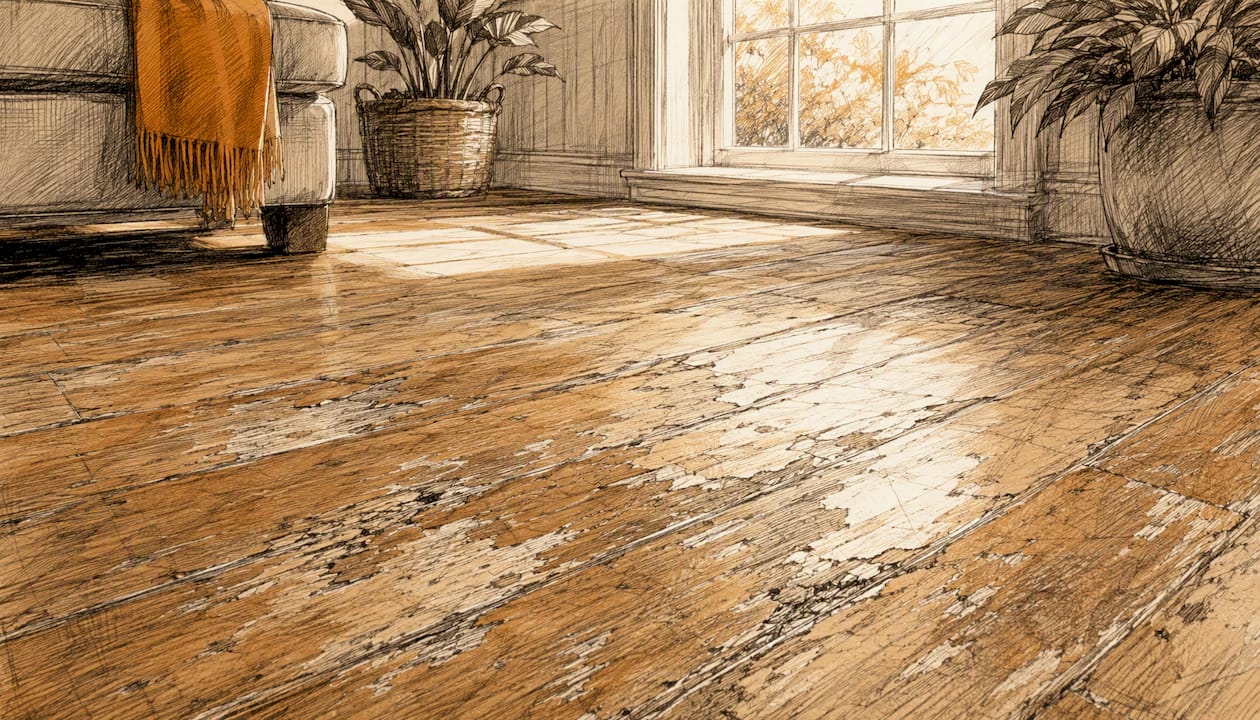
Dustless or dust-contained sanding adds a premium to the full sand process but keeps your home dramatically cleaner. HEPA-filtered vacuums and sectional plastic containment capture the vast majority of fine dust at the source. The quality difference between HEPA containment and open sanding shows up not just in cleanup but in finish adhesion, since airborne dust settling into wet finish creates surface defects. You can see the process in action on Saverawoodfloorrefinishing’s dust-free sanding page.
UV-curable finishes carry higher material and application costs but cure almost instantly under UV light, allowing furniture to return the same day in many cases. For property managers, landlords, or commercial spaces where downtime is expensive, UV-cure systems trade a higher upfront cost for a much faster turnback. Saverawoodfloorrefinishing’s UV-cure workflow is built specifically for this scenario.
What does a typical refinishing invoice actually include?
Knowing the line items on a professional estimate helps you spot missing charges before a project starts, not after.
- Sanding: $0.50–$3.00/sq ft depending on passes required, equipment, and containment. Edge work and hand-scraping tight areas are often priced separately.
- Staining: $1.00–$3.00/sq ft for standard stain; color changes toward the higher end. Test patches are standard practice because stain reads differently on freshly sanded wood than on the sample card.
- Finish coats (topcoat application): $1.00–$2.00/sq ft per coat. Most quality jobs include two to three coats; a single-coat finish is a red flag on a full sand project.
- Furniture moving: $50–$200 depending on room contents. Some contractors exclude this entirely.
- Molding removal and replacement: $1.00–$3.00 per linear foot. Skipping this step leaves a visible gap at the wall edge.
- Wax removal or deep cleaning: $0.50–$1.50/sq ft when needed. Old wax must be stripped before new finish will bond.
- Stair refinishing: $25–$75 per step, priced separately from field work.
- Subfloor repairs: Priced per repair area; squeaky boards, soft spots, and nail pops should be addressed before sanding begins.
Sanding, staining, and topcoat together typically account for the bulk of the invoice. Add-ons stack quickly, so a quote that looks low on the base rate may catch up once prep items are included.
DIY vs. hiring a pro: what does each actually cost?
DIY refinishing tool rental and materials typically run $340–$1,000 for a single room, compared to $1,200–$2,000 or more for a professional full sand on the same space. The labor savings are real. So are the risks.
When DIY can work:
- A small, simple room (under 200 sq ft) with no tight angles or stairs
- A homeowner who has rented a drum sander before and understands sanding direction
- A floor in good condition that needs only a light sand and one color of stain
When hiring a pro is the safer call:
- Any floor with cupping, deep gouges, or previous finish failures
- Engineered hardwood with thin veneer, where one pass too many removes the wear layer permanently
- Color changes, where uneven sanding creates blotchy stain absorption that is expensive to correct
- Whole-house projects where a DIY mistake multiplies across every room
The most common DIY failure is uneven sanding: drum sanders move fast, and a moment’s hesitation leaves a visible dip that requires a professional to correct. Finish failures from improper prep or incompatible products are the second most common issue, and they often mean stripping the floor and starting over. For most homeowners, the cost of a professional redo erases the original savings.
How to get accurate local quotes and what to ask contractors
Getting three written quotes is the baseline. Getting three comparable quotes requires asking the same questions of each contractor.
- What method will you use, and what equipment? (drum sander, planetary, dustless containment)
- How many sanding passes and finish coats are included?
- What finish brand and product will you apply? (single-component water-based, two-component, UV-cure)
- Is staining included, and will you do a test patch before committing to a color?
- Does the quote include furniture moving, molding removal, and edge work?
- What is your dust containment method? (HEPA filtration, plastic sectioning)
- What is the project timeline and cure time before furniture returns?
- Do you carry liability insurance and offer a warranty on the finish?
- Is there a minimum project charge, and how does my room count affect pricing?
Red flags to watch: A quote with no mention of containment or prep. A per-square-foot rate well below the method’s typical range (a $1.50/sq ft “full sand” is not a full sand). No written breakdown of line items. Pressure to decide before a site visit.
A solid written quote should include: job address, total square footage, method and equipment, finish brand and product, number of coats, stain color (if applicable), add-ons listed separately, timeline, warranty terms, and total price with payment schedule.
What is the typical project timeline and how should you prepare?
Timeline varies by method and project size, but here are realistic ranges:
- Screen and recoat, single room: 1 day on-site; furniture back in 4–8 hours with water-based finish.
- Full sand and refinish, 400–600 sq ft: 2–3 days on-site; furniture back in 24–48 hours (water-based) or 3–5 days (oil-based).
- Whole-house project (1,000+ sq ft): 3–5 days on-site; plan for 48–72 hours minimum before re-occupying with water-based finish.
- UV-cure finish: Cure is near-instant under the lamp; furniture can often return the same day.
Homeowner prep checklist:
- Remove all furniture, rugs, and breakables from the work area before the crew arrives.
- Arrange pet accommodations for the full project duration plus cure time.
- Turn off HVAC or seal vents in the work area to prevent dust migration and finish contamination.
- Clear adjacent rooms of items that could be affected by dust or fumes.
- Plan to stay elsewhere during oil-based finish application if you are sensitive to VOCs.
Oil-based finishes need 24 hours between coats and 72 hours before light foot traffic. Water-based finishes dry faster between coats and typically allow light foot traffic in 24 hours. Rugs should stay off the floor for at least 2 weeks regardless of finish type to allow full cure.
Why dust-free sanding and UV-cure finishes deliver better value
Not every contractor offers the same process, and the difference shows up in your home long after the crew leaves.
Saverawoodfloorrefinishing is a veteran-owned, family-operated company serving Long Island, including communities like Stony Brook, Baldwin, and surrounding neighborhoods. Here is what sets the process apart:
- Dust-free sanding with HEPA containment: Sectional plastic barriers and HEPA-filtered vacuums capture fine dust at the source, protecting your family, pets, and indoor air quality throughout the job.
- Low-VOC, odor-free water-based finishes: Safer for households with children, pets, or anyone with respiratory sensitivities.
- UV-curable finish technology: Near-instant cure means furniture returns the same day in many cases, dramatically reducing downtime for homeowners and property managers alike.
- Engineered hardwood expertise: Thin-veneer floors require a gentler approach. Saverawoodfloorrefinishing specializes in restoring engineered hardwood that other contractors may decline or damage.
- Full service scope: Wax removal, deep cleaning, color correction, screen and recoat, and prefinished hardwood restoration are all available, so you get the right solution for your specific floor.
- Historic and luxury home experience: From older Long Island homes with original red oak floors to modern condos with thin-veneer engineered boards, the team has handled the full range.
Pairing a floor refinish with other home upgrades, like interior door replacements, can amplify the visual impact and resale value of the project.
One thing most homeowners overlook before refinishing
We see it on nearly every site visit: homeowners focus on the finish color and forget to check whether their existing finish is compatible with a recoat. Wax-finished floors, for example, cannot simply be screened and recoated with a water-based product. The new finish will not bond, and the result is peeling within weeks. Before scheduling anything, run a simple water-bead test: drop a few drops of water on the floor. If they bead up and sit on the surface, there is likely a wax or oil finish present that needs removal first.
When we scope a job at a Long Island home, we check veneer thickness on engineered boards, test for wax or incompatible coatings, and look at the subfloor for squeaks or soft spots before quoting. That site visit is what keeps the final invoice close to the estimate.
Ready to get a quote for your Long Island floors?

Saverawoodfloorrefinishing offers free on-site assessments for homeowners and property managers across Long Island. Whether you have a 200 sq ft bedroom in Stony Brook or a full-floor project in a Baldwin colonial, we scope the job in person so your quote reflects the actual work required, not a generic per-square-foot estimate. Our hardwood floor restoration services cover everything from screen and recoat to full dustless sand-and-refinish with UV-cure finishes. Call us at 631-866-1972 or visit saverawoodfloorrefinishing.com to schedule your free estimate today.
Sources
- Cost to Refinish Hardwood Floors – NerdWallet
- How Much Does It Cost to Refinish Hardwood Floors? – The Spruce
- Cost to Refinish Hardwood Floors (Detroit) – CostToRenovate
- What Affects Hardwood Floor Refinishing Cost | 12th And Oak
- Cost to Refinish Hardwood Floors | 2026 Per Sq Ft Pricing – 1WoodFloors
- Hardwood Floor Refinishing Cost in 2026: Full Pricing Guide – Rustic Wood Floor Supply
FAQ
How much does it cost to refinish a 400 sq ft hardwood floor in Michigan?
A 400 sq ft project in a Michigan market like Detroit typically runs $850–$2,975 total, with method choice producing a swing of roughly $1.50–$3.50 per square foot between screen and recoat and a full sand-and-refinish.
What is the cheapest way to refinish hardwood floors?
Screen and recoat is the most affordable option at $1–$2.50 per square foot, but it only works when the existing finish is intact and not worn through to bare wood.
How much does wood floor refinishing cost for a whole house?
A 1,000 sq ft whole-house project runs roughly $3,000–$8,000 for a full sand-and-refinish at mid-to-premium rates; larger jobs tend to yield a lower per-square-foot rate because setup costs spread over more area.
Does changing the stain color add to the cost?
Yes. Staining adds $0.50–$3.00 per square foot, with color changes toward the higher end. Contractors typically recommend an on-site test patch because stain reads differently on freshly sanded wood than on a sample card.
Is refinishing hardwood floors worth it compared to replacing them?
Refinishing costs far less than replacement, often under one-third of a full new install, and solid hardwood can be refinished multiple times over its life. Replacement makes more sense only when structural damage, deep cupping, or veneer under 2mm makes safe sanding impossible.
Recommended
- Price to Redo Hardwood Floors: A 2026 Long Island Guide – Expert Wood Floor Refinishing Company | Savera Hardwood Services
- Refinish or Replace Hardwood Floors: Huntington Homeowners’ Guide – Expert Wood Floor Refinishing Company | Savera Hardwood Services
- Commack Wood Floor Refinishing Costs Per Square Foot
- Hardwood Floor Refinishing Cost 2026 | DIY vs. Pro Guide