

Cupping, crowning, buckling, seasonal gaps, squeaks, and finish wear are the most common hardwood floor problems we see in Commack homes. If you’ve just noticed something wrong, your first move is to stop any water source, remove wet rugs, and set a dehumidifier running. Most issues in Commack trace back to Long Island’s swing between humid summers and dry, heated winters. Catching the problem early often means the difference between a quick screen-and-recoat and a full board replacement.
Immediate triage checklist:
- Stop any active water source (check under sinks, appliances, and exterior doors)
- Remove rugs and wet mats to let the floor breathe
- Photograph the affected area from multiple angles before touching anything
- Run a dehumidifier or fans to begin drying the space
- Call a plumber if there is an active leak before calling a flooring pro
DIY vs. call a pro right now:
- Watch and wait: Small seasonal gaps in winter, minor surface scratches, light finish dullness
- Temporary DIY: Touch-up markers for scratches, furniture pads, cleaning with a hardwood-safe product
- Call a pro now: Buckling of any kind, widespread cupping or crowning that does not improve after 48–72 hours of drying, finish peeling in sheets, or any hollow spot that spans more than a few boards
Pro Tip: Take a moisture reading with an inexpensive pin-type meter before calling anyone. That single number tells a flooring professional more than a dozen photos.
Key Takeaways
| Point | Details |
|---|---|
| Moisture drives most problems | Cupping, crowning, buckling, and gaps all trace back to humidity imbalance or a water source. |
| Pattern plus meter reading | Map the damage pattern and take a moisture reading before calling anyone; this determines the repair path. |
| Never sand a wet floor | Sanding before the floor dries causes crowning and locks in distortion, per NWFA guidance. |
| Screen-and-recoat for surface wear | A screen-and-recoat ($1–$3/sq ft, one day) extends floor life when wear hasn’t reached bare wood yet. |
| Saverawoodfloorrefinishing for Commack | Savera offers dust-free sanding, UV-cure finishes, and engineered hardwood refinishing for Long Island homes. |
Table of Contents
- Common hardwood floor problems in Commack: a full breakdown
- How to tell if your floor problem is moisture or installation
- Seasonal maintenance for Commack homes that protects your floors
- When to call a professional and what to expect
- What we see in Commack homes: a Savera perspective
- Savera Wood Floor Refinishing serves Commack homeowners
- Sources
- FAQ
Common hardwood floor problems in Commack: a full breakdown
Understanding what each condition looks like, what causes it, and what to do next saves you time and money. Here is what we see most often on Long Island.
1. Cupping
Cupping means the edges of each board sit higher than the center, giving the floor a washboard feel underfoot. The NWFA identifies cupping as a direct result of moisture imbalance: the underside of the board is wetter than the face. In Commack homes, the most common culprits are basements with poor vapor control, slab subfloors without a proper retarder, and HVAC systems that drop indoor humidity too low in winter, then spike it in summer.
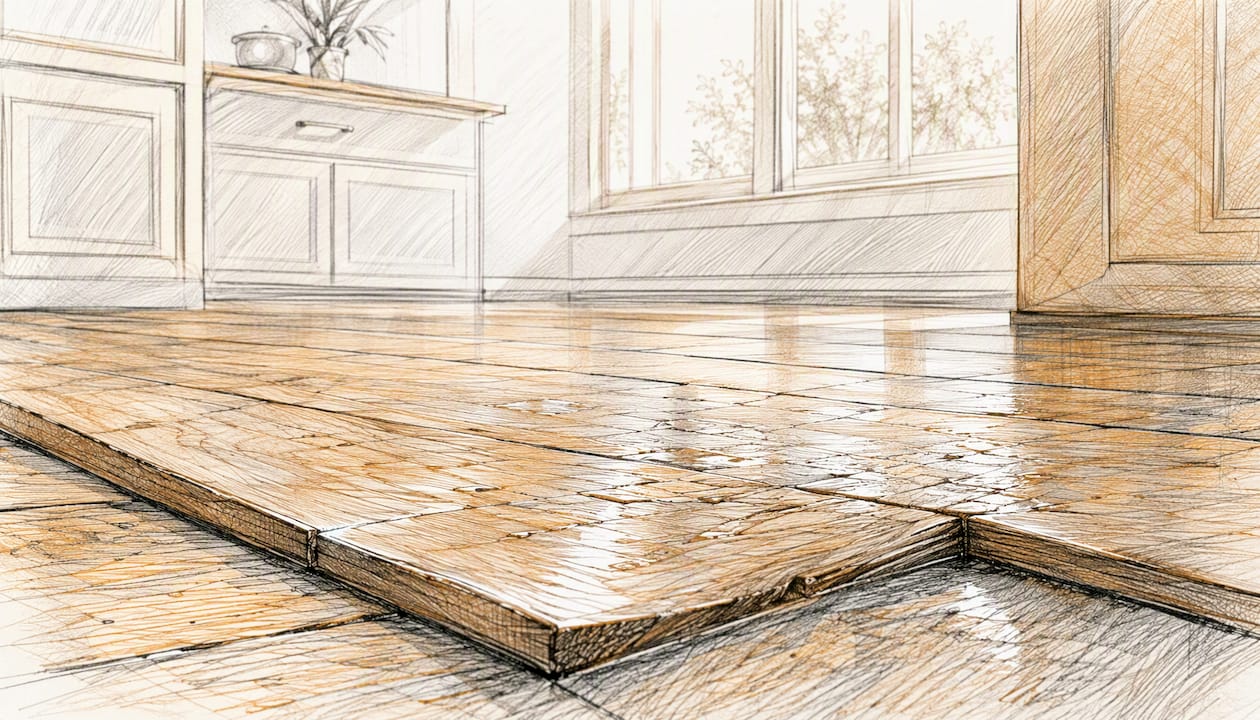
Short-term stabilization: run a dehumidifier, identify and fix the moisture source, and let the floor dry for several weeks before making any sanding decisions. Sanding a cupped floor before it dries fully almost always causes crowning. DIY flag: stabilize humidity. Pro flag: persistent cupping after two weeks of drying.
2. Crowning
Crowning is the reverse of cupping: the center of each board is higher than the edges. It often follows surface moisture exposure or, more commonly, sanding a cupped floor before it has fully dried. The NWFA technical guidance on water and wood is clear that sanding a wet floor locks in distortion rather than correcting it.
If you see crowning, resist the urge to sand immediately. Let the floor reach equilibrium, then have a professional assess whether light sanding will correct the profile or whether the boards need replacement. DIY flag: none. Pro flag: always.
3. Buckling
Buckling is the most dramatic moisture reaction: boards physically lift from the subfloor, sometimes by an inch or more. According to NWFA materials on moisture and wood, buckling typically follows flooding or severe wetting and often requires both subfloor correction and board replacement. Near exterior doors and in mudrooms, we see it regularly in Commack after heavy rain events.
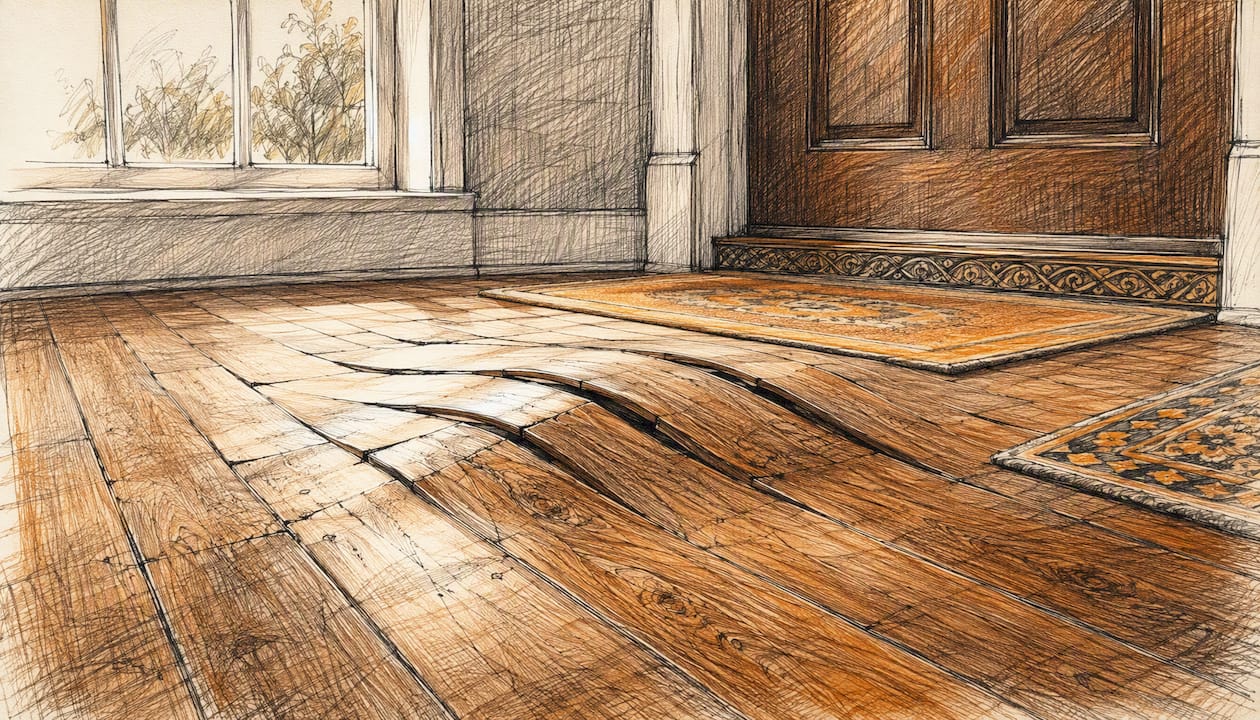
Active buckling is a safety issue. Keep foot traffic off the area, document everything with photos for your insurance carrier, and call a flooring professional. Learn more about what causes hardwood floors to buckle on Long Island. DIY flag: none. Pro flag: immediately.
4. Gaps and seasonal shrinking
Narrow gaps between boards in January or February are normal in Commack homes. Wood shrinks when indoor humidity drops during heating season. Those gaps typically close on their own by April as humidity rises. Persistent gaps that stay open year-round, or gaps wider than a narrow gap typical of normal seasonal movement, suggest either chronic low humidity or a subfloor problem.
Fine Homebuilding’s guide to wood-floor problems notes that gaps from seasonal movement rarely need filling; gaps from structural issues do. For wider or persistent gaps, filling hardwood floor cracks with a color-matched filler is a practical option before refinishing. DIY flag: seasonal gaps under 1/8 inch. Pro flag: gaps that persist through summer.
5. Squeaks and hollow spots
A squeak usually means a board is rubbing against a fastener, a neighboring board, or the subfloor. A hollow sound when you walk over a section suggests the board has lost adhesion to the subfloor below. Both are common in older Commack ranch-style homes where subfloor panels have shifted over decades.
Simple DIY check: walk the floor slowly and mark squeaky spots with painter’s tape. Driving a trim screw through the board into the subfloor from above (then filling the hole) fixes many squeaks. Widespread hollow spots, however, point to subfloor separation and need professional evaluation. DIY flag: isolated squeaks. Pro flag: hollow spots covering more than a few boards.
6. Scratches, finish wear, and peeling finish
Surface scratches and dull finish are the most common cosmetic complaints we hear from Commack homeowners. Light scratches that haven’t broken through the finish respond well to a touch-up pen or a screen-and-recoat service. Deep scratches that reach bare wood, or finish that is peeling in sheets, need a full sand-and-refinish or, in some cases, individual board replacement.
Floor Detective’s guidance on hardwood floor problems emphasizes that finish delamination and peeling often signal a contamination or adhesion problem from a prior coating, not just wear. Wax removal and deep cleaning before refinishing are critical steps to ensure the new finish bonds properly. DIY flag: light surface scratches. Pro flag: peeling finish, deep gouges, or worn-through areas.
Pro Tip: A screen-and-recoat adds a fresh topcoat without sanding down to bare wood. It costs a fraction of a full refinish and can extend your floor’s life by several years when done before wear reaches the wood itself.
Cost and timeline snapshot: Screen-and-recoat typically runs $1–$3 per square foot with a one-day turnaround. Full sand-and-refinish ranges from $3–$8 per square foot and usually takes 2–3 days on site. Board replacement adds cost depending on species availability and scope.
How to tell if your floor problem is moisture or installation
The fastest diagnostic is pattern plus a moisture reading. C & H Installation Group’s moisture guidance recommends stopping water sources first, documenting conditions, and letting the floor equilibrate before any sanding or replacement decisions.
Step-by-step diagnostic framework:
- Map the pattern. Room-wide cupping across multiple boards points to a moisture imbalance (humidity, slab, or HVAC). Localized buckling near a dishwasher, exterior door, or bathroom wall points to a specific leak. Isolated squeaks in one corner suggest a subfloor or fastener issue.
- Take moisture readings. Use a pin-type meter on the wood and a non-pin (capacitance) meter on the subfloor. A difference of more than 4% between the subfloor and the flooring is a red flag per NWFA standards.
- Measure relative humidity. The NWFA recommends maintaining indoor RH between 30% and 50% and temperature between 60°F and 80°F for Long Island homes. A reading outside that range during a cupping episode confirms a humidity cause.
- Document everything. Photograph the pattern, record your meter readings with timestamps, and note the season. This documentation matters for insurance claims and helps a flooring professional make the right repair call without guesswork.
- Distinguish active from historical damage. Press gently on a buckled board. If it springs back, the moisture may still be present. If it stays flat under pressure, the event may have passed and the floor is drying.
Diagnostic note: Floor Detective points out that similar visual conditions can come from entirely different mechanisms. Appearance alone is not enough. Moisture testing and pattern analysis together give you a defensible diagnosis.
Seasonal maintenance for Commack homes that protects your floors
Long Island’s climate puts hardwood floors through a real workout: humid summers push boards together, dry heated winters pull them apart. A consistent maintenance routine cuts the risk of recurring problems significantly.
Seasonal humidity control:
- Target indoor RH of 30%–50% year-round (a whole-house humidifier in winter, a dehumidifier or central AC in summer)
- Check RH monthly with a simple hygrometer; they cost under $20 at any hardware store
- In Commack’s older split-levels and ranch homes, basements are the biggest humidity source. Seal crawl spaces and use a vapor retarder over any concrete slab under hardwood
Cleaning dos and don’ts:
- Use a hardwood-specific cleaner (pH-neutral, no wax, no oil soap) applied with a barely damp microfiber mop
- Never let standing water sit on the floor, even for a few minutes
- Avoid excess water entirely and perform wax removal and deep cleaning before any refinishing to ensure finish adhesion
- For deeper cleaning or wax removal before a recoat, see Savera’s hardwood floor cleaning service in Commack
Protective measures:
- Place walk-off mats at all exterior doors (especially mudroom entries common in Commack colonials)
- Use felt furniture pads on every chair and table leg; replace them annually
- Keep pet nails trimmed; dog nails are a leading cause of finish wear in high-traffic hallways
- Put waterproof trays under plant pots and pet water bowls
Finish and product choices for moisture-prone zones:
In areas near exterior doors, kitchens, or over slabs, engineered hardwood with a thick wear layer outperforms solid hardwood. A vapor retarder under any slab installation is non-negotiable on Long Island.
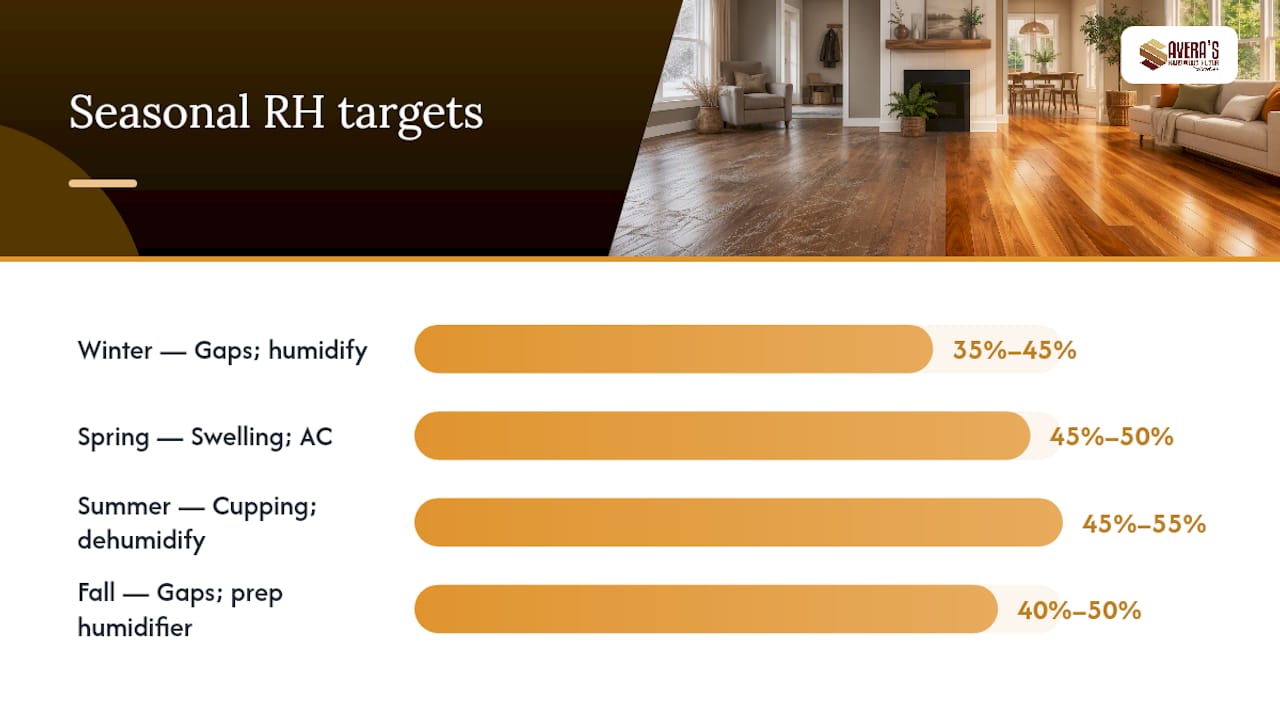
| Season | RH Target | Primary Risk | Action |
|---|---|---|---|
| Winter (Dec–Mar) | 35%–45% | Gaps, shrinkage | Run whole-house humidifier |
| Spring (Apr–May) | 45%–50% | Swelling, cupping | Monitor and adjust AC |
| Summer (Jun–Sep) | 45%–55% | Cupping, crowning | Run AC or dehumidifier |
| Fall (Oct–Nov) | 40%–50% | Transition gaps | Begin humidifier prep |
When to call a professional and what to expect
Call a professional immediately for active leaks, any buckling, widespread cupping or crowning that does not improve after 48–72 hours of drying, or finish that is peeling in sheets. Waiting makes every one of those conditions more expensive to fix.
What a professional inspection covers:
- RH and moisture-meter readings at multiple points across the floor and subfloor
- Perimeter checks for gaps at baseboards (a sign of expansion pressure)
- Finish adhesion test (tape pull or scratch test)
- Fastener and glue inspection under accessible areas
- Pattern mapping and photographs for insurance or warranty documentation
Repair options, timelines, and cost ranges:
| Repair Type | Typical Scope | Time on Site | Rough Cost Band |
|---|---|---|---|
| Screen-and-recoat | Surface refresh, no bare-wood sanding | 1 day | Low ($1–$3/sq ft) |
| Full sand-and-refinish | Remove old finish, sand to bare wood, recoat | 2–3 days | Medium ($3–$8/sq ft) |
| Board replacement | Swap damaged planks, blend finish | 1–2 days | Medium-high (varies by species) |
| Engineered HW refinishing | Thin-layer sand on wear layer, recoat | 1–2 days | Medium ($3–$6/sq ft) |
| Subfloor correction + refinish | Address structural cause, then refinish | 3–5 days | High (project-specific) |
The full refinishing process explained by Savera walks through each step so you know exactly what to expect before anyone sets foot in your home.
Questions to ask any contractor:
- Do you use dust-free sanding with HEPA containment?
- What is your moisture-testing protocol before sanding?
- Can you refinish engineered hardwood, and what is the minimum wear-layer thickness you require?
- Do you offer UV-curable finishes for same-day furniture return?
- Will you provide before-and-after moisture readings in writing?
Pro Tip: Ask for moisture readings in writing before and after the job. A contractor who won’t document them is skipping the most important diagnostic step.
Savera’s UV-curable finish and screen-and-recoat service uses instant-cure technology so most Commack homeowners can move furniture back the same day, compared to waiting 24–72 hours with traditional oil-based finishes.
What we see in Commack homes: a Savera perspective
Working on floors across Long Island, we notice patterns that repeat in Commack specifically. Ranch-style homes built in the 1960s and 1970s near Hobart Road and the Commack Road corridor often have solid red oak over a concrete slab with no vapor retarder. By the time we arrive, the cupping has been there for years and the homeowner assumed it was just “old floors.” In most cases, once we address the moisture source and let the floor stabilize, a full sand-and-refinish brings those boards back flat and beautiful.
We also see a lot of buckling near exterior mudroom doors in the two-story colonials off Veterans Memorial Highway. Water tracks in from the driveway, sits under a mat, and works its way into the wood over months. Those jobs typically need a few board replacements followed by a full refinish to blend the new boards with the existing floor.
For engineered hardwood, which is common in Commack condos and newer construction near Commack Road, we often recommend a thin-layer sand and recoat rather than a full refinish, preserving the wear layer for future refinishing cycles. Our dust-free sanding system and HEPA containment mean the rest of the home stays clean throughout the process, which matters a lot in occupied homes with kids and pets.
Savera Wood Floor Refinishing serves Commack homeowners
When your floors need more than a mop and a prayer, Saverawoodfloorrefinishing brings the full toolkit to your door. We offer professional inspections, dust-free sanding with HEPA containment, UV-curable finishes for same-day furniture return, screen-and-recoat, deep cleaning, wax removal, and engineered hardwood refinishing. Whether you’re dealing with cupped boards in a Commack split-level or peeling finish in a newer condo, we diagnose the root cause first and recommend only what your floor actually needs.

As a veteran-owned, family-operated company serving Long Island, we take pride in doing the job right the first time with minimal disruption to your home. Call us at 631-866-1972 or visit Saverawoodfloorrefinishing to schedule your Commack hardwood floor refinishing consultation today.
Sources
- Hardwood Floor Problems: Cupping, Gaps, Buckling, and Moisture — Floor Detective
- Moisture & Hardwood: Decode Cupping, Crowning, and How to Fix Them – C & H Installation Group
- 11 Wood-Flooring Problems and Their Solutions — Fine Homebuilding
FAQ
How can you tell if hardwood floors have a serious problem?
Look for boards that are lifting, cupped across the whole room, or finish that is peeling rather than just dull.
What is the life expectancy of hardwood floors?
Solid hardwood floors last many years with proper care and periodic refinishing. Engineered hardwood lasts 20–30 years depending on wear-layer thickness and how many times it can be refinished.
What flooring choice do homeowners most often regret?
Homeowners most often regret installing solid hardwood over a concrete slab without a vapor retarder, or choosing a very light finish in a high-traffic home with pets. Both situations accelerate wear and moisture damage faster than expected.
What is the healthiest flooring for a home?
Hardwood with a low-VOC, water-based finish is among the healthiest flooring options because it does not trap allergens and off-gasses minimal chemicals. Savera’s low-VOC, odor-free water-based finishes meet that standard and are safer for families and pets.
Recommended
- Common Hardwood Floor Problems: What Homeowners Must Know – Expert Wood Floor Refinishing Company | Savera Hardwood Services
- The Best Way to Clean Hardwood Floors for a Lasting Shine in Commack | Savera Wood Floor Refinishing
- Expert Hardwood Floor Cleaning Commack, NY | Savera
- What Causes Hardwood Floors to Buckle in Long Island Homes | Savera