

Your flooring is one of the largest, longest-lasting sources of indoor pollutants, allergen reservoirs, and lifecycle environmental impact in your home. EPA, indoor air can be 2–5 times more polluted than outdoor air, and Americans spend around 87% of their time indoors. That makes every flooring decision, from the material you choose to the adhesive your installer uses, a direct health decision.
The bottom line: choosing low-emission materials, requiring certified low-VOC installation products, maintaining floors consistently, and thinking twice before replacing instead of refinishing are the four moves that protect your family and reduce your home’s environmental footprint.
Immediate actions to take:
- Ventilate after installation or refinishing. EPA guidance recommends keeping formaldehyde and VOC levels “as low as reasonably achievable” and increasing ventilation when exposures are suspected.
- Look for certifications. GREENGUARD Gold, FloorScore, and CDPH 01350 testing are the three most meaningful labels for low-emission flooring products.
- Prioritize maintenance and entry mats. Regular HEPA vacuuming and entry mats at every door cut allergen load dramatically.
- Consider renew vs. replace. Refinishing an existing hardwood floor typically produces far less embodied carbon than a full replacement.
Key Takeaways
Flooring is a primary, long-lasting source of indoor VOCs, allergens, and lifecycle environmental impact, and the choices you make at purchase, installation, and maintenance directly determine your home’s air quality and carbon footprint.
| Point | Details |
|---|---|
| VOCs and formaldehyde are the top chemical risk | Choose products certified to CDPH 01350, FloorScore, or GREENGUARD Gold to minimize off-gassing. |
| Ventilate for at least 72 hours after installation | Peak off-gassing occurs early; open windows and run fans to cut initial concentrations quickly. |
| Adhesives matter as much as the flooring itself | Specify low-VOC or zero-VOC adhesives in writing before installation begins. |
| Renew before you replace | Refinishing an existing hardwood floor reduces embodied carbon and avoids landfill waste compared to full replacement. |
| Saverawoodfloorrefinishing | Offers dust-free sanding, HEPA containment, and UV-curable low-VOC finishes for Long Island homeowners who want healthier results with same-day return. |
Table of Contents
- Why healthy flooring environments matter: the mechanisms behind indoor health
- How different flooring materials compare on health and sustainability
- Certifications and standards that actually mean something
- What to expect during installation and the off-gassing window
- Cleaning and maintenance practices that protect your floors and your health
- Sustainability tradeoffs and the renew-vs-replace decision
- A practical checklist for choosing healthier flooring
- A real-world example: dust-free refinishing and UV-cure finishes in Greenlawn
- Greenlawn homeowners: get a cleaner, healthier floor without the disruption
- Sources
- FAQ
Why healthy flooring environments matter: the mechanisms behind indoor health
Flooring affects your indoor air quality through several distinct pathways, and understanding them helps you make smarter choices at every stage.
VOCs and formaldehyde off-gassing are the most widely discussed risks. Volatile organic compounds are chemicals that evaporate at room temperature from adhesives, finishes, backing materials, and some flooring planks themselves. Formaldehyde, a specific VOC classified as a probable human carcinogen, appears in urea-formaldehyde resins used in composite wood products like some laminate and engineered flooring. Acute exposure causes eye, nose, and throat irritation. Long-term, higher-level exposure carries more serious risks. The EPA recommends keeping these levels as low as reasonably achievable and using ventilation and low-emission products proactively, not just after symptoms appear.
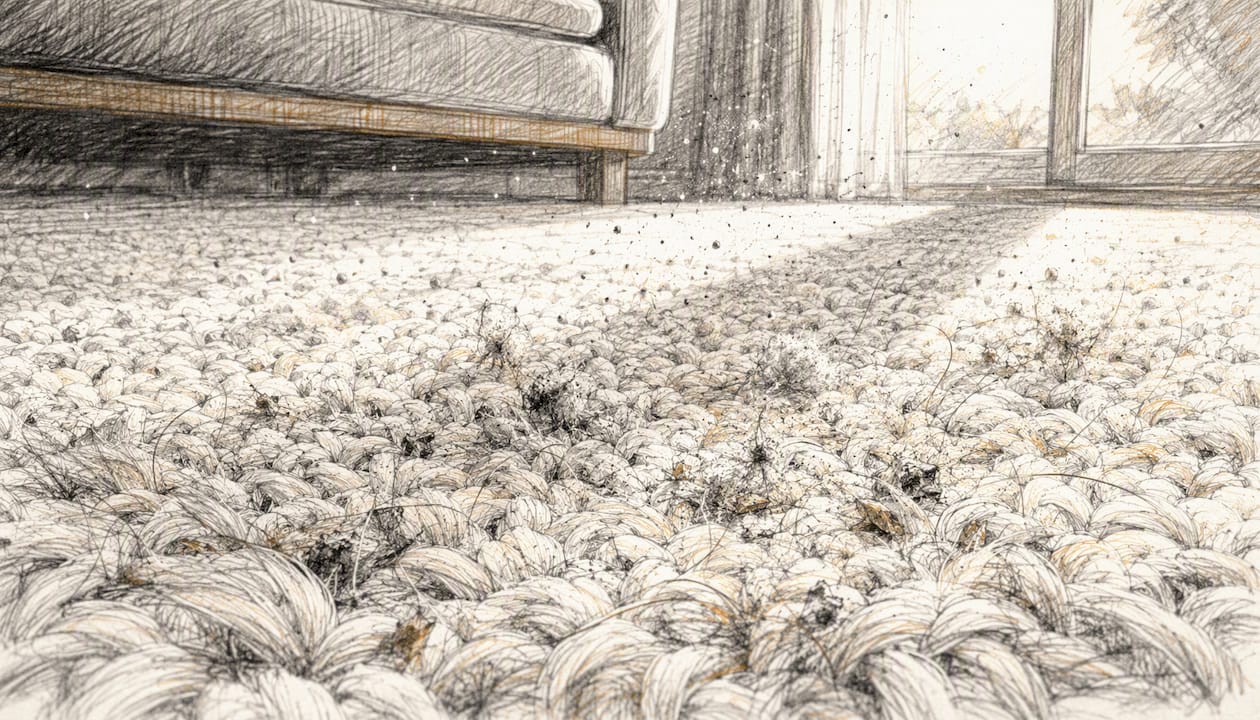
Carpets as allergen reservoirs present a different problem. The EPA’s indoor air quality guidance explains that carpet can act as a reservoir for dust, dust-mite allergens, pet dander, and other particles. Walking across carpet resuspends those particles into the breathing zone. A CDC/NIOSH workshop report found that carpets are complex multi-component systems that can also sorb chemicals and microbes, and that real-world behavior often differs from controlled chamber tests, which is why maintenance and real-use evaluation matter more than lab ratings alone.
Adhesives and finishes during installation often contribute more to short-term VOC peaks than the flooring planks themselves. Solvent-based adhesives, in particular, release high concentrations of compounds like toluene and xylene in the hours immediately after application.
Moisture and microbial growth round out the picture. High humidity trapped under or within flooring materials creates conditions for mold and mildew. Temperature swings affect emission rates too: warmer rooms off-gas faster, which is why a newly installed floor in a sun-exposed room can feel noticeably more irritating than the same product in a cooler space.
How different flooring materials compare on health and sustainability
Choosing the right material means weighing health impact, sustainability, durability, and cleanability together. No single material wins on every axis.
| Material | Health impact (IAQ/VOCs) | Sustainability/lifecycle | Durability/maintenance | Cleanability/allergen control | Installation risks |
|---|---|---|---|---|---|
| Solid hardwood | Low VOCs if finished with water-based products; no backing off-gassing | Renewable if FSC-certified; refinishable multiple times | multiple decades with refinishing | Easy to clean; low allergen retention | Adhesive risk if glued; nail-down is lower risk |
| Engineered hardwood | Composite core may contain urea-formaldehyde; look for CARB Phase 2 or CDPH 01350 | Moderate; uses less old-growth wood but harder to refinish repeatedly | around 20 years; limited refinish cycles | Good; smooth surface | Adhesive and core off-gassing risk |
| Ceramic/porcelain tile | Near-zero VOCs from the tile itself; grout sealers vary | High durability; clay is abundant; no recycled content required | multiple decades; grout needs periodic sealing | Excellent; easiest allergen removal | Low risk; thin-set mortar is low-VOC |
| LVP/vinyl | Varies widely; PVC-based products can off-gas phthalates and other plasticizers; look for FloorScore or GREENGUARD | Lower sustainability; PVC is difficult to recycle; some take-back programs exist | around 15 years; scratch-resistant | Good surface cleanability; no allergen reservoir | Adhesive risk; some products off-gas during acclimation |
| Carpet | Can harbor dust mites, mold, VOCs from backing and adhesive; CDPH 01350 or Green Label Plus helps | Shorter lifespan; most carpet ends in landfill; CEH notes conventional carpet releases hazardous chemicals across its lifecycle | 5–15 years depending on traffic | Hardest to keep allergen-free; requires extraction cleaning | Adhesive and backing off-gassing; peak at install |
| Cork | Naturally antimicrobial; low VOC if finished with water-based products; avoid solvent-based sealers | Renewable bark harvest; FSC-certified options available; cork’s sustainability benefits include thermal insulation and carbon storage | 20–30 years with proper sealing; can be refinished | Good; resists mold and mildew naturally | Adhesive risk; moisture sensitivity during install |
| Linoleum/Marmoleum | Made from linseed oil, wood flour, and jute; naturally low-emission; Forbo’s Marmoleum carries FloorScore and GREENGUARD certifications | Biodegradable; made from rapidly renewable materials; long service life | multiple decades; durable with proper maintenance | Excellent; smooth surface; naturally antimicrobial | Low risk; water-based adhesives available |
| Bamboo | Adhesive resins in strand-woven bamboo can off-gas formaldehyde; look for CARB Phase 2 compliance | Fast-growing crop; but processing energy and adhesive use reduce net benefit | 20–25 years; harder than many hardwoods | Good surface cleanability | Adhesive and resin off-gassing risk |
Repair and renew vs. full replacement: If your hardwood floor has structural integrity, refinishing is almost always the better choice. Practice Greenhealth’s lifecycle guidance recommends factoring manufacture, maintenance, and end-of-life into flooring decisions, and renewal consistently wins on embodied carbon. Bona, a widely used professional-grade floor care brand, offers water-based refinishing systems specifically designed to minimize VOC exposure during the renewal process. Forbo’s Marmoleum line is a strong example of a new-install material that pairs low emissions with genuine biodegradability.
Certifications and standards that actually mean something
Marketing terms like “eco” and “green” carry no legal definition in the U.S. flooring market. These certifications do.
- GREENGUARD Gold (UL Environment): Tests for over 360 VOCs and chemical emissions. Gold certification applies stricter limits than standard GREENGUARD, making it appropriate for schools and healthcare settings. Look for it on flooring, adhesives, and finishes.
- FloorScore (RFCI): Developed by the Resilient Floor Covering Institute, FloorScore certifies hard-surface flooring and adhesives against the CDPH Standard Method (01350). It covers vinyl, laminate, hardwood, and tile products.
- CDPH Standard Method 01350: The California Department of Public Health’s testing protocol is the most rigorous VOC emission standard in the U.S. Products tested to this method must meet strict limits for dozens of compounds. EPA references CDPH 01350 as a meaningful benchmark for low-emitting product selection.
- CARB formaldehyde standards: California Air Resources Board Phase 2 limits set maximum formaldehyde emissions for composite wood products. CARB Phase 2 compliance is now required federally under the Toxic Substances Control Act (TSCA Title VI), so any composite wood product sold in the U.S. must meet it. Still, look for the explicit CARB Phase 2 label.
- FSC (Forest Stewardship Council): Certifies responsible forest management for wood and bamboo products. FSC certification does not address VOC emissions but confirms the wood was harvested without destroying old-growth forests or violating labor standards.
- EPDs (Environmental Product Declarations): Manufacturer-issued lifecycle documents that quantify a product’s carbon footprint, resource use, and waste. Not a third-party certification, but a meaningful transparency signal. Ask your supplier for one.
- Asthma & Allergy Friendly® certification: Products carrying this mark are independently tested to demonstrate easier allergen removal with standard cleaning methods. The program also aligns with LEED and WELL low-emitting material credits.
Questions to ask your seller: Does this product have a current FloorScore or GREENGUARD Gold certificate? Is the adhesive you’re recommending also certified? Can you provide an EPD or ingredient disclosure? What is the recommended ventilation plan post-installation?
Red flags: A product described as “natural” or “eco-friendly” with no supporting certification. A seller who cannot name the adhesive brand or its VOC content. No written ventilation or re-entry timeline.
What to expect during installation and the off-gassing window
Installation is the highest-risk period for VOC exposure, and the steps you require from your installer matter as much as the product you chose.
- Specify low-VOC or zero-VOC adhesives before signing any contract. Adhesives and finishing products are often the largest short-term VOC sources during installation. Prioritizing low-VOC adhesives is as important as selecting low-emitting floor planks.
- Request HEPA containment during any sanding work. Sanding generates fine particulate that settles throughout a home. A dust-free sanding system with HEPA filtration keeps that particulate contained at the source.
- Ask for sectional work where possible. Working room by room lets you keep living areas usable and reduces total exposure at any one time.
- Ventilate aggressively for at least 72 hours after installation. EPA guidance on carpet IAQ supports a minimum 72-hour airing-out period, with windows open and fans running. Off-gassing peaks early but can persist beyond the first day.
- Keep indoor temperatures moderate during the airing-out period. Warmer rooms off-gas faster. If possible, schedule installation during mild weather so you can ventilate without extreme heat or cold.
- Delay re-occupancy for sensitive individuals. Children, pregnant women, and anyone with asthma or chemical sensitivities should stay out of the space longer than the general 72-hour baseline.
Your installation checklist: product certifications (FloorScore/GREENGUARD), adhesive spec and VOC content, ventilation plan, re-entry timeline, and post-install air testing if the space houses vulnerable occupants.
Pro Tip: Ask your installer to leave product data sheets (SDS/TDS) for every adhesive and finish used. These documents list VOC content and safe re-entry times, and they’re your reference if anyone develops symptoms after the work is done.
Cleaning and maintenance practices that protect your floors and your health
Consistent maintenance does more for indoor air quality than most homeowners realize. Dust, allergens, and chemical residues accumulate on and in flooring over time, and the right cleaning routine keeps them from becoming a chronic exposure source.
For hard floors (hardwood, tile, LVP, linoleum):
- Vacuum with a HEPA-filtered vacuum at least twice weekly in high-traffic areas. Standard vacuums recirculate fine particles back into the air.
- Damp-mop weekly using a well-wrung mop and a pH-neutral, low-VOC cleaner. Excess moisture damages hardwood and linoleum alike.
- Place entry mats at every exterior door. They intercept pesticides, heavy metals, and allergens tracked in from outside before they reach your main floor surface.
- For linoleum/Marmoleum, use low-pH cleaners specifically formulated for the material. Phenolic disinfectants can damage linoleum’s surface and should be avoided.
- Avoid steam mops on hardwood and engineered floors. The moisture penetrates finish layers and can cause swelling or delamination.
For carpet:
- Vacuum at least three times per week in high-traffic zones using a HEPA vacuum. The EPA’s IAQ guidance and the CDC/NIOSH workshop findings both emphasize that maintenance and real-world cleaning behavior are critical to managing carpet’s chemical and microbial load.
- Schedule hot-water extraction cleaning (professional or rental) at least once per year, twice in homes with pets or allergy sufferers.
- Address spills immediately. Moisture left in carpet backing creates conditions for mold within 24–48 hours.
This range suppresses dust-mite reproduction and mold growth simultaneously. For hardwood floor allergy prevention, controlling humidity is as important as vacuuming frequency.
Sustainability tradeoffs and the renew-vs-replace decision
The purchase price of flooring tells you almost nothing about its true cost or environmental impact. A lifecycle approach, covering manufacture, installation, use, maintenance, and disposal, often reverses the apparent economics.
Practice Greenhealth’s lifecycle guidance shows that healthier flooring products can reduce long-term maintenance needs and overall environmental impact, and that the full lifecycle cost frequently favors higher-quality, lower-emission products over cheaper alternatives that require more chemical maintenance and earlier replacement.
When to renew/refinish:
- The floor has structural integrity (no rot, no significant subfloor damage, adequate wood thickness for sanding).
- The existing material is hardwood, engineered hardwood with remaining wear layer, or a resilient floor that accepts recoating.
- You want to reduce embodied carbon. Refinishing an existing floor avoids the manufacturing, transport, and disposal impacts of a full replacement.
- The current finish is worn but the wood itself is sound. A screen and recoat or full sand-and-refinish restores appearance and adds a protective layer without the waste of replacement.
When replacement makes more sense:
- Moisture damage has compromised the subfloor or the flooring material itself.
- The floor contains materials of concern (older resilient flooring with asbestos-containing backing, for example) that require professional abatement.
- You are switching material types for a specific health reason, such as removing carpet to reduce allergen load for a severe asthma sufferer.
- The wear layer on engineered hardwood is too thin for another sanding cycle.
The CEH’s guidance notes that conventional flooring releases hazardous chemicals across its product lifecycle and contributes to landfill toxic waste. Choosing to refinish rather than replace keeps existing material out of the waste stream and avoids the emissions associated with manufacturing new product.
A practical checklist for choosing healthier flooring
When you’re shopping for new flooring or hiring an installer, these questions cut through marketing noise quickly. For a broader overview of how to pick the right flooring for your home’s specific needs, the questions below give you a solid starting framework.
Ask sellers and installers:
- What certification does this product carry? (FloorScore, GREENGUARD Gold, CDPH 01350, CARB Phase 2)
- What adhesive will you use, and what is its VOC content?
- Is an EPD or full ingredient disclosure available for this product?
- What is the recommended ventilation and re-entry timeline?
- Does the manufacturer offer a take-back or recycling program at end of life?
- What warranty applies if the product is installed with non-approved adhesives or cleaners?
Red flags to walk away from:
- No ingredient disclosure and no third-party certification.
- “Green” or “eco” claims with no supporting label or test data.
- An installer who cannot name the adhesive brand or provide its SDS.
- No written ventilation plan or re-entry timeline included in the quote.
- A warranty that voids if you use anything other than the manufacturer’s own (often high-VOC) cleaning products.
Immediate steps if you already have concerns:
- Open windows and run fans to increase air exchange.
- Stop using any harsh chemical cleaners until you identify what’s in them.
- Switch to HEPA vacuuming immediately.
- If occupants are experiencing symptoms (eye irritation, headaches, respiratory issues) after a recent installation, consult a clinician trained in environmental medicine and contact your local health department.
A real-world example: dust-free refinishing and UV-cure finishes in Greenlawn
Greenlawn hardwood floor refinishing projects illustrate exactly why the professional workflow matters as much as the product choice. Here is how a health-conscious refinishing job differs from a conventional one.
- Pre-job assessment. The floor is evaluated for wood thickness, existing finish type, wax contamination, and moisture levels. Wax removal is completed before sanding begins, using low-VOC solutions rather than solvent-heavy strippers.
- Dust-free sanding with HEPA containment. A dust-free sanding system captures fine particulate at the source using HEPA-filtered equipment and sectional plastic containment. This keeps airborne dust out of the home’s HVAC system and living areas, which is a meaningful IAQ benefit that standard sanding cannot match.
- Low-VOC water-based finish application. Water-based finishes carry significantly lower VOC loads than oil-modified polyurethane. The finish is applied in thin, even coats with adequate dry time between coats.
- UV-curable finish option for same-day return. UV-curable finishes cure instantly under UV light rather than requiring 24–72 hours of air drying. This eliminates the extended off-gassing window associated with conventional finishes and allows furniture return the same day in many cases. For families with young children, pets, or anyone sensitive to finish odors, this is a practical advantage.
- Post-job ventilation guidance. Even with low-VOC products, the homeowner receives a written ventilation plan: windows open, fans running, HVAC filter checked.
Project snapshot: A 1,200-square-foot Greenlawn home with original red oak floors, last refinished with oil-modified polyurethane roughly 15 years prior. Scope: wax removal, full dust-free sand, two coats of water-based finish with UV-cure topcoat. Timeline: one day of work, same-day furniture return. Outcome: floors restored to a natural matte appearance, no detectable finish odor by evening, and no disruption to the family’s schedule.
Pro Tip: If your home has engineered hardwood, always ask a professional to measure the remaining wear layer before committing to a full sand. Many engineered floors have enough thickness for one or two more refinishing cycles, which is far less disruptive and less expensive than replacement.
What we see most often, and what actually fixes it
We’ve worked on floors across Long Island, from historic colonials in Greenlawn to modern condos in Middle Island, and the same three problems come up repeatedly: adhesive failure from moisture intrusion, finish degradation from harsh cleaning products, and allergen buildup in homes that switched from carpet to hard floors but kept the same vacuum.
The simplest fixes are consistent: control humidity, use a HEPA vacuum, and choose a water-based or UV-curable finish when it’s time to refinish. These steps cost less than most homeowners expect and deliver measurable improvements in both floor longevity and indoor air quality.
If anyone in your household develops respiratory symptoms, eye irritation, or headaches after a flooring installation or refinishing project, consult a clinician trained in environmental medicine and notify your local health authorities.
Greenlawn homeowners: get a cleaner, healthier floor without the disruption
Your floors deserve a professional who treats air quality as seriously as appearance. Saverawoodfloorrefinishing brings dust-free sanding and low-VOC UV-cure finishes to Long Island homeowners who want beautiful results without tipping around for days waiting for fumes to clear.

Before you hire anyone for Greenlawn hardwood floor refinishing, ask these three questions: Do you use a dust-free sanding system with HEPA filtration? Can you offer low-VOC water-based or UV-curable finish options? Can you provide references or project photos from similar homes? A qualified professional answers yes to all three.
Saverawoodfloorrefinishing serves homeowners, property managers, and real estate professionals across Long Island, offering full refinishing, screen and recoat, deep cleaning, wax removal, and engineered hardwood refinishing with minimal downtime. Call 631-866-1972 or visit Saverawoodfloorrefinishing to request a quote and see your floor’s potential.
Sources
- Questions and answers regarding laminate flooring | US EPA
- Healthy Flooring guidance for manufacturers – Practice Greenhealth
- Flooring and indoor air quality: Building healthier spaces from the ground up | Asthma & Allergy Friendly®
- Implications of carpets on indoor chemistry and microbiology (workshop report) | CDC/NIOSH
This article is general information, not a substitute for advice from a qualified doctor. Consult a qualified healthcare professional about your own circumstances before acting on anything here.
FAQ
What is the healthiest flooring to have in your home?
Solid hardwood finished with a water-based, low-VOC product is widely considered the healthiest option for most homes: it has no composite-core off-gassing, is easy to clean, and can be refinished rather than replaced. Ceramic tile and Forbo Marmoleum (linoleum) are strong alternatives for rooms where moisture resistance matters.
What flooring choices do homeowners most regret?
Carpet in high-moisture areas (basements, bathrooms) and low-cost LVP without FloorScore or GREENGUARD certification are the most common regrets. Carpet traps allergens and mold in humid conditions, while uncertified vinyl can off-gas plasticizers for months after installation.
What are the benefits of resilient flooring?
Resilient flooring, including LVP, linoleum, and cork, offers comfort underfoot, water resistance, and relatively easy maintenance. When certified to FloorScore or CDPH 01350, it can also be a low-emission choice, though the EPA notes that each resilient type carries its own tradeoffs for IAQ and durability.
What are the environmental considerations for flooring choices?
Lifecycle impact, not just purchase price, determines a floor’s true environmental cost. FSC-certified hardwood, Marmoleum, and cork score well on renewability and end-of-life biodegradability. PVC-based vinyl is difficult to recycle and can release hazardous chemicals across its lifecycle, as documented by the Center for Environmental Health.
How long does off-gassing last after new flooring is installed?
Peak off-gassing typically occurs in the first 24–72 hours after installation, but lower-level emissions can continue for weeks depending on the product, adhesive, and ventilation. Keeping windows open and fans running for at least 72 hours after installation is the most effective low-cost mitigation, per EPA guidance.
Recommended
- Top reasons to refinish hardwood floors for a lasting home – Expert Wood Floor Refinishing Company | Savera Hardwood Services
- Eco-Friendly Wood Flooring in Greenlawn, NY Guide
- Hardwood floor allergy prevention tips for healthier homes – Expert Wood Floor Refinishing Company | Savera Hardwood Services
- Hardwood floor allergy prevention tips for healthier homes – Expert Wood Floor Refinishing Company | Savera Hardwood Services