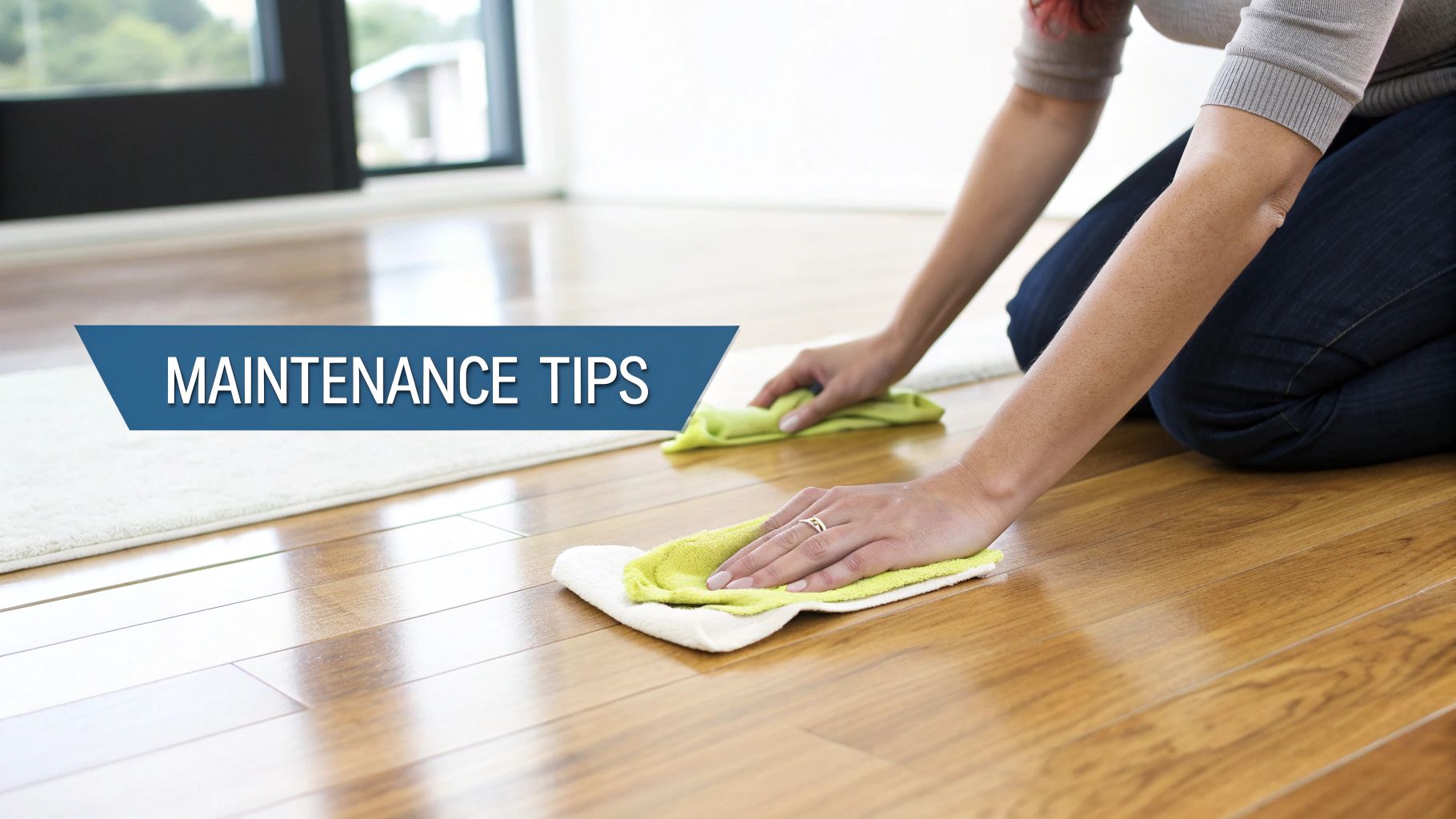
Yes, engineered hardwood in East Northport can often be screened and recoated when the finish is still bonded and the wear layer is sound, with 3.2 millimeters for unfinished engineered flooring and 2.5 millimeters for factory-finished flooring as the NWFA refinishable benchmarks (NWFA refinishable program). The pressing question isn't whether the floor is engineered, it's whether the coating is compatible, the veneer is intact, and the surface only needs renewal rather than heavy removal.
You're probably looking at a floor that's lost its sheen in the traffic lane, not one that's structurally failing. That's exactly the kind of situation where screening and recoating can make sense, because it refreshes the protective finish instead of cutting into the wood itself.
Table of Contents
- Why East Northport Homeowners Ask About Screening Engineered Floors
- How to Tell If Your Floor Is a Good Recoat Candidate
- Wear Layer Thickness and Factory Finish Compatibility Explained
- What Happens During a Dust Free Screen and Recoat Visit
- Finish Options Timelines Costs and Aftercare That Protects Results
- Getting the Right East Northport Recoat Plan for Your Home
Why East Northport Homeowners Ask About Screening Engineered Floors
A common call starts the same way. A homeowner in East Northport notices the living room looks tired, the entry has a dull track from shoes, and the floor no longer feels as clean as it should even after mopping. Maybe the house is going on the market, maybe there are kids and pets, or maybe the finish just stopped looking right under daylight from the windows.
A living-room problem, not a demolition problem
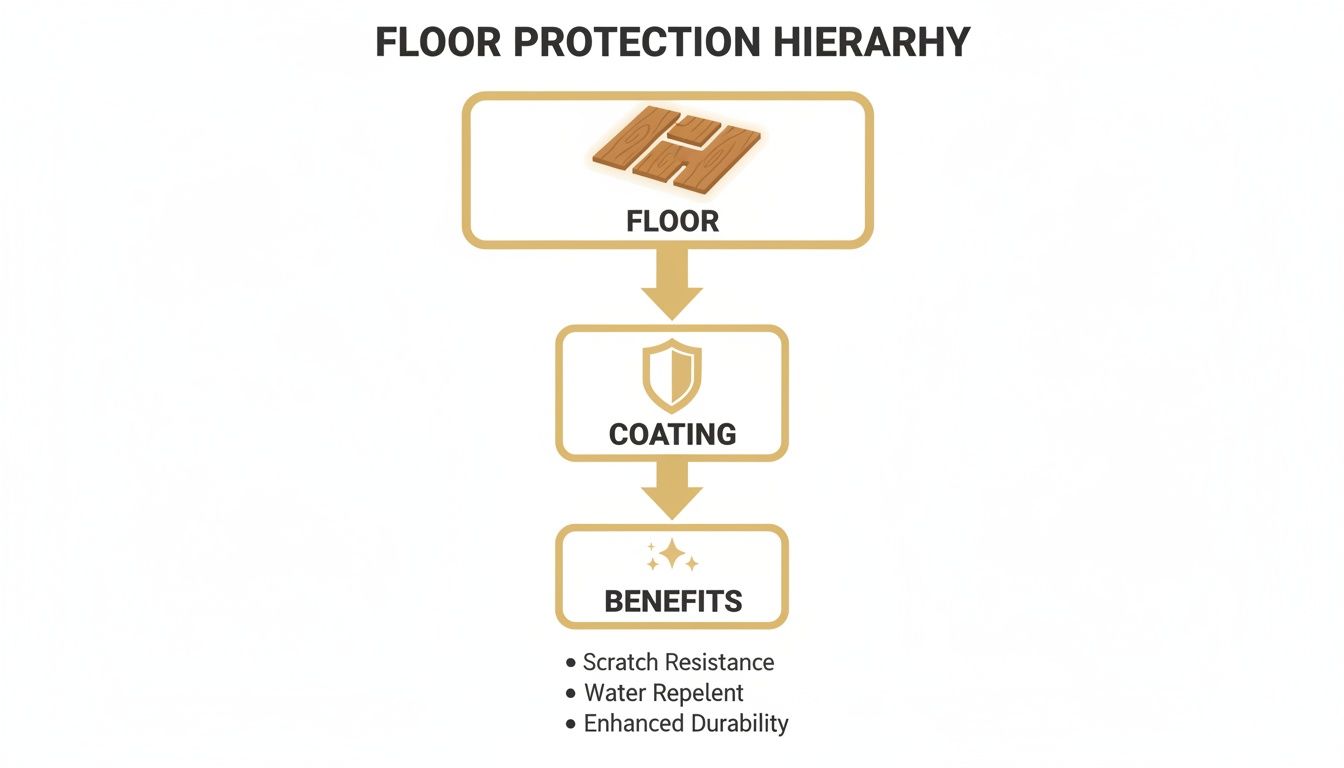
That's where screening and recoating enters the conversation. It's a maintenance refresh, not a full strip job, and it works by lightly abrading the existing coating so a new finish can bond. The process is about renewing the protective layer, not removing a meaningful amount of wood from the plank (screen and recoat maintenance guide).
A floor can look worn out without being a candidate for aggressive sanding.
That distinction matters on engineered hardwood because the wood is only the veneer above the layered core. If that veneer is still healthy and the coating is intact enough to accept a new layer, recoating can preserve the floor's life while improving the look.
Why homeowners confuse this with full refinishing
A lot of people hear “refinish” and think every option means sanding down to bare wood. It doesn't. A light recoat is often the smarter move when the damage is mostly cosmetic, because it avoids unnecessary wear on the plank and keeps the job focused on the finish instead of the structure.
For homeowners who do need deeper work, Hardwood Floor Sanding and Natural Finish Restoration is the separate path, and it's meant for worn floors that need old finish removed, scratches reduced, and a fresh protective system built from the wood up. That's a different scope from a screen-and-recoat, and it's not the right answer for every engineered floor.
Why this question comes up so often in East Northport
Long Island homes see a mix of traffic patterns, kitchen moisture, and cleaning-product habits that can dull a finish faster than homeowners expect. The floor may still be serviceable, but the coating tells a different story. That's why the first step is never a guess, it's a look at the actual surface condition and the construction underneath.
How to Tell If Your Floor Is a Good Recoat Candidate
The question I ask first on any East Northport job is not how thick the veneer is. It's whether the existing finish will accept a new coat, and whether anything sitting on top of it will block the bond. A thin engineered floor with a sound, clean finish recoats beautifully. A thick floor with cooking film and failing coating can reject the new coat outright. Veneer thickness gets the attention, but finish compatibility and contamination decide the outcome.

Good signs and bad signs side by side
| Condition clue | Usually a recoat candidate | Usually not a recoat candidate |
|---|---|---|
| Surface look | Dull sheen, light scuffs, normal wear | Peeling finish, flaking, bubbling |
| Wood color | Wood still covered by finish | Gray oxidized wood or exposed veneer |
| Damage level | Minor scratches in the coating | Deep gouges through the finish |
| Board behavior | Boards stay flat and stable | Cupping, movement, or delamination |
The biggest separator is finish integrity. If the coating is still attached but tired, screening creates the mechanical bite the new coat needs. If the finish is already failing, recoating over the problem only traps the problem underneath.
What to look for in different rooms
Each room tells you something different about the bond. In a living room, the first clue is often a soft, hazy look where chairs slide and people walk daily. That's simple wear, and it screens off easily. A kitchen is the room I worry about most, because cooking residue and cleanup products can leave an invisible film that interferes with adhesion even when the floor looks fine. Entry areas show the heaviest edge wear, especially where grit gets tracked in from outside, and that grit tells me the coating has been abraded by real use rather than degraded by a product problem.
Practical rule: if the floor has visible structural movement, moisture distortion, or layers separating at the edges, stop thinking about a quick recoat and move to professional assessment.
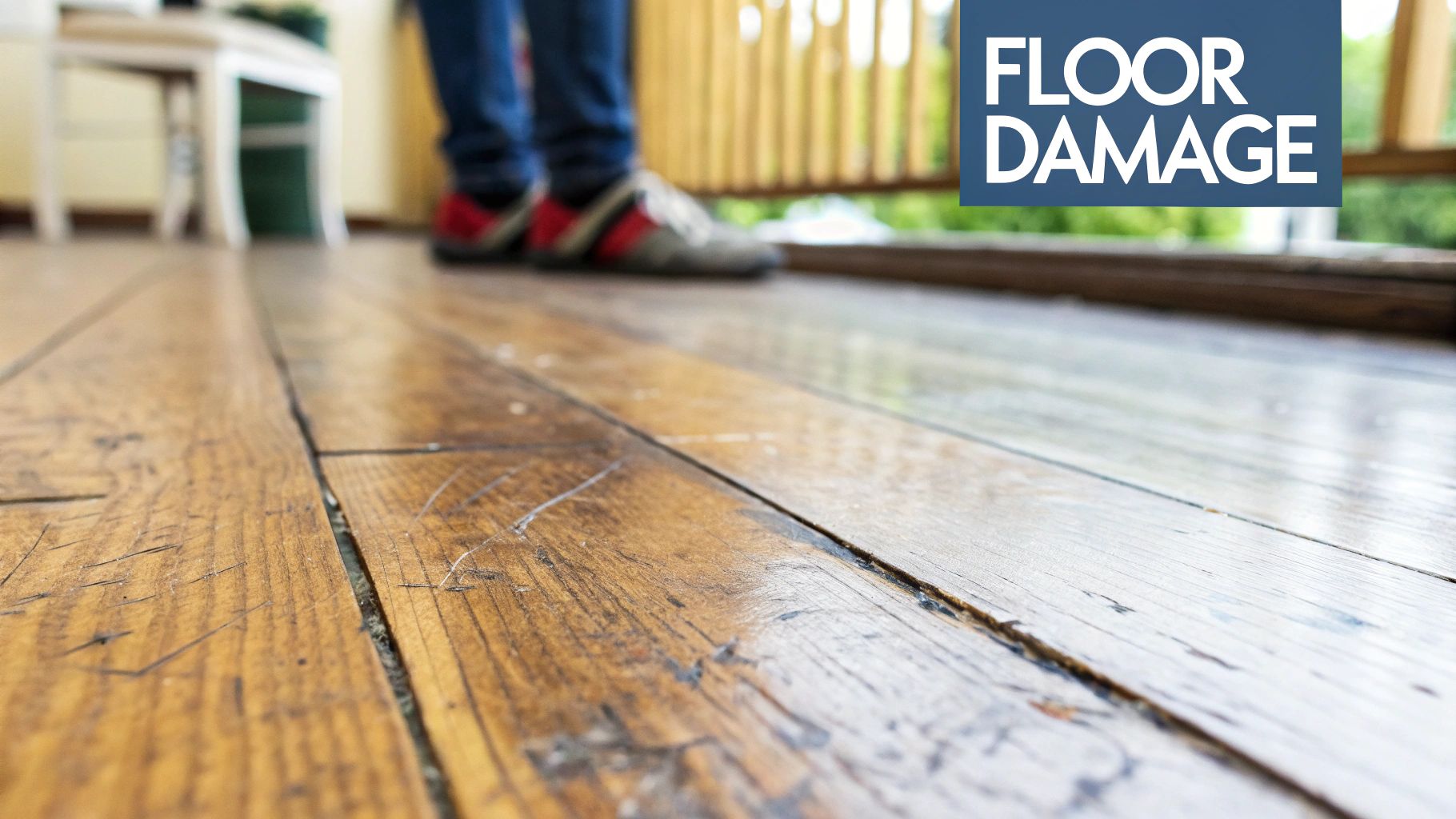
Some conditions push a floor out of recoat territory entirely. Deep gouges, widespread water damage, delamination, or finish loss down to the veneer need repair first, and sometimes replacement is the safer answer. Screening doesn't solve wood that's already compromised.
A simple self-check before booking
Run your hand over the surface. If it feels mostly smooth but visually tired, that's promising. If you can catch a nail edge in rough spots, see finish lifted at seams, or spot gray wood showing through, you're probably beyond a cosmetic refresh. If several of those bad signs show up, review the five signs your hardwood floors only need restoration instead of full sanding before booking anything.
Engineered flooring often gets paired with more aggressive restoration in people's minds, but the decision starts with the surface you can see and feel. That's why a targeted recoat inspection in East Northport should focus on condition first and assumptions second.
Wear Layer Thickness and Factory Finish Compatibility Explained
Thickness matters, but it answers a different question than most homeowners think. A thicker engineered plank suggests the floor can be sanded someday. A thinner one can still take a recoat today. Wear-layer depth governs whether full sanding is plausible, while finish compatibility governs whether a screen-and-recoat will bond. Those are two separate tests, and confusing them leads to wrong calls on both sides.
The sanding limit and the recoat question are different
The NWFA thresholds introduced earlier, the minimum wear-layer depths for refinishable classification, help determine whether full sanding is technically reasonable (NWFA refinishable program). They say nothing about whether a floor is a good candidate for a new topcoat, because screening doesn't intentionally remove measurable wood.
That's why a thinner floor can still be a strong recoat candidate if the finish is sound. Screening abrades the coating, not the plank core, so the floor may be serviceable even when it's a poor sanding candidate (engineered hardwood guide). See how wear-layer thickness plays out in nearby engineered wood flooring thickness guidance for Garden City homes when you want a local example of how these numbers get applied in practice.
| Factor | Screen and Recoat | Full Sand and Refinish |
|---|---|---|
| What gets removed | Only the existing finish is abraded lightly | Finish and surface wood are removed |
| Best use | Surface dullness, light wear, intact coating | Deep scratches, color change, major surface damage |
| Wood loss | Minimal to none by design | Material is intentionally removed |
| Technical limit | Finish bond and contamination matter most | Wear-layer thickness is the key limit |
Finish chemistry can make or break the project
Factory-cured aluminum-oxide and UV finishes are common reasons a recoating job succeeds or fails. They resist ordinary abrasion, which means the contractor has to identify the product and use the right approach. When a recoat fails on this kind of floor, the bond between old and new finish is usually the culprit, not the veneer.
Contamination is just as important. Wax, acrylic polish, pet residue, silicone, oil soap, and unknown cleaners can all interfere with adhesion. A floor that looks only slightly dull can still fail the test if the surface is contaminated. I've seen floors that passed a visual check and then peeled within weeks because someone had used an oil soap for years. That's why a test area matters more than how the floor photographs.
Why product history matters more than total plank thickness
Homeowners often get tripped up here. A thick-looking engineered floor with a dirty, incompatible factory finish may perform worse in a recoat test than a thinner floor with a clean, bondable coating. The right question is whether the existing surface can accept a new finish, not just whether the wood above the core sounds substantial.
For a broader construction comparison, Interiors by DeX engineered wood insights gives useful background on why layered products behave differently from solid boards. That distinction helps explain why maintenance decisions on engineered flooring have to account for the surface chemistry, not only the structure.
Why this is not the same as full refinishing
A full sanding project is for floors that need correction, reshaping, or a finish change that recoating can't deliver. Full Sanding & Refinishing is the right language when the goal is to remove the old finish and surface imperfections, then rebuild the look with new stain and topcoat. A recoat is the lighter, lower-risk route when the floor still has enough life left and the surface is bondable.
What Happens During a Dust Free Screen and Recoat Visit
You can usually tell how a recoat visit will go in the first few minutes. Before any screen goes on the machine, the contractor checks what is sitting on top of the floor. That means the existing finish, any cleaner or polish residue, moisture conditions, and whether the wear pattern matches a floor that can still take a new coat. A shiny floor can still fail this step. A worn-looking one can pass.

The order that protects the floor
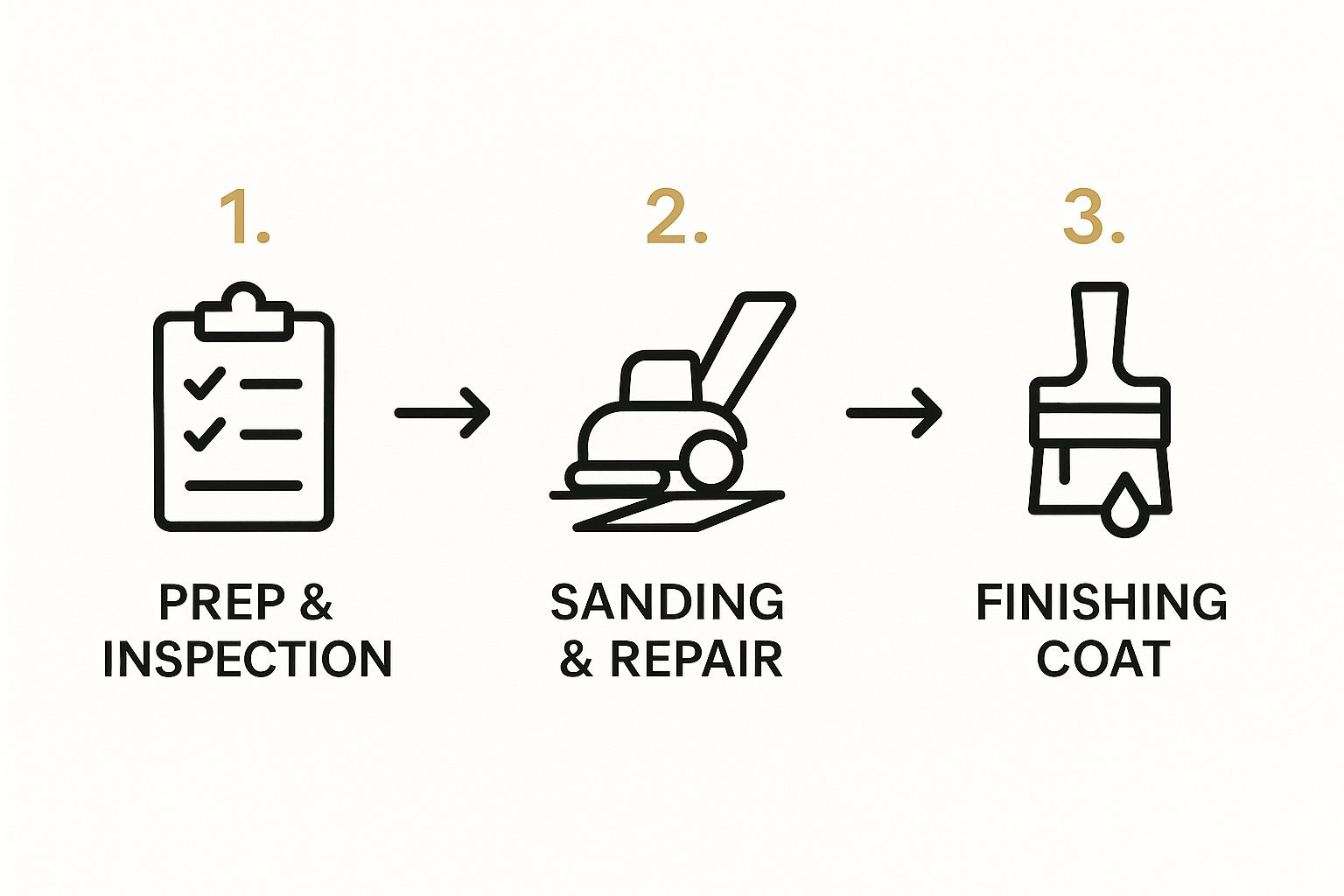
A good crew follows a clear sequence because each step affects the bond. The usual order is finish identification, moisture check, residue removal, a small adhesion test, light screening, and topcoat application. The screening step is there to create microscopic mechanical adhesion in the existing finish. Then the new coat goes over a surface that is clean and ready to accept it (screen and recoat workflow).
- Finish ID: The existing coating has to be identified before anyone chooses a recoat system.
- Moisture check: The floor and subfloor need to be dry and stable enough for finishing work.
- Residue removal: Wax, polish, oil soap, and embedded soil have to be removed before testing or coating.
- Adhesion test: A sample area is screened and checked where the floor has real use, not in a protected corner.
- Topcoat application: Once the surface passes, the finish is applied evenly and left to cure under controlled conditions.
The test spot should include a traffic lane or an area that may have seen cleaning products over time. That is where fisheye, crawling, soft cure, or peeling usually shows up first. If the sample fails, the right call is to stop and change course. That saves the homeowner from coating the whole room with a finish that will not hold.
What to expect on the day of work
The room still needs preparation. Furniture gets moved, pets need to stay clear, and airflow has to be managed so dust and curing conditions stay under control. During the work itself, many crews use HEPA vacuuming, tack cleaning, and containment to keep fine dust from circulating through the house.
When comparing contractors, ask how they handle containment and cleanup, not just what finish they plan to use. dust-free hardwood floor refinishing systems keep disruption down when the process is set up correctly. Savera Wood Floor Refinishing builds its process around dust-free containment for exactly that reason. Some projects also use low-VOC, water-based finishes when the household wants a cleaner indoor experience.
Some homes are candidates for UV-cured systems, and in those cases the floor can be ready the same day in many situations. That only makes sense after the floor condition and adhesion testing support that system.
Why prep decides the finish
Prep decides whether the new coat bonds or fails. Screening does not fix contamination, and it does not bury cleaning residue. If polish, oil soap, or another film is still on the floor, the new finish can separate from the old one even when the wood underneath is sound.
That is why a light-refresh service only works when the surface is bondable. If the floor fits that category, Screen and Recoat is the right maintenance service for restoring sheen, adding protection, and extending the life of the existing finish without full sanding.
Finish Options Timelines Costs and Aftercare That Protects Results
A recoat makes the most sense when the goal is to protect what's already there. It won't erase deep damage, change the color dramatically, or rebuild a badly worn floor from scratch, and that honesty matters before anyone starts. The payoff is getting a cleaner-looking surface with a renewed finish that fits the home's daily use.

Engineered wood flooring has become a major global category, and one U.S. Forest Service life-cycle inventory reported American manufacturers produced 36.36 million square meters of engineered wood flooring in 2007, compared with 41.67 million square meters of solid wood flooring (U.S. Forest Service inventory). That helps explain why finish maintenance on engineered planks matters in so many homes, rentals, and commercial spaces.
Choosing a finish that fits the household
Water-based finishes are a strong fit for homeowners who want lower odor and a cleaner indoor experience. UV-cured finish systems appeal to people who want the floor back in service fast, because the finish can be ready the same day in many cases. The right choice depends on the room's use, the condition of the surface, and whether the existing coating passed testing.
Practical rule: the finish should match the floor's condition and the family's routine, not the other way around.
Timing shifts with prep, cleanup, curing conditions, and whether the floor needed extra testing. A floor that's clean, dry, and compatible moves faster than one that needed residue removal or more careful evaluation. Cost also follows scope, because a simple refresh is a different job from repair or full restoration, but no honest contractor should guess at that before seeing the floor.
Simple aftercare that keeps the coating clear
Use cleaners made for finished wood floors, not waxy products or soap-heavy mixes that leave film behind. Put felt pads under furniture legs, keep pet nails trimmed, and avoid dragging chairs across the surface during the first days after the work is done. Humidity swings can also affect the floor's behavior, so stable indoor conditions help protect the finish.
The flooring should not be treated like it's cured and bulletproof the moment the crew leaves. The finish still needs the right curing window, even when the surface feels dry to the touch. If a floor gets wet or abrasive particles stay on it, the new coat wears down faster than it should.
What a good result looks like
A good recoat leaves the floor with even sheen, no peeling, and no cloudy patches from poor bonding. It should look refreshed, not thickened into a plastic shell. If the surface still shows deep scratches or wood damage, that's the sign the floor needed more than a maintenance coat from the start.
Getting the Right East Northport Recoat Plan for Your Home
The right answer usually comes down to three checks, not one. The finish has to be bonded and compatible, the wear layer has to be sufficient for the chosen service, and the floor has to be clean enough to accept a new coating. When those pieces line up, screened recoating is a practical way to extend the life of engineered hardwood without going straight to full sanding.
If the floor has peel, deep gouges, water damage, delamination, or a coating that won't test well, a deeper restoration or localized repair is the smarter move. That's where an inspection saves money and avoids a finish failure that would've been preventable.
For East Northport homeowners who want a clear answer before committing to a bigger project, Savera Wood Floor Refinishing can evaluate the floor and tell you whether a restore-without-sanding approach makes sense. Bring the questions, the floor's history, and a realistic idea of how the room gets used, and you'll get a plan that matches the wood you already have.
If you want a straight assessment of whether your engineered floor should be screened, recoated, repaired, or fully refinished, contact Savera Wood Floor Refinishing and ask for an in-home evaluation. Visit Savera Wood Floor Refinishing to see the service options and start the conversation about the right restoration path for your East Northport home.