Tag Archives: floor refinishing

Screen Recoat Hardwood Floors in Greenlawn, NY: A Guide to Restoring Shine

Think of a screen and recoat as a refreshing spa day for your hardwood floors. It's not a full-blown surgical procedure like a complete refinishing; it's a vital maintenance process designed to breathe new life into the existing top protective layer. For homeowners in Greenlawn, NY, this is the go-to solution for floors showing the marks of a well-lived life—light scuffs, minor scratches, and a generally dull appearance. When considering hardwood floor refinishing in Greenlawn, this service is often the perfect first step.

We lightly abrade the old finish and then apply a brand-new coat of polyurethane, instantly restoring that protective barrier and beautiful luster. It’s a fast, effective, and dust-free way to revitalize your home.

What Does It Mean to Screen and Recoat Hardwood Floors?

Let's break down what's really happening here. A screen and recoat is all about preservation, not replacement. Unlike a full refinish where we sand everything down to bare wood, this process only touches the very top layer of polyurethane. It’s a refresh, not a restart, making it an essential part of hardwood floor refinishing in Greenlawn.

This method is perfect for floors that are in good shape structurally but have lost their original gleam from years of foot traffic, pets, and everyday activity. For homeowners in Greenlawn, NY, this is often the smartest and most cost-effective way to maintain the classic oak or maple floors that are so common in Long Island homes, from the beautiful Colonials near Harborfields High School to more contemporary houses.
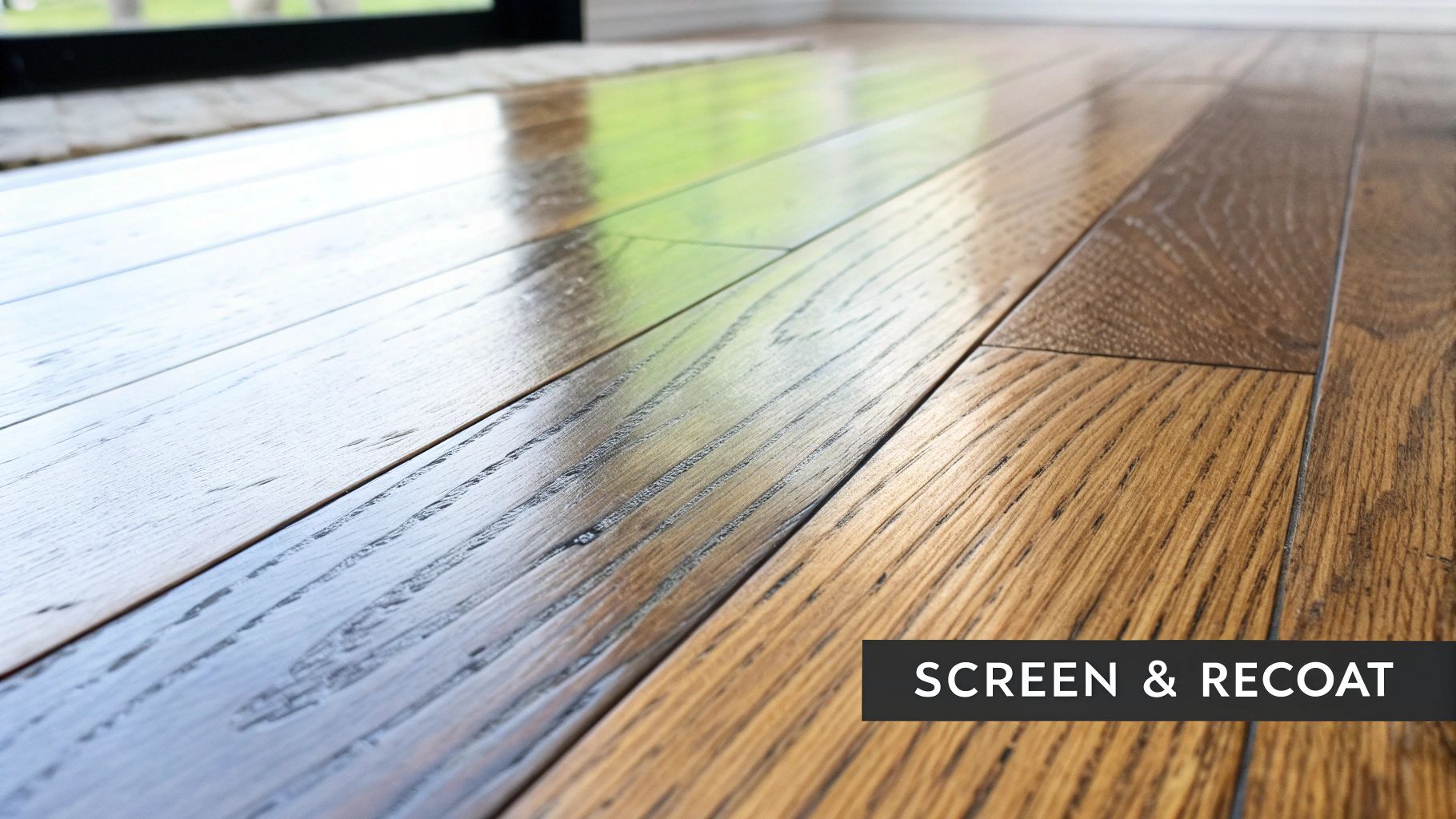
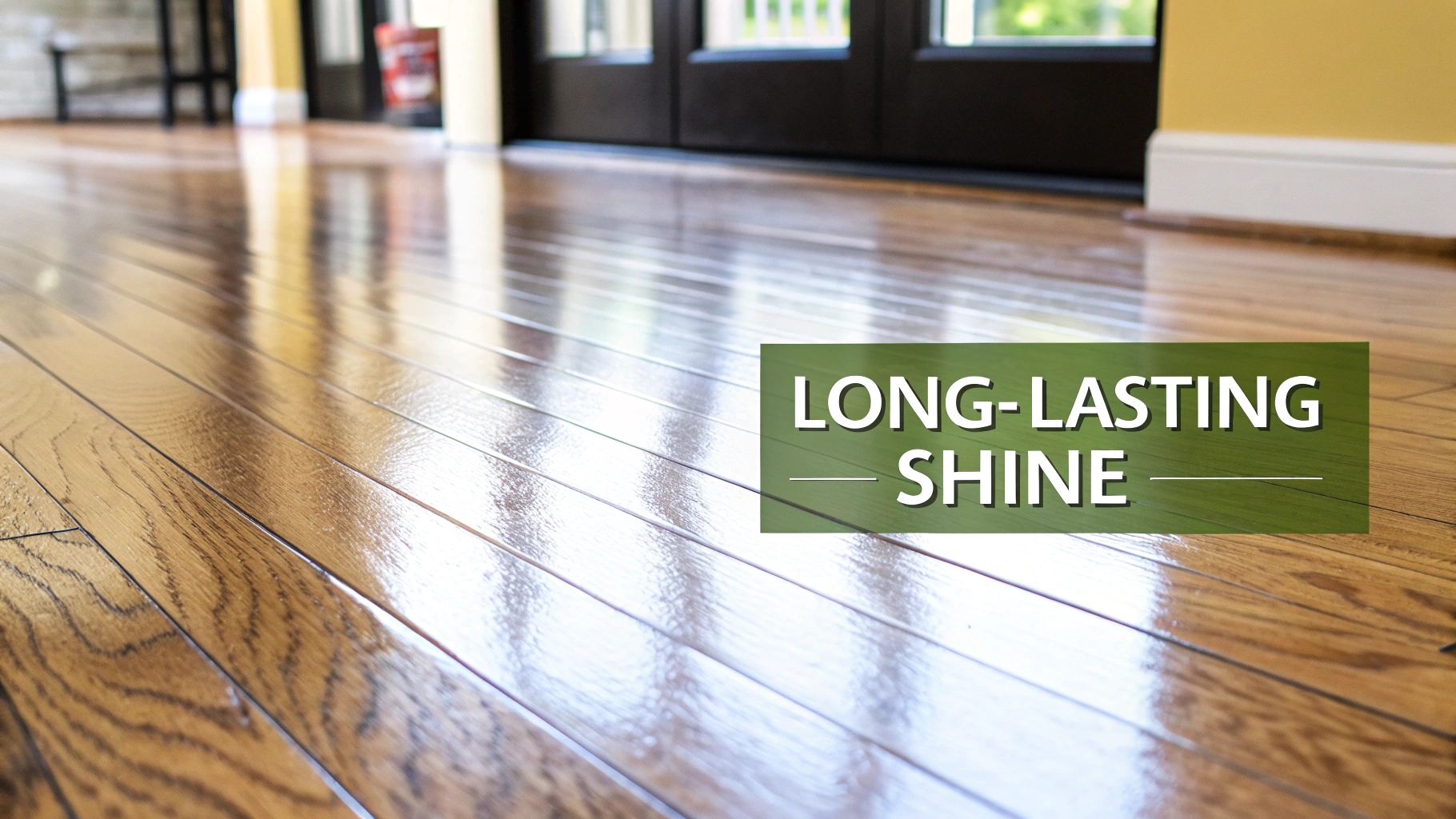
Close-up of newly screened and recoated shiny hardwood floors, showing reflections from a window.

The Core Purpose of a Screen and Recoat

The whole point is to add a fresh, tough layer of protection. That polyurethane finish on your floors is a sacrificial layer—it’s meant to take the abuse so the wood underneath doesn't have to. A screen and recoat essentially hits the reset button on that protection.

Here's how it works:

  • Lightly Abrading the Surface: We use a professional buffer fitted with a fine-grit screen (this is the "screening" part) to gently scuff up the existing finish. This isn't about removing it, but creating a microscopic texture for the new coat to grab onto. It’s a critical step for ensuring the new finish bonds properly.
  • Applying a New Topcoat: Once the floor is perfectly clean and free of dust, we apply a fresh coat of high-quality polyurethane. This not only restores that beautiful sheen but also rebuilds the floor's defense against future wear and tear.

This process is preventative maintenance in its purest form. By tackling minor wear and tear every 3-5 years, you can put off a more disruptive and expensive full sand and refinish for a very, very long time. It’s the single best way to protect your original flooring investment.

If you want to dive deeper into the technical side of things, we have more information about wood floor screening right here.

Why Choose This Method for Your Greenlawn Home

Honestly, a professional screen and recoat is one of the quickest and most effective ways to improve your home's interior without the mess and time of a major project. It's a fundamental part of any smart Greenlawn hardwood floor refinishing plan. You get to preserve the unique character of your wood floors and keep them looking their best for years. It's the secret to that "just-installed" look, without having to start all over again.

Is a Screen and Recoat Right for Your Greenlawn Home?

Knowing how to care for your hardwood floors can feel overwhelming, but it often comes down to one key question: do they need a quick refresh or a complete overhaul? A screen and recoat isn't the right answer for every floor, but when it is, it’s a fantastic, efficient solution for your hardwood floor refinishing in Greenlawn.

This process is perfect for floors that are structurally sound but look a little worn out from daily life. If you're looking at a dull finish, some light scuffs from moving furniture, or surface-level scratches that haven't gone through the top layer of polyurethane, you're in luck. A screen and recoat is designed to fix exactly these kinds of cosmetic issues. The damage has to be in the finish, not the wood itself.

When Screening Is Not the Answer

It’s just as crucial to know when this method won't work. Think of a screen and recoat as a powerful maintenance tool, not a cure-all for heavy damage. If the problems run deeper than the surface, you'll need a more intensive solution like a full sanding.

A screen and recoat is not the right approach for:

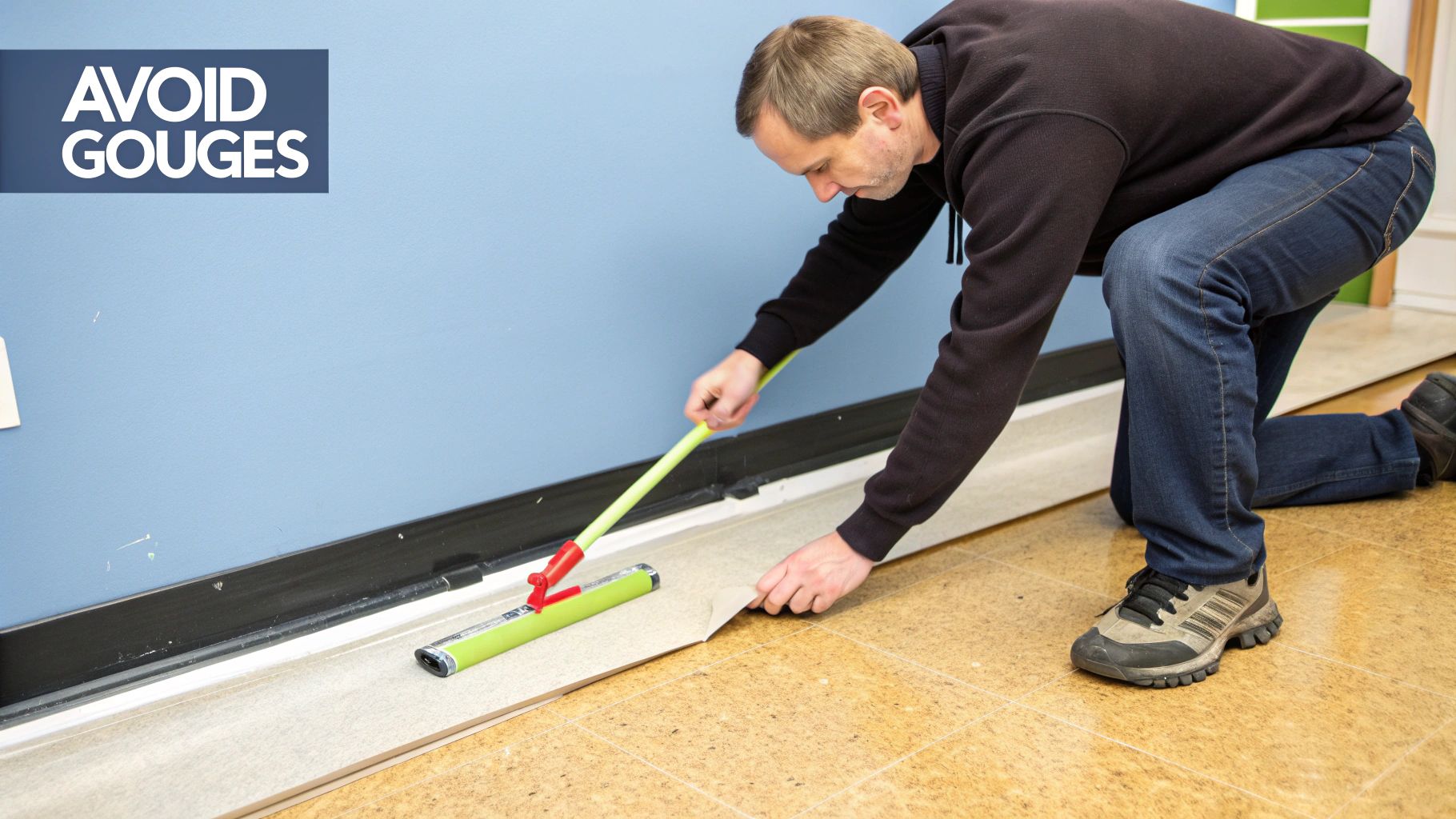
  • Deep Gouges or Scratches: If you can see the raw wood peeking through a scratch, a new coat of finish will just seal that damage in. It won't hide it.
  • Significant Water Damage: Any dark stains, black spots, or boards that have started to warp or cup from moisture require a full sanding to get to the healthy wood underneath.
  • Widespread Discoloration: Has the sun faded the floor near your windows? Or maybe you have gray, worn-out patches in high-traffic hallways where the finish is gone? Those are signs the wood itself needs to be refinished.
  • Wax or Oil Soap Buildup: We often see floors that have been cleaned for years with products like oil soaps, Murphy Oil, or acrylic polishes. These leave a residue that will cause a new coat of finish to peel right off. That contamination has to be sanded away completely, sometimes requiring our specialized hardwood floor wax removal.

We recently helped a family in Huntington, just a stone's throw from Greenlawn, who were getting frustrated with their dull red oak floors. Years of foot traffic had killed the shine, but the wood was still in great shape. Our dust-free Greenlawn hardwood floor refinishing team was able to screen and recoat the entire area, bringing back that original luster in a single day. It’s a perfect example of what this service can do for the right kind of floor.

Floor Restoration Services Compared: Screen & Recoat vs. Full Refinishing

Deciding between a screen and recoat and a full sand and refinish can be tricky. To make it easier for Greenlawn homeowners, we've broken down the key differences to help you see which service fits your floor's condition and your goals for your hardwood floor refinishing in Greenlawn.

Service Feature Screen & Recoat Full Sand & Refinish
Best For Light scratches, dull finish, routine maintenance Deep gouges, water damage, color change, heavy wear
Process Lightly abrades existing finish, applies new topcoat Sands wood to its bare state, applies new stain and finish
Timeframe Typically 1 day (instant with UV-cure) 3-5 days
Cost Starts at $2.00/sq. ft. Higher, starts around $4.00/sq. ft.
Invasiveness Minimal disruption, dust-free process More disruptive, involves heavy machinery

Each process serves a very different purpose. For more detail, check out our other articles on hardwood floor recoating to get a deeper understanding of the process.

Our Screen and Recoat Process for Greenlawn Homes

When you bring us in to care for your floors, you’re getting a team that’s obsessed with the details. We've honed our process over years of working in homes across Long Island, and we want you to know exactly what’s happening every step of the way. Our approach to a screen and recoat hardwood floors job in Greenlawn is all about meticulous prep work and a flawless finish.

It always starts with a deep, professional wood floor cleaning. We're not just talking about a quick sweep. We use specific cleaners to cut through any built-up grime, oils, or residues from old cleaning products that could prevent the new finish from sticking properly. Getting this step right is non-negotiable for a lasting bond.

Once the floor is perfectly clean, we bring out our professional-grade buffing machines. These aren’t the heavy-duty sanders we use for a full refinish. Instead, they’re fitted with a fine-grit screen that gently scuffs up the surface of the existing polyurethane. This light abrasion is what gives the new coat something to grab onto. And because we use advanced dust-free equipment, your Greenlawn hardwood floor refinishing project won’t leave a layer of dust on everything you own.

From Scuffing to Sealing

After screening the entire floor, we vacuum everything up again. And I mean everything. Then we go over it one more time with a tack cloth to pick up any microscopic particles left behind. This is the kind of painstaking detail that separates a truly professional job from a weekend DIY project—it’s how we guarantee a perfectly smooth finish.

This is the thought process we go through before we even start, to make sure a screen and recoat is the right call for your specific floors.
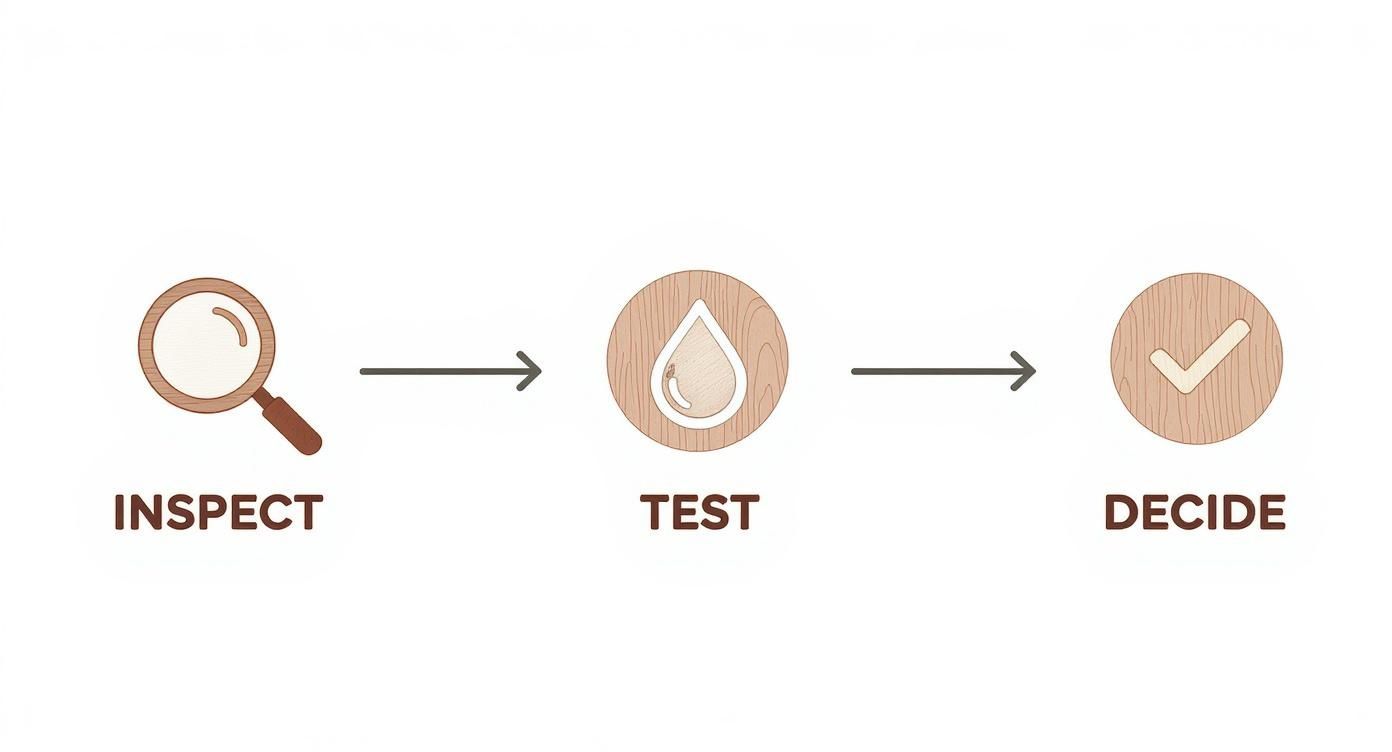
A three-step process diagram: inspect (magnifying glass), test (water droplet), and decide (checkmark).

With the floor perfectly prepped, it's time to apply the new topcoat. This is where you get to choose the level of protection and the final look. We’ll walk you through the options, making sure you get a finish that matches your family’s lifestyle.

  • Silver Traffic Plus: A fantastic single-component (1K) water-based finish that holds up beautifully to normal, everyday household use.
  • Gold Traffic Plus: We step it up to a two-component (2K) water-based finish here, giving you much better scratch resistance.
  • Platinum Traffic Plus: This is a premium 2K finish, but we fortify it with a Nano Wear Oxide Additive for truly superior durability.
  • Diamond Traffic Plus: Our absolute best. It offers incredible scratch resistance and comes with the huge advantage of instant UV-curing.

Modern Finishes for Today's Homes

There's a good reason the floor refinishing market is valued at USD 4.47 billion and growing. People want better, healthier options in their homes. In fact, 62% of consumers now say they prefer sustainable refinishing products. We’re right there with them, always adopting the best and safest technologies available.

For our Greenlawn clients, especially those with kids, pets, or just a busy life, our Diamond finish with UV-curing is a total game-changer. There's no tiptoeing around for days. We cure the finish instantly with a special UV light machine. You can literally move your furniture back in and get back to your life the same day, with zero lingering fumes.

This is what modern floor refinishing looks like: minimal disruption, maximum durability. For a deeper look at every single step, you can see our full Savera screen and recoat process laid out.

Why Go Pro for Your Screen and Recoat?

Sure, some home projects are perfect for a weekend warrior. But when it comes to your hardwood floors, bringing in an expert for a screen and recoat is one of those times where experience makes all the difference. Choosing a professional for your Greenlawn hardwood floor refinishing isn't just about convenience—it's about getting a durable, beautiful result that protects your investment for years to come.

The value is pretty clear. A professional screen and recoat is a fraction of the cost of a full sand and refinish, giving you a chance to bring your floors back to life without breaking the bank. It's hands-down the most budget-friendly path to that "like-new" look.

It's Fast, with Less Upheaval

Let's be honest, you can't just put your life on pause for a home improvement project. That's where the speed of a professional service is a huge plus. We can often get the entire job done in a single day, which is a massive relief for busy Greenlawn families.

This is especially true if you choose our instant UV-curable finish. There's no long, drawn-out waiting period for the polyurethane to dry and harden. You can literally move your furniture back and get back to normal life the very same day. No tiptoeing around for days on end.

A Cleaner, Healthier Home

The number one fear for most homeowners? The dust. Our advanced dust-free sanding system is designed to capture dust right at the source, which means your home stays clean from start to finish. You won't be finding a fine layer of dust coating every single surface for weeks after we leave. This clean approach makes the whole screen recoat hardwood floors process a lot more pleasant.

A professional screen and recoat doesn't just improve your floors' appearance; it actively extends their life. By adding a fresh, durable topcoat, you're giving the wood a new shield against daily scuffs and scratches. This simple step can help you avoid a far more expensive and disruptive full refinishing down the line.

Protecting Your Investment

Your hardwood floors are one of your home’s biggest assets. Keeping them in great shape is key to maintaining, and even boosting, your property's value—a big deal in the competitive Long Island real estate market.

A professional screen and recoat can seriously enhance your home’s appeal and help to increase your home's property value. This isn't just a local trend, either. The global market for wood floor renovation services was valued at around USD 3.1 billion in 2023 and continues to grow, which shows just how much homeowners everywhere value well-kept floors.

Keep That Freshly Recoated Shine for Years to Come

You’ve just given your floors a new lease on life, and now the key is making that beautiful finish last. Thankfully, protecting your investment is less about hard work and more about smart, consistent habits. A little proactive care is the best way to preserve that shine and is a cornerstone of any long-term Greenlawn hardwood floor refinishing plan.

The biggest mistake I see homeowners make is using the wrong cleaning products. Stick to a pH-neutral cleaner made specifically for polyurethane-finished hardwood. Steer clear of things like vinegar, ammonia, or those all-in-one "floor shine" products—they can easily dull or even damage that fresh topcoat you just paid for.
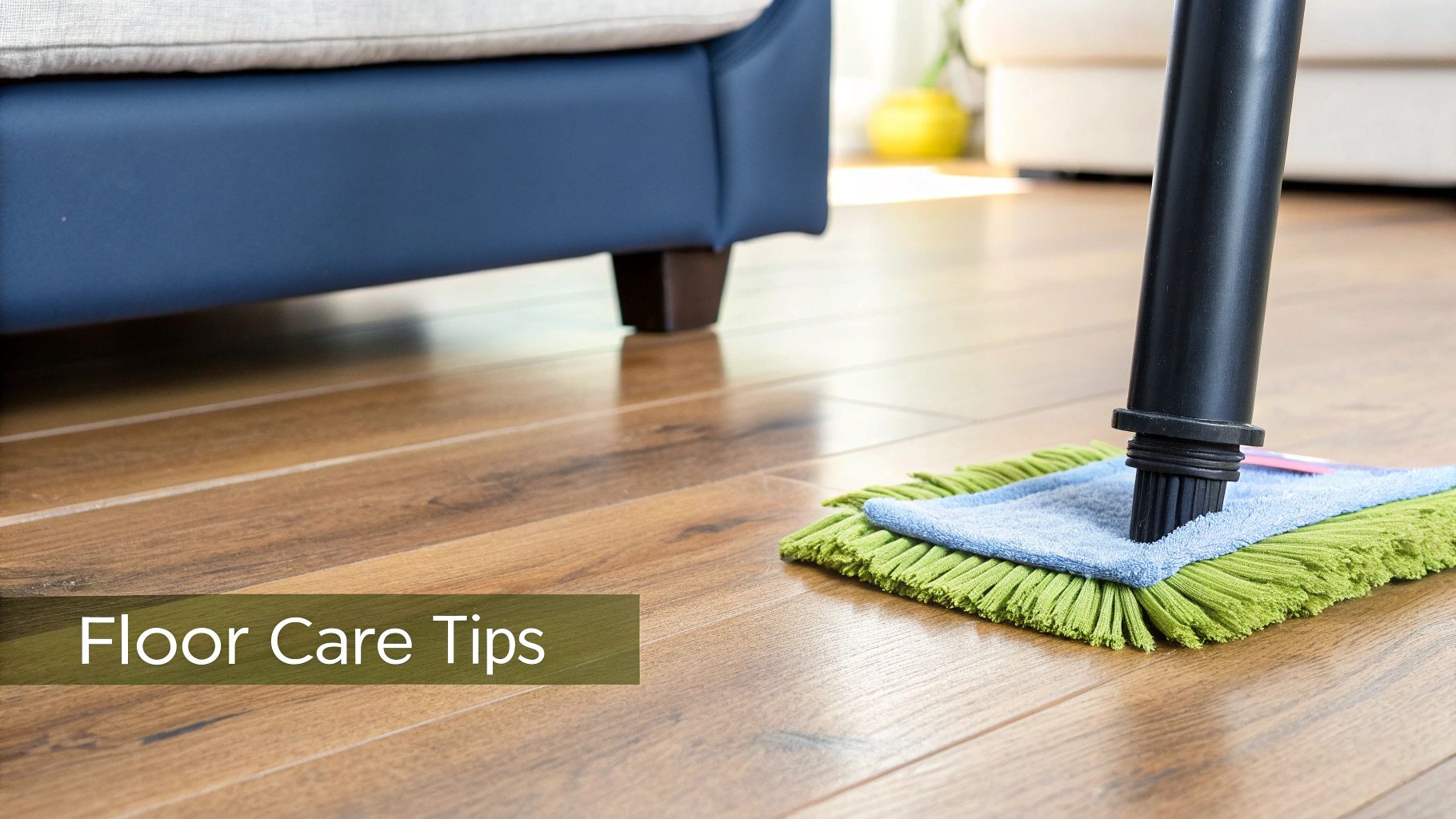
A close-up of a green and blue mop cleaning a shiny hardwood floor, with a blue sofa and "Floor Care Tips".

Small Habits, Big Impact

Beyond the cleaning solution, a few simple adjustments in your daily routine can make all the difference. These little things help you avoid the very scuffs and wear that a screen recoat hardwood floors service is meant to fix in the first place.

  • Felt Pads are Non-Negotiable: Put felt protector pads on the bottom of every piece of furniture that touches the floor. I mean everything—chairs, tables, couches, you name it. This is your number one defense against scratches.
  • Wipe Spills Immediately: Don't let liquids sit. Water and other spills can eat away at the finish and seep into the wood itself, causing real damage. A soft, dry cloth is all you need.
  • Sweep or Vacuum Regularly: Grit, dust, and tiny pebbles are like sandpaper under your feet. Use a soft-bristle broom or a vacuum with a hardwood floor setting to get them up before they can do any harm.

For those looking to enhance and protect the wood over the long haul, specialized finishes like Osmo Polyx Oil can be a fantastic option for maintaining both the look and durability of the floor.

Think of a screen and recoat as preventative maintenance for your home, just like getting your HVAC system serviced. We typically recommend it every 3-5 years, depending on foot traffic. This small investment now helps you completely avoid the cost and disruption of a full sand-down-to-bare-wood refinishing project later on.

Hardwood floors are a significant asset. The global market, valued at around USD 51.38 billion, shows just how much homeowners value them, with North America accounting for over 36.5% of that demand. Protecting that asset starts with proper care. For a deeper dive, check out our guide on how to maintain hardwood floors.

Your Top Questions About Screening and Recoating Floors in Greenlawn

Over the years, we've talked with hundreds of homeowners across Greenlawn and the rest of Long Island about screening and recoating. It's an incredible way to bring life back to tired floors, but it’s only natural to have a few questions before you get started. We want to make sure you have all the answers you need to feel great about your decision for your hardwood floor refinishing in Greenlawn.

Here are some of the most common things people ask us, with straightforward answers to help you plan.

How Long Does a Screen and Recoat Actually Take?

This is where the process really shines. A full sand and refinish is a multi-day affair, but a screen and recoat is refreshingly fast. We know you want your house back to normal as quickly as possible.

For most homes, we can get the entire job done in just one day. This includes the prep, the light screening, and applying the new topcoat. And if you choose our Diamond Traffic Plus finish, which cures instantly with UV light, the timeline gets even better. You can literally walk on the floors and move furniture back in the same day we finish. No waiting, no hassle.

Am I Going to Have to Deal With a Strong Chemical Smell?

That's a huge concern, and a totally valid one. Nobody wants their home filled with harsh fumes, especially if you have kids or pets. The old-school, oil-based finishes were notorious for that lingering chemical smell.

Fortunately, we've moved far beyond that. We almost exclusively use modern, low-VOC (Volatile Organic Compound) water-based finishes. These have a very mild odor that disappears quickly as the floor dries. It’s a much more pleasant experience and far better for your home’s air quality.

I've Used Oil Soap on My Floors. Can They Still Be Recoated?

This is a really important one. Cleaners like Murphy's Oil Soap, Orange Glo, or any wax-based polish can be a dealbreaker for a recoat. They leave behind an oily residue that creates a barrier, making it impossible for a new coat of polyurethane to stick. If we tried to apply a finish over that, it would just peel right off.

If your floors have been cleaned with these products, a standard screen and recoat won't work. The floor will need a special wax removal service first to strip that residue completely. In some cases where the buildup is heavy, a full sanding might be the only way to get down to raw wood that a new finish can bond to. We always test a small, inconspicuous area first to check for any contamination before we begin.

Still have more questions? We’ve answered dozens more on our hardwood floor refinishing FAQ page. Our team is always here to give you clear, honest advice for your home.

Homeowners on Long Island trust Savera Wood Floor Refinishing to restore the natural beauty of their hardwood floors with our dust-free sanding system and advanced UV-curable finishes. Unlike traditional methods, our UV technology cures instantly, so you can move furniture back the same day with no lingering odor or downtime. Choose the perfect refinishing service to match your needs and home traffic. Our dust-free process ensures a clean, beautiful finish every time.

📞 Phone: 631-866-1972
🌐 Website: saverawoodfloorrefinishing.com
📍 Service Area: Greenlawn, Huntington, Centerport, Northport, and surrounding Long Island towns.

Oil vs. Water-Based Polyurethane: Which Is Better for Stony Brook, NY Homes?

When it comes to your Long Island home, the core difference between oil and water based polyurethane boils down to how it looks, how it wears, and how it’s applied. Choosing the right finish is one of the most important decisions you'll make for your hardwood floor refinishing in Stony Brook, NY. Oil-based finishes give floors that classic, warm amber glow that many people love. On the other hand, water-based options dry crystal clear, keeping the wood’s natural color true and preventing any yellowing over time. This single choice can affect everything from your project's timeline to the air quality inside your home.

Choosing The Right Polyurethane For Your Stony Brook, NY Home

Picking the perfect finish is a huge part of any hardwood floor refinishing in Stony Brook, NY. It’s not just about protection; the finish you choose sets the entire mood for the room. Whether you're restoring the red oak in a classic colonial in Setauket or a modern build near Stony Brook University, the polyurethane you select will dictate the wood's color, sheen, and character for years.

To really get a handle on your options, it's smart to look at the various flooring options available for homes to see where hardwood fits in the bigger picture. This perspective helps you appreciate the subtle but important differences among finish types.

At Savera Wood Floor Refinishing, we are experts in guiding homeowners through this decision every day. We’ll talk about your lifestyle, what look you're going for, and the specific wood species in your home to pinpoint the best solution. To get started, this quick overview table breaks down the essentials of oil vs water based polyurethane in Stony Brook, NY.

Oil-Based vs. Water-Based Polyurethane At A Glance

Here’s a snapshot of how these two popular finishes stack up against each other. Think of it as a cheat sheet before we dive into the nitty-gritty details of your Stony Brook hardwood floor refinishing project.

Characteristic Oil-Based Polyurethane Water-Based Polyurethane
Appearance Adds a warm, amber tint; darkens over time Crystal clear; non-yellowing, preserves natural wood color
Durability Softer, more flexible finish; prone to scratches Harder, more brittle finish; excellent scratch resistance
Dry/Cure Time 8-12 hours to dry; up to 30 days to fully cure 2-4 hours to dry; cures in about 7 days
Odor/VOCs High VOCs with a strong, lingering chemical odor Low VOCs with a mild, quickly dissipating odor
Cost Generally less expensive for materials Higher upfront material cost, but faster application
Best For Traditional aesthetics, darker woods, lower traffic areas Modern looks, light-colored woods, high-traffic areas

This table gives you a great starting point, but the best choice often comes down to personal preference and the specific demands of your household.

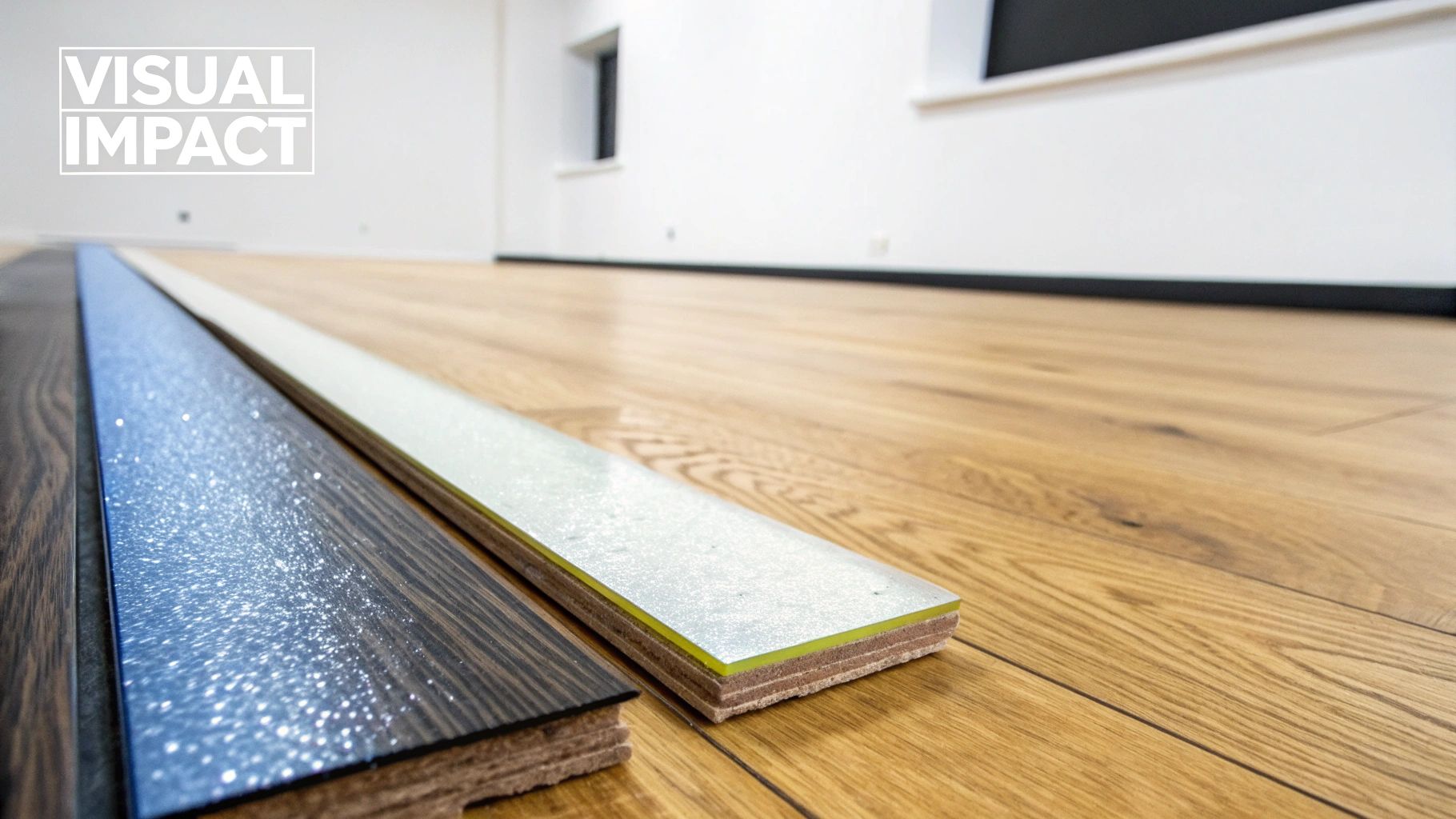
Two wooden boards, one light and one dark, on a wood floor, illustrating finish options.

Comparing the Visual Impact on Your Hardwood Floors

The final look of your floors really boils down to the chemistry of the finish you choose. When you’re weighing the difference between oil and water based polyurethane, the visual outcome is often the number one deciding factor for homeowners planning a hardwood floor refinishing in Stony Brook, NY. Each one interacts with the wood in its own way, and the aesthetic you end up with will be completely different.

Oil-based polyurethane is made with alkyd resins and mineral spirits, giving it a thicker consistency that seeps deep into the wood grain. The result? That rich, warm, amber hue that so many of us associate with classic, timeless hardwood floors. We see this finish chosen a lot for historic properties in Old Westbury or traditional colonial-style homes in Garden City, where it beautifully enhances the natural depth and warmth of woods like red oak.

Three laminate flooring samples, one sparkling, laid on a wooden floor in a bright room.

Color Tone: Oil vs. Water-Based for Stony Brook, NY Hardwood Floor Refinishing

The way the finish transforms the wood’s color is probably the most striking difference you'll notice. An oil-based finish doesn't just sit on top of the wood; it actually changes its color profile through a process called "ambering."

  • Oil-Based Polyurethane: Right from the first coat, it adds a distinct golden or amber tint. This effect continues to deepen over the years as it’s exposed to UV light, giving the floor a glowing, aged patina. It’s the perfect choice if you're going for a cozy, traditional vibe.
  • Water-Based Polyurethane: This one dries crystal clear and stays that way. It's designed to be "water-white," meaning it won’t change the natural color of your wood at all. This makes it ideal for preserving the pale, natural beauty of woods like maple or birch, and it’s a must for the trendy gray-stained floors we’re seeing everywhere in Stony Brook.

This ability to preserve the wood's true color is exactly why water-based finishes have become the go-to for modern homes across Long Island. It delivers a clean, contemporary look that lets the wood's character shine through without any color distortion.

For homeowners in Stony Brook aiming for a lighter, more modern aesthetic, a water-based finish is almost always what we recommend. It guarantees that the beautiful wood color you see right after our dust-free sanding is the color you'll get to enjoy for years to come.

Sheen and Finish Clarity

Beyond just color, the final sheen and clarity of the finish are also noticeably different. Water-based polyurethane is made with acrylic resins suspended in water. This creates a much thinner liquid that flows and levels out differently than its thicker, oil-based cousin.

Because it's thinner, the water-based finish often looks less like a heavy plastic coating and more like an organic part of the wood itself. While both finishes come in a full range of sheens—from matte and satin to semi-gloss and gloss—the water-based options tend to look clearer and more refined. If you want more guidance on how different finishes can impact your floor’s final look, our blog has some great insights on refinishing hardwood floors colors.

Ultimately, the choice comes down to the style you’re trying to create. Are you envisioning a floor with deep, honey-toned warmth that feels lived-in and classic? Or do you prefer a crisp, clean look that puts the raw, natural beauty of the wood on full display? Understanding this fundamental visual difference between oil and water based polyurethane is the first, most important step toward a successful hardwood floor refinishing in Stony Brook, NY.

How Does Each Finish Hold Up to Your Long Island Lifestyle?

When you’re investing in hardwood floor refinishing in Stony Brook, NY, the last thing you want to worry about is how well your floors will stand up to daily life. Between kids, pets, dinner parties, and just the general shuffle of a busy household, durability is everything. The old debate over the difference between oil and water based polyurethane used to be simple, but today's advanced products have completely changed the conversation, highlighting the advantages of water-based polyurethane.

Oil-based polyurethane was the undisputed king of durability for decades. Its secret was a slow, deep cure that created a finish that was softer and more flexible. That pliability made it incredibly resistant to abrasion, so it became the standard for high-traffic homes from Commack to Hauppauge. It could take a hit without chipping easily, but that same softness meant it was also more prone to scuffing and denting over time.

High-Performance Water-Based Finishes Have Changed the Game for Stony Brook, NY Hardwood Floor Refinishing

Modern water-based polyurethane hasn't just caught up; it's sprinted past the old oil-based formulas. The real turning point was the introduction of advanced two-component (2K) water-based finishes. These products are mixed with a hardener right before they’re applied, setting off a chemical reaction that creates an incredibly tough, cross-linked surface.

This isn't just a minor improvement—it’s a fundamental shift in performance. These premium water-based finishes deliver exceptional resistance to both scratches and chemicals, making them a far better match for the demands of an active Long Island family. This superior oil-based polyurethane durability has made it a favorite for many projects.

Scratch vs. Scuff Resistance: What's the Difference?

When we talk about durability, we’re really talking about a few different things. It’s important to understand how each finish handles specific types of wear during a hardwood floor refinishing in Stony Brook, NY.

  • Scratch Resistance: This is where modern 2K water-based finishes have a clear edge. Their hard, dense surface is much better at deflecting the sharp points that cause scratches, like a dog’s claws or the grit that gets tracked in on shoes. This is a huge win for pet owners.
  • Abrasion Resistance: This is the wear and tear from friction—think of a dining chair sliding back and forth or the path worn into a hallway. Oil-based finishes have always been good here, but today’s best water-based products are just as good, if not better.
  • Chemical Resistance: Spills happen. Water-based finishes generally stand up better to common household chemicals that might stain or eat away at an oil-based coating.

For a busy family in Stony Brook, a premium water-based finish like our Platinum or Gold Traffic Plus options offers a harder, more resilient shield against the daily grind. It provides top-tier protection without the long cure times and high VOCs of older oil-based technology.

So, Which Finish Is Truly Tougher for Your Home?

The answer isn't black and white anymore. It really comes down to what "tough" means for your specific situation and the challenges your floors will face every day.

If your biggest worry is preventing scratches from pets and kids' toys, a high-quality, two-component water-based polyurethane is hands-down the better choice. That hard, cross-linked surface creates a barrier that is incredibly difficult to scratch.

But if your floors are in a lower-traffic area and you're more concerned with a finish that can absorb impacts and is a bit more forgiving of dents, a traditional oil-based polyurethane is still a very solid option.

The bottom line is that the old rule of "oil is tougher" no longer applies. With today's advanced formulas, we can offer water-based solutions that provide world-class protection. At Savera Wood Floor Refinishing, we’ll walk you through your family’s needs to select a finish that gives you the perfect balance of stunning looks and lasting strength for your Long Island home.

How Your Finish Choice Impacts Your Project Timeline

Let's be honest, nobody enjoys having their home turned into a construction zone. When you're planning a hardwood floor refinishing in Stony Brook, NY, one of the first questions is always, "How long will this take?" The type of finish you choose is the single biggest factor affecting that timeline. The difference between oil and water based polyurethane is never more apparent than when you're talking about how long you have to wait to get your house back.

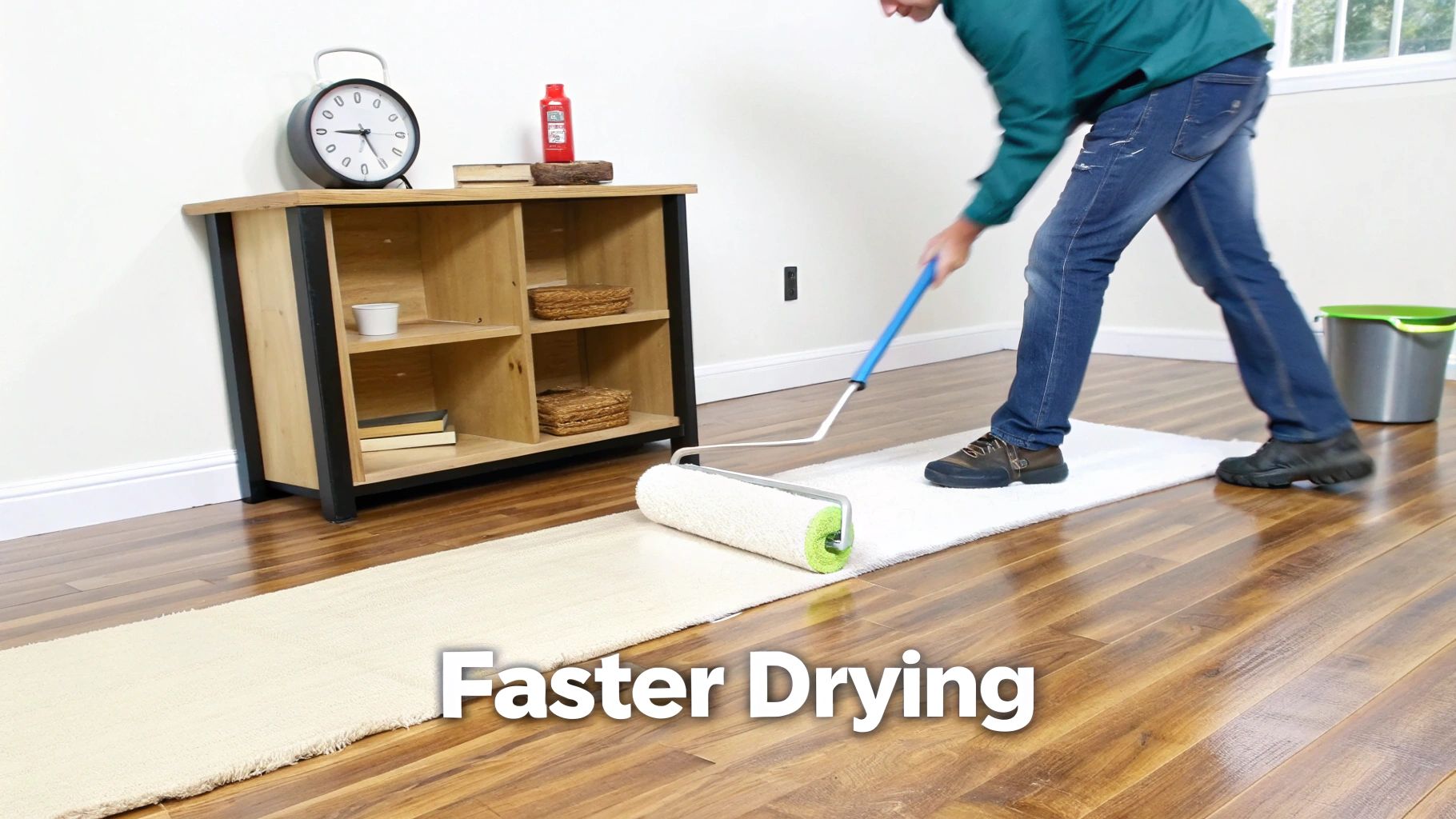
Oil-based polyurethane is the traditional choice, but it definitely requires a healthy dose of patience. A single coat takes a solid 8 to 12 hours to dry enough for another to be applied, which means we can usually only get one coat down per day. That's just the start. The real test is the curing time—the period it takes for the finish to fully harden. With oil, you're looking at up to 30 days. For that entire month, you have to baby your floors, holding off on area rugs and heavy furniture to avoid any damage.

A person applies a product with a large roller to a white runner rug on a wooden floor, with text 'Faster Drying'.

Get Your Home Back Faster with Water-Based Finishes

For busy households in towns like Huntington or Northport, waiting a month simply isn't an option. This is where water-based polyurethane really shines, offering a much faster return to your normal life. The whole hardwood floor refinishing in Stony Brook, NY schedule gets a major upgrade.

  • Dries in a Flash: Water-based finishes are ready for a recoat in just 2 to 4 hours. This efficiency means our team can often apply multiple coats in a single day, dramatically shortening the on-site work time.
  • Cures in a Week: Instead of a month-long waiting game, the full cure time for water-based poly is roughly 7 days. You can get your furniture and rugs back in place in about a week, not a month.

This compressed timeline makes a huge difference, turning a major disruption into a far more manageable project. If you want to see a full project breakdown, you can learn more about how long it takes to refinish hardwood floors on our site.

For a family in a bustling Stony Brook home, reclaiming their living room in a week instead of a month is a game-changer. Water-based finishes just make professional refinishing a less intrusive experience.

The No-Wait Option: Instant UV-Cured Finishes

At Savera Wood Floor Refinishing, we offer an even better solution for those who can't afford any downtime: our incredible UV-curable finishes. This technology is the pinnacle of convenience and completely eliminates the concept of curing time.

As soon as our specialized UV light machine passes over the floor, the finish is 100% cured. Instantly.

This means you can walk on the floors, bring your furniture back in, and roll out the area rugs the very same day we finish the job. There is zero waiting. It's the ultimate combination of speed and durability in the hardwood floor refinishing world, perfect for high-traffic homes or commercial spaces where shutting down is not an option.

Evaluating Health and Environmental Considerations

When we talk about refinishing your floors, the conversation isn't just about color and shine—it's about the air you and your family breathe. Your home's indoor air quality is paramount, especially during a major project like hardwood floor refinishing in Stony Brook, NY. The most critical difference between oil and water based polyurethane on this front comes down to one thing: volatile organic compounds (VOCs).

Oil-based polyurethane is the old-school choice, and it comes with a major downside: high VOCs. As the finish dries and cures, these chemicals off-gas, releasing a powerful, lingering chemical smell that can stick around for weeks. Good ventilation is non-negotiable, and the fumes can be a real problem for kids, pets, or anyone with respiratory issues like asthma.

A Safer Choice for Your Family and Home

This is where water-based finishes really shine. They are a much healthier, more modern alternative because they contain dramatically lower levels of VOCs. The result? A far milder odor that’s gone in a fraction of the time. This makes the whole refinishing process a lot less disruptive and more comfortable for everyone in the house.

For families in Roslyn, Manhasset, and across Long Island, opting for a low-VOC finish is one of the easiest ways to safeguard your home's air quality without sacrificing a beautiful result.

Choosing a low-VOC water-based polyurethane isn't just a technical decision—it's a conscious choice for a safer, healthier living space. That’s a key advantage of modern hardwood floor finishes explained for today’s homeowner.

Environmental Impact and Eco-Friendly Practices

The entire flooring industry is moving towards more responsible, eco-friendly solutions, and for good reason. Water-based polyurethanes are at the forefront of this shift. Because they use water as a solvent instead of petroleum distillates, their environmental footprint is significantly smaller than their oil-based counterparts.

This trend isn’t just about feeling good; it’s a market-driven demand for greener building materials. Choosing a low-VOC, water-based finish brings your home in line with these modern, sustainable practices.

Here at Savera, our advanced water-based systems, like our Gold and Platinum Traffic Plus options, deliver top-tier durability while being much kinder to the environment. We’re committed to providing solutions that protect your floors and the planet. You can read more about our commitment to finishes with low volatile organic compound (VOC) emissions on our blog.

Ultimately, by choosing a modern water-based polyurethane for your hardwood floor refinishing in Stony Brook, NY, you get the best of both worlds: a tough, beautiful floor and a healthier home for your loved ones. For any Long Island family, it’s the smart way to get lasting quality and total peace of mind.

Which Hardwood Floor Finish Is Right for You?

Making the final call on your finish can feel like the make-or-break moment of your entire hardwood floor refinishing in Stony Brook, NY project. You've weighed the aesthetics, durability, timelines, and health impacts, and now it's time to put it all together. The truth is, the best choice isn't found on a simple pros-and-cons list; it's about matching a finish's specific strengths to your home's unique demands and your family's lifestyle.

Let's move past the basic oil vs. water-based polyurethane debate and get into real-world scenarios that Long Island homeowners face every day. This will help you see exactly how each finish performs when it really matters.

Choosing a Finish for Your Home's Style and Location

The character of your home—its age, architecture, and even its location—often points you toward the ideal finish. A great finish should feel like a natural extension of your home's style, not something that clashes with it.

  • For the Traditional Home: If you want that deep, classic amber tone to complement a traditional Saint James home, and you have the time for a longer curing period, an oil-based finish is a solid choice. Its warm glow is fantastic for enhancing the natural richness of woods like red oak and cherry.
  • For the Modern Residence: To protect the beautiful pale tones of maple floors in a contemporary Lloyd Harbor residence, a premium water-based finish is the way to go. It’s perfect when you need a quick turnaround and want to maintain excellent indoor air quality.

Aligning Your Choice with Savera's Refinishing Tiers

Here at Savera Wood Floor Refinishing, we've designed our service packages to give every homeowner a clear, high-performance solution for their hardwood floor refinishing in Stony Brook, NY. We've built our tiers around the industry's best water-based technologies because, frankly, they deliver superior results for today's homes.

Our Recommendation: We find ourselves guiding nearly all of our clients toward our advanced water-based systems. The technology has simply leaped ahead of oil-based options in almost every metric that matters—from scratch resistance and project speed to indoor air quality.

Here’s a quick look at how our packages are structured to meet different needs:

  • Silver Traffic Plus: This is an excellent starting point. It’s a 1K water-based finish that offers great wear resistance for normal household traffic.
  • Gold Traffic Plus: We step it up to a 2K water-based finish here, giving you enhanced scratch resistance for busier homes with more foot traffic.
  • Platinum Traffic Plus: Our most popular choice for a reason. This 2K formula includes a Nano Wear Oxide Additive for truly exceptional durability against scratches and scuffs.
  • Diamond Traffic Plus: This is the ultimate in floor protection. We combine our best 2K water-based finish with our instant UV-curable technology, which delivers unmatched wear and scratch resistance with absolutely zero downtime.

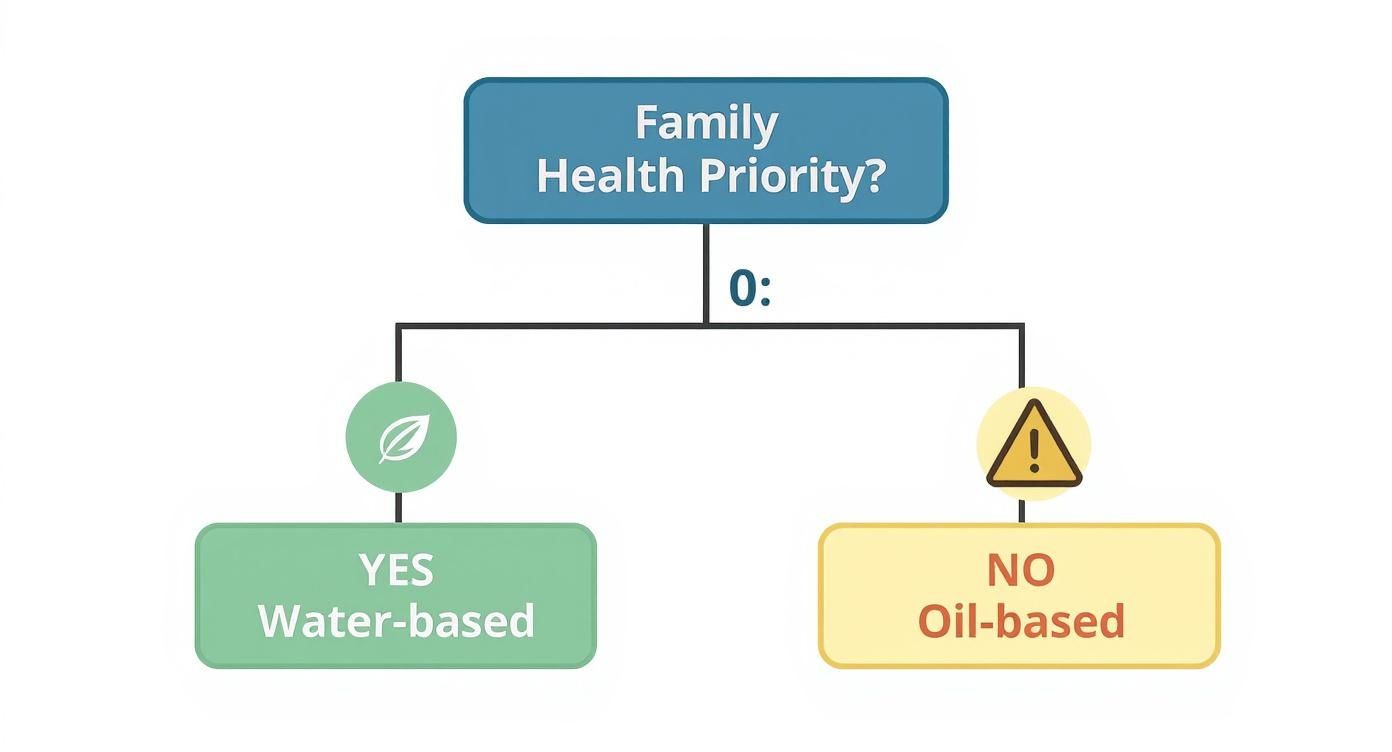
This decision tree helps visualize how prioritizing family health immediately points toward a water-based solution.

Decision flowchart comparing water-based (yes, family health priority) with oil-based (no) options for products.

As the chart shows, if a healthy home environment is high on your list, water-based finishes are the recommended path because of their low VOCs.

While the market has historically leaned on solvent-based (oil-based) polyurethane for its durability, the tide is definitely turning. Water-based coatings are now the fastest-growing segment, driven by homeowners who want safer, more sustainable products without giving up performance. You can read the full research about the polyurethane coating market to see the data for yourself.

Ultimately, the best finish for hardwood floors on Long Island is one that brings you beauty, protection, and complete peace of mind. Let our experts at Savera help you select the perfect system to bring your vision to life.

Your Top Questions About Polyurethane Finishes, Answered

Even with all the details laid out, you probably still have a few questions. Choosing between oil-based and water-based polyurethane is a big commitment for your floors, especially when you're investing in hardwood floor refinishing in Stony Brook, NY. Getting straight answers is key. Here are the most common questions we get from homeowners all over Long Island, with direct answers to help you lock in your decision.

How Long Does Each Type of Polyurethane Finish Last?

This is usually the first thing people ask, and the answer might surprise you: high-quality versions of both finishes last about the same amount of time. When applied by a pro and maintained with a little common sense, you can expect a premium oil-based or water-based finish to last 7-10 years.

The real factors that determine how long your finish holds up have less to do with oil vs. water and more to do with:

  • Product Quality: Professional-grade finishes are simply in a different league than what you find on a hardware store shelf.
  • Number of Coats: A proper finish isn't a single layer. Building up the right number of coats is what creates that tough, protective shield.
  • Your Lifestyle: A floor in a busy house with kids and pets will see more action—and wear—than one in a quiet, shoes-off home.

Can I Put a Water-Based Finish Over an Existing Oil-Based Finish?

Yes, you can—but this is absolutely a job for a professional. Don't even think about trying this yourself. To make it work, the old oil-based finish has to be prepared perfectly.

First, it needs a thorough, professional-grade cleaning. Then, it has to be abraded using a process we call a screen and recoat. This isn't a full sanding; it's a light but crucial step that scuffs up the surface just enough to give the new water-based polyurethane something to grab onto. If that bond isn't created, the new finish will peel right off. At Savera, we've perfected this prep work to ensure a seamless, lasting result.

Will a Water-Based Finish Look Dull Compared to Oil-Based?

Not at all. This is probably the biggest myth out there about the difference between oil and water based polyurethane. Today’s water-based finishes come in every sheen imaginable, from a modern, flat matte all the way up to a mirror-like high gloss.

The real difference isn't in the shine, but the color. A water-based finish gives you a crystal-clear look that lets the wood's true, natural color be the star. It won't add that classic amber tint you get from oil. So, whether you want a soft, subtle glow or a show-stopping shine for your Stony Brook, NY hardwood floor refinishing project, there’s a water-based finish that will deliver.

Is One Finish Easier to Maintain Than the Other?

Nope. When it comes to day-to-day cleaning, the routine is the same for both. Good habits are what will keep your floors looking great, no matter which polyurethane you have.

The Golden Rule of Floor Care: Your best defense is consistent, gentle cleaning. Sweep or vacuum (with a soft brush head!) regularly and wipe up spills as soon as they happen. That alone will do more for your floors than anything else. When you do clean, stick to a pH-neutral hardwood floor cleaner and stay far away from harsh chemicals, vinegar, or steam mops.

Follow those simple rules, and either finish will serve you well for years. It all comes down to picking the right product for your home and lifestyle from the get-go. With the right choice, your hardwood floor refinishing in Stony Brook, NY will protect your investment for years to come.

Homeowners on Long Island trust Savera Wood Floor Refinishing to restore the natural beauty of their hardwood floors with our dust-free sanding system and advanced UV-curable finishes. Unlike traditional methods, our UV technology cures instantly, so you can move furniture back the same day with no lingering odor or downtime. Choose the perfect refinishing service to match your needs and home traffic. Our dust-free process ensures a clean, beautiful finish every time.

📞 Phone: 631-866-1972
🌐 Website: saverawoodfloorrefinishing.com
📍 Service Area: Stony Brook, Setauket, Port Jefferson, Mount Sinai, and surrounding Long Island towns.
Your Guide to Wood Floor Screening

If you've ever looked at your hardwood floors and wished you could turn back the clock just a little—without the cost and chaos of a full sanding job—then you need to know about wood floor screening. For homeowners in Stony Brook, this service is a cornerstone of smart hardwood floor refinishing.

It’s a light refinishing process, often called a "screen and recoat," that refreshes the top protective layer of your hardwood. Think of it as the perfect middle ground for floors that are looking a bit tired from minor surface scratches and general dullness, but aren't damaged enough for major surgery like deep gouges or water stains.

Understanding Wood Floor Screening and Hardwood Floor Refinishing in Stony Brook

Image

Many homeowners we work with in Stony Brook and across Long Island want to bring back that original glow without tearing their house apart. The answer, more often than not, is wood floor screening. It’s an incredibly effective maintenance step that slots perfectly between a deep cleaning and a full-blown sand-down.

It's really a spa day for your floors, not an invasive procedure.

The whole point is to gently abrade, or scuff up, the existing polyurethane finish. We're not taking off any wood here. Instead, we're creating the perfect texture for a new coat of finish to grab onto, forming a strong, durable bond that will last. For homeowners looking for proactive Stony Brook hardwood floor refinishing, this is one of our most recommended services.

When Is Screening the Right Choice?

Knowing when to screen versus when to do a full refinish is one of the most important decisions you can make for your floors. Screening is the ideal route when your floors are only showing surface-level wear and tear.

It's the perfect fix for:

  • Minor surface scratches: Those light scuffs from moving furniture, your dog’s nails, or just everyday foot traffic.
  • A dull or hazy finish: When that beautiful luster has faded over the years, but the wood itself is still in great shape.
  • General loss of shine: It’s all about restoring that clean, just-finished look without changing the floor's color.

For instance, we recently performed a screen and recoat on the beautiful red oak floors of a classic colonial home right here in Stony Brook. The floors were structurally sound but had lost their sheen from years of family life. The screening process brought back their original warmth and protected them for years to come without the disruption of a full sand.

Wood floor screening is a smart, cost-effective maintenance tool. It extends the life of your floor's finish and can delay the need for a more expensive and disruptive full sanding project for years.

When Screening Isn't Enough

But screening isn't a magic bullet for every problem. It definitely has its limits.

It is not the right tool for the job if your floors are dealing with more serious issues. You’ll absolutely need a full Stony Brook hardwood floor refinishing service if you’re seeing:

  • Deep gouges or dents that have gone through the finish and dug into the actual wood.
  • Gray or dark patches where the polyurethane has been completely worn away, exposing raw wood.
  • Serious water damage or dark pet stains that have soaked deep into the wood grain.
  • A desire to change the color or stain of your floors. Screening only refreshes the topcoat; it can't alter the color underneath.
  • Wax buildup from years of using the wrong cleaning products.

Making this distinction is the key to protecting your investment and making sure you get the beautiful, long-lasting results your home deserves.

The Wood Floor Screening Process: A Step-by-Step Guide

Image

Knowing what actually happens during a screen and recoat can make the whole process feel a lot less mysterious. It’s a careful, deliberate method that delivers a like-new finish without turning your home into a construction zone. For homeowners looking for an efficient Stony Brook hardwood floor refinishing service, screening is often the perfect fit. So, let’s walk through exactly what you can expect when our team arrives.

It’s no surprise that services like wood floor screening are in high demand. The global market for wood floor renovation was already sitting at about USD 3.1 billion in 2023 and is expected to jump to USD 5.2 billion by 2032. Why? Because smart homeowners know that maintaining their floors is one of the best ways to protect their property's value.

Step 1: Deep Cleaning and Preparation

You can't build a strong house on a weak foundation, and you can't get a lasting finish on a dirty floor. The first—and most critical—step is a thorough, deep cleaning. Before any equipment even touches the wood, our team gets to work removing every trace of dirt, oil, and old cleaning residues.

This isn't your average weekly mopping. We're talking about a meticulous process to ensure the floor is completely free of anything that could get between the old finish and the new one. We pay special attention to tricky spots like corners and along baseboards where grime loves to hide.

Step 2: The Screening Abrasion

With the floor perfectly clean, it's time for the main event. We bring in a professional-grade buffer, but instead of a polishing pad, we fit it with a specialized abrasive screen. The easiest way to think of this is as a very fine-grit sandpaper, usually around 120-grit.

The whole point here isn't to sand down to bare wood. Not at all. The goal is to lightly scuff, or abrade, the surface of the existing polyurethane. This light scuffing creates thousands of microscopic scratches, giving the surface a "tooth" for the new topcoat to grab onto. We guide the buffer methodically, always moving with the grain of the wood to ensure the texture is perfectly uniform.

This gentle abrasion is the key difference between screening and a full sand-and-refinish. It's all about creating a mechanical bond for the new finish, not stripping the old one away completely.

Step 3: Dust Removal and Applying the New Finish

After screening, a fine, powdery dust from the old finish will be left on the floor. Removing it is non-negotiable. We use powerful vacuums with HEPA filters to pull up every last particle. If even a little bit of this dust gets trapped under the new finish, it will ruin the smooth, clear look we're after.

Once the surface is pristine, we apply a fresh, even coat of high-quality polyurethane. Depending on what works best for your home and lifestyle, we can use:

  • Eco-friendly water-based finishes that are incredibly durable, have low VOCs (fumes), and dry quickly.
  • Advanced UV-cure finishes that are hardened instantly with a special UV light, meaning you can get back on your floors almost immediately.

Our team applies the finish with an expert touch, guaranteeing a flawless layer without any streaks, drips, or bubbles. The result is a beautifully refreshed floor with a tough, protective shield that looks fantastic. To get an even closer look at our specific techniques, you can learn more about the Savera screen and recoat process.

Screening vs. Full Refinishing: Which Is Right for Your Stony Brook Home?

One of the biggest questions we get is, "Do my floors just need a light screening, or is it time for a full sanding?" It’s a great question, and getting it right is the key to saving time, money, and hassle. The choice between these two very different Stony Brook hardwood floor refinishing approaches comes down to one thing: the current condition of your floors.

Think of it like this: wood floor screening is like a professional detailing for your car. It’s perfect for floors that have lost their luster and have some minor surface scuffs but are otherwise in good shape. A full refinish, on the other hand, is a complete restoration. It's what you need for floors with deep scratches, pet stains, or sun damage that a simple screen and recoat just can't touch.

Key Differences at a Glance

A full refinish is an intensive process where we sand the floor all the way down to bare wood. This removes the old finish entirely, along with a very thin layer of the wood itself. It’s the only way to erase deep gouges, fix widespread discoloration, or completely change the stain color. It’s more invasive, creates more dust (even with the best containment systems), and takes a few days to complete.

Screening is much less aggressive. We're not touching the wood at all. The process simply scuffs up the existing top layer of polyurethane, creating the perfect texture for a new coat to bond with. It's quick, clean, and effective for the right situation.

Wood Floor Screening vs. Full Refinishing Comparison

Feature Wood Floor Screening (Screen & Recoat) Full Hardwood Refinishing (Sanding)
Ideal For Light scratches, dull finish, and routine upkeep. Deep scratches, pet stains, color changes, and heavily worn areas.
Process Lightly abrades the existing polyurethane topcoat. Sands the finish and a paper-thin layer of wood completely off.
Time Usually done in just 1 day. Takes 3-5 days from start to finish.
Mess Very minimal dust and disruption to your home. More intensive, even with professional dust-containment systems.
Cost Significantly more affordable. A larger, but necessary, investment for damaged floors.
Outcome Restores that beautiful shine and adds a fresh layer of protection. A completely renewed floor that looks brand new.

As you can see, the right choice really depends on your floor's needs and your end goal.

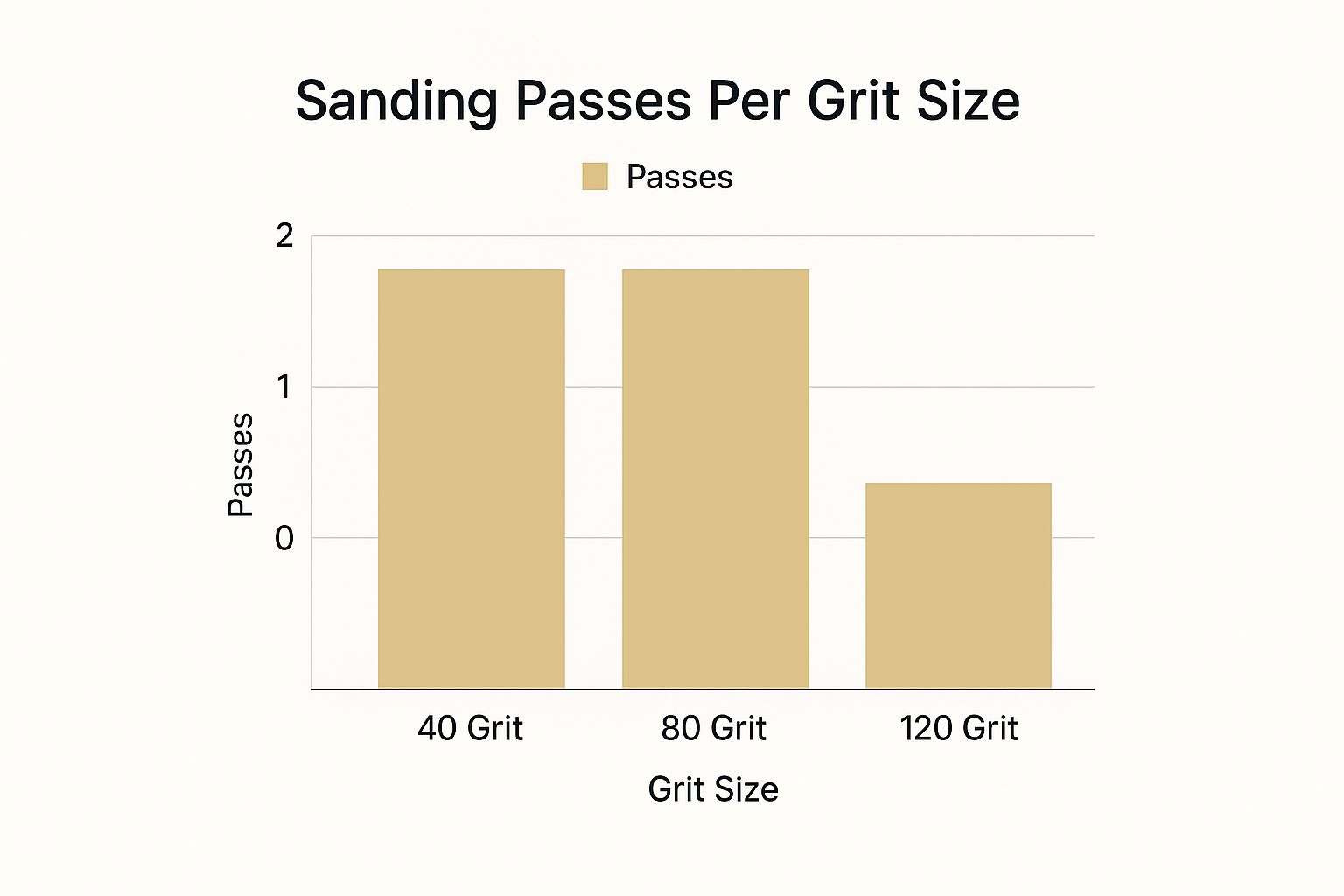
Image

This image does a great job of showing the different sanding passes needed for a full refinish. It’s a far more involved process than the single, light pass we do for a screening.

Ultimately, the decision boils down to this: are you trying to maintain a healthy floor or restore a damaged one? Screening maintains; sanding restores.

Grasping this fundamental difference is the first step to making a smart investment in your home. If you want to dig a little deeper into the terms we use, check out our guide on hardwood floor refinishing vs. resurfacing. Of course, the absolute best way to know for sure is to have an expert take a look.

The Benefits of Regular Floor Screening

Image

So, why is a screen and recoat one of the smartest investments you can make for your floors? It goes way beyond just making them look shiny again. Regular wood floor screening offers powerful, long-term advantages that genuinely protect your home and your wallet.

For anyone considering Stony Brook hardwood floor refinishing, understanding these benefits is crucial. Hardwood floors are a valuable asset, a fact backed by a global market valued at USD 87.7 billion in 2024 and still growing. Maintaining them properly ensures you get the most out of that investment. If you're interested in the numbers, you can learn more about the wood flooring market growth on expertmarketresearch.com.

Significant Cost Savings

Let’s talk money first. A screen and recoat is dramatically more affordable than a full-blown sanding and refinishing project.

By scheduling this service every 3-5 years, you’re protecting the wood and its finish from the kind of heavy wear that forces a more expensive, intensive restoration down the line. Think of it as preventative care—a small investment now to avoid a massive one later.

Unbeatable Convenience and Speed

We all know one of the biggest headaches with any home improvement project is the disruption. A full refinish can put a room out of commission for several days.

A wood floor screening, on the other hand, is refreshingly fast.

  • Minimal Disruption: The whole thing is usually done and dusted in a single day.
  • Less Mess: Because we aren't sanding down to bare wood, the process generates far fewer airborne particles. If you want an even cleaner option, check out our guide on dust-free hardwood floor refinishing.
  • Quick Return to Normal: With traditional finishes, you can often be back walking on your newly refreshed floors that same evening. With UV-cure finishes, the floor is ready for use immediately.

This speed and convenience make it a no-brainer for busy households.

Extending the Life of Your Floors

Here’s the most important benefit: preservation. Every time a hardwood floor is fully sanded, a thin layer of wood is stripped away forever. While that’s necessary to fix deep damage, you can only do it so many times before the wood gets too thin.

By regularly screening your floors, you're not removing wood. Instead, you're adding a fresh layer of durable polyurethane. This new coat acts as a shield, taking the daily abuse from foot traffic, scuffs, and spills. It preserves the actual wood underneath and can dramatically extend its lifespan.

DIY Screening vs. Hiring a Professional

The thought of renting a buffer for the weekend and screening your wood floors yourself is definitely tempting. On paper, it looks like a simple way to save a few bucks. But this is one of those home projects where the DIY risks can quickly overshadow the savings, especially when you look at the quality and lifespan of the final result.

While you can technically do it yourself, the process is loaded with little traps that can turn a quick refresh into a seriously expensive repair job. One small slip-up with that heavy-duty equipment can leave permanent damage, putting you in a worse spot than when you started. That's why getting professional advice for your Stony Brook hardwood floor refinishing project is so important.

Common DIY Screening Mistakes

Without years of hands-on experience, it's incredibly easy to make mistakes that are tough, if not impossible, to undo. We’ve seen homeowners run into the same handful of problems time and time again—issues that trained pros know how to avoid.

Here are the most common DIY challenges:

  • Using the Wrong Screen Grit: Picking a screen that's too coarse will chew right through your existing finish, leaving deep, permanent swirl marks. On the flip side, a screen that's too fine won't create enough "tooth" for the new coat to grab onto, leading to peeling polyurethane months down the line.
  • Imperfect Cleaning: Even the tiniest speck of dust, a single pet hair, or any leftover residue on the floor before you apply that final coat will be sealed under the new finish forever. We use commercial-grade vacuums and special tacking methods to get a perfectly pristine surface.
  • Uneven Polyurethane Application: Spreading a finish smoothly and evenly is a true art form. DIY jobs often end up with obvious streaks, tiny bubbles, roller marks, and "holidays" (the industry term for missed spots), all of which scream unprofessional.

The Professional Advantage

Hiring an experienced crew isn't just about dodging mistakes; it's about getting access to superior equipment, professional-grade materials, and years of hard-won expertise. A professional wood floor screening delivers a level of quality that a rental machine from a big-box store just can't touch. We use commercial-grade buffers for consistent abrasion and powerful dust containment systems to keep your home clean.

The real value a professional brings is foresight. We can test for hidden contaminants like wax or silicone from old cleaning products, which are notorious for causing "fish-eye" blemishes and complete finish failure.

Plus, we have the skill to apply modern, high-quality finishes like eco-friendly, fast-drying options that give you better durability and a beautiful, even sheen. This isn't just about making your floors look good for a few weeks; it's about protecting your investment for the next several years. In the end, professional work ensures your floors aren't just beautiful—they’re properly protected.

Caring For Your Newly Screened Floors

So, your floors look incredible after a fresh screening—now the trick is keeping them that way. Protecting that beautiful new finish doesn't take much work, just a bit of know-how and consistency. A simple maintenance plan will go a long way in making that just-finished look last for years.

First things first: give your floors time to breathe. A new coat of polyurethane needs time to fully cure and harden. While you can walk on it gently (in socks!) after about 24 hours, it's best to hold off on putting down heavy furniture or area rugs for at least 7 days. This gives the finish a chance to reach maximum hardness and prevents any accidental imprints.

Daily and Weekly Maintenance Tips

It's the small, everyday habits that make the biggest impact. The goal is to stop tiny particles of dirt and grit from grinding away at your finish like sandpaper.

  • Sweep or Dust Mop Frequently: Grab a microfiber mop. It’s your best friend for trapping dust and dirt before it gets ground in underfoot.
  • Place Mats at Entrances: A good quality mat both inside and outside your doors will catch the vast majority of grit, water, and debris before it ever hits your wood floors.
  • Use Furniture Pads: Stick felt pads on the legs of all your furniture. Pay special attention to chairs and tables that get moved around a lot.
  • Keep Pet Nails Trimmed: This is a big one. Keeping your furry friend's nails trimmed is one of the most effective ways to prevent those fine, hairline scratches that can build up over time.

The Right Way to Clean

When it comes to cleaning, less is always more. You should never use a steam mop, wax, or any kind of oil-based soap. These products can either damage the polyurethane finish or leave behind a dulling residue that makes it impossible to screen the floors again in the future.

The best approach is to use a pH-neutral cleaner made specifically for hardwood floors. Just lightly mist a small area and immediately wipe it dry with a clean microfiber mop. This kind of proactive care isn't just about looks; it's also a more sustainable way to manage your home. Choosing to maintain and preserve what you have is a cornerstone of eco-friendly living.

FAQs About Hardwood Floor Refinishing in Stony Brook

We get a lot of the same questions from homeowners thinking about a screen and recoat. Let's clear up the confusion so you can feel confident about your Stony Brook hardwood floor refinishing decision.

How Long Does Wood Floor Screening Take?

This is one of the best parts—it’s fast. Unlike a full refinish that can turn your life upside down for days, a professional screen and recoat is usually done in just one day. You can often walk on your beautifully refreshed floors that very same evening, making it a game-changer for busy households.

Can screening remove pet stains or deep scratches?

Screening works wonders on minor surface scratches and light scuffs that haven't broken through the finish to the bare wood. However, it cannot fix deeper damage. If you have deep gouges, dents, or dark pet stains where the finish has worn away, you'll need a full sanding and refinishing job to properly restore the wood.

How do I know if my floors can be screened?

Your floors are likely a perfect candidate if they just look a bit dull or have light scratches, but the finish is still intact everywhere else. A quick trick we tell homeowners: put a few drops of water on a high-traffic spot. If the water beads up, your finish is still doing its job. But if it soaks in and darkens the wood, the finish is gone, and you’ll need a full Stony Brook hardwood floor refinishing service to bring them back to life.

What's the difference between a UV-cure finish and a traditional finish?

Traditional water-based finishes are durable and low-odor, but they require several days to fully cure and harden. A UV-cure finish is a more advanced option where the coating is instantly hardened by a special ultraviolet light machine. The major benefit is speed—you can move furniture back and use your floors immediately, making it ideal for high-traffic homes or commercial spaces.

📞 Phone: 631-866-1972

🌐 Website: saverawoodfloorrefinishing.com

📍 Service Area: Stony Brook, Setauket, Port Jefferson, Miller Place, Mount Sinai, and surrounding Long Island towns.
New Homeowner Offer