Tag Archives: floor repair

Should You Refinish or Replace Hardwood Floors in Setauket?

If you are a Setauket homeowner looking at scratched, dull, or water-marked hardwood floors, your first question is probably simple, can this floor be saved, or do I need to replace it? In many Setauket hardwood floor refinishing projects, the answer comes down to whether the damage is only on the surface or deeper in the boards. If the wear is cosmetic, refinishing is usually the smarter move. If boards are warped, water-stained, or structurally compromised, replacement becomes the better call.

That decision matters in Setauket, where many homeowners are trying to protect original oak floors, keep the character of older homes, and avoid turning a fixable problem into a full renovation. Refinishing usually costs about $3 to $8 per square foot, while full replacement commonly runs $8 to $28 per square foot, which is why the first question should be, is this floor truly worn out, or just worn down? (cost comparison guide)

Across Setauket, that choice shows up in everyday spaces, scratched oak in raised ranches off Nicolls Road, faded colonial floors near Frank Melville Memorial Park, and water-marked boards in busy kitchens and family rooms near East Setauket and Old Field. The good news for homeowners is that many of these floors can still be restored. When the wood is sound, modern refinishing keeps the original material, avoids unnecessary tear-out, and cuts down on the mess, cost, and disruption of full replacement.

The quickest way to tell is to separate surface wear from structural damage. Scratches, dull finish, and light staining usually point to refinishing. Warping, cupping, delamination, or repeated sanding history point toward replacement, or at least a targeted board swap before any refinishing work begins.

Setauket Hardwood Floor Refinishing Guide

A homeowner in Setauket can walk into a sunny colonial near Main Street, see worn oak boards, and assume the whole floor needs to come out. That is rarely the first move. For hardwood floor refinishing in Setauket, the smarter path is usually to preserve the floor when the wood is still sound and save replacement for floors that are damaged beyond what sanding can fix.

The practical rule is straightforward, if the floor is structurally stable and the problem is cosmetic, refinishing is the right answer. If boards are warped, soft, or water-stained through a large portion of the room, replacement starts making more sense. For homeowners who want to keep the original character of a Setauket home, that distinction matters as much as the budget.

One useful local habit is to think like a property inspector, not just a decorator. A wood floor in Setauket can look tired from years of coastal humidity, winter grit, and everyday Long Island living and still be a good candidate for restoration. For extra homeowner guidance on everyday care, cleaning and protecting hardwood floors is worth a look because maintenance often decides how far a floor can go before major work is needed.

Practical rule: if the floor still feels solid underfoot, refinishing is usually the first solution to explore.

Savera's approach also includes a middle ground that many homeowners overlook, targeted board replacement. That matters when one or two damaged boards would ruin the appearance of an otherwise healthy floor. For readers comparing service options, the internal reference on floor-refinishing wood gives helpful context on how wood floors are assessed before any sanding begins.

Assessing Your Setauket Floors, A Homeowner's Checklist

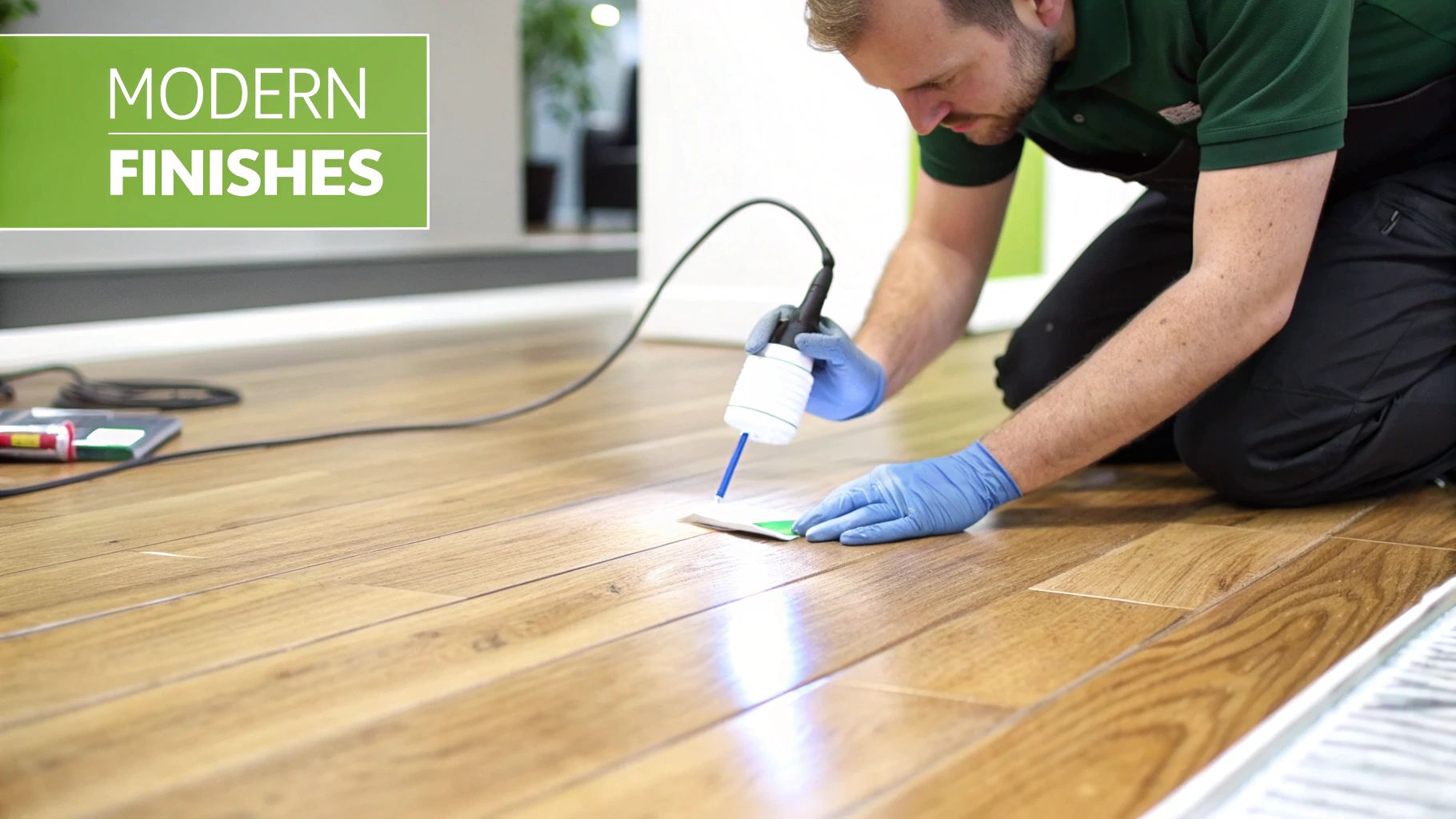
A man kneels on a hardwood floor, closely inspecting a small scratch or gap in the wood.

Setauket homes often have a mix of older solid oak, later additions, and updates that used engineered materials in select rooms. That mix makes a careful inspection more important than a quick glance. The goal is to figure out whether the floor needs a cosmetic refresh, a board-level repair, or a full replacement.

A simple field check helps narrow it down fast:

  • Surface scratches only. If the damage is mostly in the finish and not deep into the wood, refinishing usually solves it.

  • Deep gouges or isolated broken boards. A few bad spots can often be replaced before sanding, which keeps the rest of the floor intact.

  • Warping or cupping. These signs usually point to moisture issues, and sanding alone will not correct instability.

  • Dark staining or recurring water marks. That often means the wood has absorbed moisture, which pushes the decision closer to replacement.

  • Loose or hollow-feeling sections. That can signal subfloor or fastening problems, not just a surface issue.

For damaged floors, a good decision point is whether the problem is localized or widespread. Flooring guidance says replacement starts making more sense when more than 30% of the floor is damaged, warped, or water-stained, while solid 3/4-inch hardwood can usually be refinished 5 to 7 times because each sanding removes only about 1/32 inch of wood (floor lifespan guide). That is especially relevant in older Setauket and East Setauket homes where original boards may already have a long sanding history.

If you are unsure, a good local comparison point is the type of work done on nearby Long Island homes in places like Merrick, where the same condition-based approach is used to decide whether restoration or replacement makes more sense. The internal page on when to refinish hardwood floors is a useful checklist if you want a second pass before calling in a crew.

Screen and Recoat also belongs in the conversation when the floor still has good life remaining. It is a lighter refresh for pine, red oak, or white oak, where the existing finish is lightly abraded and a fresh protective coat is applied.

The Modern Setauket Approach to Hardwood Floor Refinishing

A comparison chart showing how modern hardwood floor refinishing by Savera eliminates dust, disruption, and harsh chemicals.

Old-school sanding used to mean a house full of dust and a long wait before furniture could come back. Modern Setauket hardwood floor refinishing works differently. The process can be controlled, cleaner, and much easier for families living in the home while the work is happening.

Dust-free sanding changes the Setauket homeowner experience

A dust-controlled refinish is not just a marketing phrase. Savera's HEPA containment system is designed to capture 99.8% of wood dust at the source, which helps keep dust out of the living space and away from the HVAC system (Savera dust containment). That matters in occupied Setauket homes, especially where pets, kids, or allergy-sensitive family members are present.

The workflow is simple in concept, sanding is still sanding, but the containment is much more disciplined. In practice, that means less cleanup on the homeowner's side and a better environment while the work is underway. For families in Setauket balancing renovation with everyday life, school schedules, pets, and work-from-home routines, that difference is huge.

The cleanest refinishing jobs are the ones where the equipment does the containment work before dust has a chance to spread.

UV-cure finishes solve the downtime problem in Setauket homes

The other major change is curing. Traditional professional finishes can take 24 to 72 hours for initial cure and days for a full cure, while UV systems harden the floor instantly when exposed to UV light, letting homeowners walk on it and move furniture back the same day (UV cure reference). That is one reason UV-curable finishing fits so well in busy Setauket homes.

For readers comparing construction choices, Compare solid vs. engineered flooring is useful background because the flooring type determines how much sanding is even possible. In many Setauket homes with solid oak, refinishing is often the natural fit. In engineered floors, wear-layer thickness decides whether the job is possible at all.

Seamless Setauket Repairs, The Savera Board Replacement Process

A five-step infographic showing the professional hardwood board replacement process by Savera, including assessment, removal, and blending.

A floor with one ruined board does not need to be treated like a total failure. That is where perfectly integrated board replacement comes in. It is the middle-ground solution that saves money, keeps the original floor, and avoids tearing out healthy material just to fix a local problem.

How matching and installation work in Setauket homes

The first step is a careful assessment. The damaged board has to be identified correctly, but the matching work matters just as much. Grain, species, board width, and the age of the existing floor all affect how visible the repair will be.

After that, the damaged board is removed with dust-controlled tools so the surrounding boards stay stable. A new board is then fitted level and secured so it does not telegraph as a weak spot later. The final step is the craft part, sanding, stain matching, and finish blending so the repair disappears into the rest of the floor.

A good example is a classic Setauket colonial with oak flooring where only a few boards were damaged by water near an exterior wall. In a case like that, replacing the bad boards and blending them into the original field can preserve the room's character without committing the homeowner to a full replacement. The internal page on replacing hardwood boards at Head of the Harbor offers a useful local reference point for that kind of selective repair.

Why blending matters more than the swap itself in Setauket

The swap is the easy part. The visual match is what separates a repair that looks temporary from one that feels built in. UV-curable finish helps here because it lets the new work harden immediately, so the repair can be layered and blended without waiting through a slow multi-day cure.

Savera's HEPA containment system is designed to capture 99.8% of wood dust at the source (Savera dust containment), which supports the repair process by limiting mess while boards are removed and replaced. That is especially helpful in occupied Setauket homes where one damaged section sits beside a room the family still needs to use.

Setauket Cost and Timeline Expectations for Your Flooring Project

For most Setauket homeowners, the decision comes down to money, time, and how much original wood is worth saving. Refinishing costs about $3 to $8 per square foot, while replacement commonly runs $8 to $28 per square foot, which is why refinishing can save 60% to 80% in many cases (cost comparison guide). That gap becomes even more important in larger rooms or whole-floor projects in Setauket colonials, ranches, and updated family homes.

Setauket Flooring Project Cost and Timeline Comparison

Service Estimated Cost per Sq. Ft. Typical Timeline
Wood Floor Cleaning Starts at $1.50 Usually a short visit
Screen & Recoat Starts at $2.00 Often a one-day project
Screen & Recoat with color correction Starts at $2.50 Usually a short project
Silver Traffic Plus $4.00 Standard refinishing timeline
Diamond Traffic Plus $5.00 Standard refinishing timeline, with UV cure benefits
Instant UV-Curable Finish $1.00 Same-day usable finish
Full replacement Commonly $8 to $28 Longer tear-out and installation timeline

Those are service benchmarks, not a quote, but they help Setauket homeowners budget realistically. A standard refinish is usually far less disruptive than replacement because the original floor stays in place. Replacement also creates more variables, including demolition, material selection, and installation sequencing.

Budget rule: if the floor can be saved safely, refinishing usually protects both the wallet and the original wood.

A local example is a set of oak floors in a Setauket colonial where wear was mostly cosmetic. A refinish kept the character of the home and avoided the cost of new material. On the other hand, a heavily damaged room with warped boards would be better served by selective board replacement or full replacement, depending on how much of the floor is compromised.

The internal pricing reference on price to redo hardwood floors can help homeowners compare service levels before they call for an estimate.

Frequently Asked Questions About Hardwood Floors in Suffolk County

How should Suffolk County homeowners prepare before refinishing starts

Move furniture out of the work area, clear rugs and small items, and make sure pets have a separate space. In busy Suffolk County homes, especially in Setauket, Stony Brook, and Port Jefferson, it also helps to plan around school pickups, work-from-home hours, and everyday foot traffic so the crew can keep the project moving cleanly.

Can you match older oak floors in Setauket and nearby North Shore homes

Yes, custom stain matching is often essential in Suffolk County homes with older oak floors. Many homes in Setauket, East Setauket, and Old Field have original boards with years of patina, sunlight fade, and color variation, so the match has to reflect how the floor looks now, not how it looked when it was first installed.

What is the best way to protect refinished floors during Suffolk County winters

Use a dry microfiber mop, clean spills quickly, and avoid soaking the floor with water. In Suffolk County, winter grit, wet boots, and salt tracked in from driveways and entry paths can wear down the finish faster, so entry mats and felt pads under furniture make a big difference.

Are engineered floors common in Suffolk County additions and remodels

Yes, especially in later additions, updated kitchens, and remodeled lower levels. Some engineered floors can be refinished if the wear layer is thick enough. If the veneer is too thin, or if the floor is cupped or delaminated, replacement is usually the safer path.

Can one damaged board be replaced without redoing the whole room

Yes, and that is often the smartest option in Suffolk County homes where most of the floor is still in good shape. If a few boards near an exterior door, kitchen entry, or window wall were damaged by moisture, a targeted repair can fix the problem without turning it into a full-room replacement.


Homeowners across Setauket and the surrounding North Shore trust Savera Wood Floor Refinishing to restore the natural beauty of their hardwood floors. Our dust-free sanding system and advanced UV-curable finishes provide a modern alternative to traditional refinishing methods. With UV technology that cures instantly, you can move your furniture back the same day, no lingering odors, no downtime. Whether you are looking for a Scandinavian whitewash, a natural raw wood look, a soft warm amber tone, or a custom stain to complement your home, we have the perfect refinishing solution for your style and home traffic. All our services include dust-free containment and low-VOC, water-based finishes for a healthier, cleaner home environment. For homeowners seeking fast results, our UV-cured finish gets your floors ready the same day, so you can enjoy your beautifully restored hardwood floors immediately. Transform your hardwood floors with Savera Wood Floor Refinishing, clean, modern, and stunning every time!

📞 Phone: 631-866-1972
🌐 Website: saverawoodfloorrefinishing.com
📍 Service Area: Setauket, Stony Brook, Port Jefferson, East Setauket, Old Field, and surrounding Suffolk County towns.

A Homeowner’s Guide to Oak Floor Refinishing on Long Island

Staring at oak floors that have seen better days can be disheartening. Those scratches, dull spots, and discolored patches tell a story, but it's probably not the one you want your home to tell. For homeowners on Long Island, restoring the classic beauty of oak is a top priority. The good news is, you don't have to live with worn-out floors. Professional oak floor refinishing in Setauket is one of the smartest, most effective ways to bring that wood back to its former glory. It's more than a simple repair; it's an investment that restores your home's character and can seriously boost its market value.

Why Oak Floor Refinishing Is a Smart Investment for Long Island Homes

The timeless appeal of hardwood is undeniable, especially the classic red and white oak that graces so many homes on Long Island, from historic colonials in Setauket to sprawling ranches in Commack. It’s a huge selling point. But life happens, and over time, that beauty gets buried under the wear and tear of daily activity. High-traffic areas get worn down, furniture leaves its mark, and the sun can bleach the color right out of the wood.

Thankfully, professional oak floor refinishing acts like a reset button, erasing years of damage and revealing the wood's original warmth and beauty.

For many homeowners, the idea of refinishing conjures up images of dust everywhere and days of disruption. That used to be the case, but modern techniques have completely changed the game. At Savera Wood Floor Refinishing, we use advanced methods that make the process cleaner, faster, and far more convenient than you might think.

  • Dust-Free Sanding: Our state-of-the-art sanding equipment is connected to powerful vacuums that capture over 99% of the dust right at the source. This means the air in your home stays clean, and you can forget about that massive, gritty cleanup.
  • Instant-Cure UV Finishes: We specialize in innovative UV-curable finishes that harden the second they're exposed to a special ultraviolet light. No waiting, no tiptoeing around for days. You can literally move your furniture back and walk on your floors the very same day, without any harsh, lingering chemical smells.

Project Example: Restoring a Setauket Colonial

Picture a classic colonial home right here in Setauket. The original white oak floors have gone dull and tired. The entryway and kitchen have obvious wear patterns from years of foot traffic, the living room is covered in tiny scratches from kids and pets, and the spot by the big sunny window has faded unevenly.

Instead of tearing everything out—a costly and messy ordeal—a professional oak floor refinishing in Setauket can tackle all of these issues at once. By sanding down that thin, damaged top layer and applying a fresh, durable finish, we can make those floors look brand new again. It's the perfect way to preserve the home's historic charm while getting it ready for another few decades of family life.

The Lasting Value of Oak

There's a reason oak has been a go-to choice for generations. It’s incredibly durable and has that classic, beautiful grain everyone loves. White oak, in particular, is still a powerhouse in the flooring world. In fact, it accounted for nearly 29.7% of the U.S. wood flooring market revenue, largely because it's so hard and stands up to wear so well.

Industry experts see the demand for natural-looking woods like white oak only continuing to grow, which makes it a fantastic, future-proof choice for your home. This isn't just a trend; it's a testament to the wood's enduring appeal. This means that putting money into your oak floors is an investment that truly pays off.

When you look at the best home renovations for resale value, you'll find that bringing hardwood floors back to life is consistently one of the top projects. It boosts your home's appeal from the moment someone steps inside and catches the eye of buyers who know and appreciate quality.

The Oak Floor Refinishing Journey From Start to Finish

Knowing what really happens during a professional oak floor refinishing project can take a lot of the stress out of the equation. It's not just a messy job; it’s a meticulous process with clear stages, all aimed at restoring your floors to their former glory without completely upending your life. We believe in being upfront, so let’s walk through exactly what you can expect when our team shows up at your door for your hardwood floor refinishing in Setauket.

It all starts with a thorough, in-person assessment. This is where we get on our hands and knees to really look at your oak floors, spotting everything from deep gouges to areas faded by the sun. We’ll talk about what you want to achieve, measure the space, and go over your stain and finish options. The goal is to create a plan that fits your vision for your Long Island home perfectly.

Preparing for a Flawless Transformation

Once we’ve got a solid plan, the first real step is prepping the room. We carefully move all your furniture, rugs, and decor out of the way. It might seem like a bit of an upheaval, but this step is absolutely critical. It gives us the clear space we need to work efficiently and, more importantly, keeps your belongings safe. We also seal off doorways to keep the rest of your home clean.

Next up is the most important part of the whole process: the sanding. This is where the real transformation happens. Using our state-of-the-art equipment, we methodically sand away the old, worn-out finish, taking all the surface-level scratches, scuffs, and stains with it. What's left is a fresh, raw layer of oak—the perfect blank slate for a new stain and finish. You can see how we keep the air in your home clean by capturing over 99% of particles by reading about our dust-free hardwood floor refinishing process.

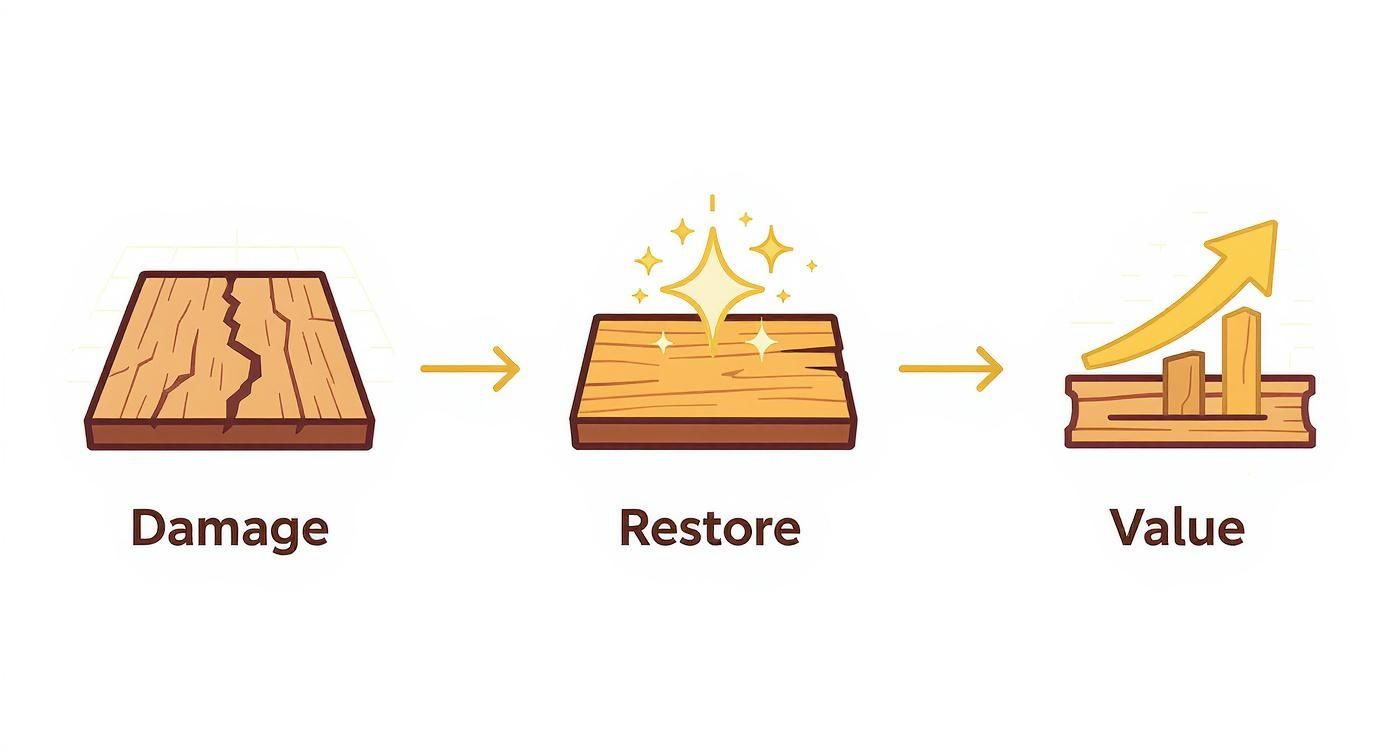
This simple illustration captures the essence of what we do—turning a worn-out floor into a valuable feature of your home.

An illustration showing a damaged wooden floor plank being restored, leading to increased value.

It’s a clear visual of how we take something damaged and bring back its original strength and beauty, boosting your home’s appeal and value in the process.

Applying the Perfect Stain and Finish

After sanding the oak down to a silky-smooth surface, we get to the fun part: staining. This is where your style really shines through. Whether you’re looking to bring back the wood's natural golden tones or go for a completely different look, we apply the stain with precision to get a rich, even color that highlights the beautiful grain of the oak.

The last and arguably most crucial step is applying the protective finish. This is the clear coat that acts as a shield, protecting your beautiful oak floors from everything life throws at them. While we have a few great options, our UV-curable finish is hands-down the most popular choice for homeowners.

Think of it this way: traditional finishes are like paint that needs to air-dry over several days. Our UV finish is different. It’s cured instantly with a special light, hardening in seconds. That means no chemical smells hanging around and no long wait times. You can literally move your furniture back in the same day.

We saw this process work wonders in a historic Huntington Bay home recently. The red oak floors had some nasty water damage near a set of French doors, leaving dark stains and a dull, lifeless look. Here’s how we tackled it:

  1. Assessment: We first confirmed the water damage was only on the surface and that the wood itself was still solid.
  2. Sanding: Our team carefully sanded down past the water stains, getting to the clean, undamaged wood underneath.
  3. Staining: We then applied a custom-mixed stain to make the repaired spot blend in perfectly with the rest of the floor.
  4. Finishing: Finally, we sealed the entire floor with our Diamond Traffic Plus UV-cure finish to give it maximum protection against foot traffic and the sun streaming through those doors.

The final result was a gorgeous, seamless floor that looked brand new. We managed to preserve the home’s classic character while giving it a tough, modern finish that will last for years. Every single step played a part in that beautiful transformation.

Exploring Modern Oak Floor Refinishing Services

Man in blue gloves carefully applying a modern finish to a light oak wooden floor.

When it comes to oak floor refinishing, not all services are created equal. Huge leaps in technology have completely changed the game, giving Long Island homeowners amazing results with way less hassle. Knowing what's possible helps you choose a service that truly protects your home, your health, and the investment you've made in your beautiful oak floors. The best hardwood floor refinishing in Setauket uses these modern techniques.

The old days of dealing with clouds of wood dust settling on every single surface are, thankfully, long gone. Today's approach is cleaner, healthier, and focuses just as much on the process as it does on the beautiful final product.

The Power of Dust-Free Sanding

Anyone who has seen a traditional floor sanding job knows the mess it creates. That fine wood dust gets everywhere—in your cupboards, on your curtains, and lingering in the air for days. It’s more than just a pain to clean up; it's a real air quality concern, especially for families with allergies or asthma.

Our dust-free sanding system is a whole different story. We attach high-powered, HEPA-filtered vacuums directly to our sanding equipment. This captures over 99% of the dust right at the source, before it ever has a chance to escape.

What does this mean for you? No gritty film coating your furniture. No hazardous particles getting sucked into your HVAC system. And best of all, no massive cleanup project waiting for you after we leave. Your home stays clean and comfortable from start to finish.

The Instant Advantage of UV-Cure Finishes

The finish is what stands between your oak floors and the wear and tear of daily life. For decades, polyurethane was the go-to, but it came with some serious downsides: long drying times, overpowering chemical smells, and a curing period that could take weeks before the floor was truly durable.

UV-curable finishes have changed all of that. This is a game-changing technology where a special coating is instantly hardened—or "cured"—by a portable ultraviolet (UV) light machine.

The benefits are immediate and obvious:

  • Instant Durability: The second the UV light passes over the floor, the finish is 100% cured and at its maximum strength. You can walk on it, move your furniture back in, and get back to your life the very same day.
  • No Lingering Odors: Forget those strong chemical smells. Unlike old-school oil-based finishes that release VOCs (volatile organic compounds) for days, our UV finishes are low-VOC and practically odorless. It's a much healthier choice for your family and pets.
  • Superior Hardness: UV-cured finishes form an incredibly tough, cross-linked bond that’s exceptionally resistant to scratches, scuffs, and spills. It's simply a stronger, more resilient shield for your oak floors than most traditional options.

This shift toward healthier homes is a huge trend in our industry. It’s no surprise that 62% of consumers now prefer eco-friendly refinishing options. With a global market valued at USD 4.47 billion and growing, and with over 45% of flooring contractors using low-VOC finishes, the move to cleaner technology is here to stay.

See for yourself how this modern approach can benefit your home and learn how we revolutionize your floors with instant UV-curable finishes.

Thinking about how these two options stack up? Here’s a quick comparison to make it clear.

UV-Cure vs Traditional Finishes for Oak Floors

Feature UV-Cure Finish Traditional Finish
Cure Time Instant (100% Cured Immediately) 24-72 Hours to Dry; 7-30 Days to Cure
Durability Exceptional; Resists Scratches & Chemicals Good, but Softer and Prone to Scuffs
VOCs & Odor Ultra-Low to Zero VOCs; Minimal Odor High VOCs; Strong Lingering Chemical Smell
Return to Use Same Day (Walk & Move Furniture Back) Days or Weeks Until Full Use
Home Disruption Minimal; No Need to Vacate Home Significant; May Need to Stay Elsewhere

The choice is pretty clear. For homeowners who value speed, durability, and a healthier indoor environment, UV-cured finishes are the modern standard.

Additional Services for Every Oak Floor

Sometimes, a full sand-and-refinish is more than your floors need. We always assess the unique condition of your oak floors to recommend the right solution.

  • Screen & Recoat: If your floor’s finish is just looking a bit tired but the wood underneath is still in great shape, this is the perfect tune-up. We lightly abrade (or "screen") the existing top layer and apply a fresh coat of finish. It restores the protective sheen without the time and expense of a full sanding.
  • Professional Deep Cleaning: Your floors might not be damaged, just dirty! Our professional equipment and pH-neutral cleaners can lift away years of built-up grime that mopping simply can't touch, revealing the true beauty underneath.
  • Expert Wax Removal: Old wax and polish products like Mop & Glo can build up over time, leaving floors looking dull, hazy, and feeling sticky. We have the proper tools and know-how to safely strip these old layers without damaging the wood, prepping it perfectly for a new, clean finish.

Should You Refinish or Replace Your Oak Floors?

It’s one of the biggest questions homeowners face: is it time to refinish the oak floors, or do they need to be torn out and replaced entirely? This decision really comes down to a balance of cost, time, and whether you want to preserve the unique character of your home.

While starting over with a brand-new floor has its appeal, refinishing is almost always the smarter, more sustainable, and wallet-friendly choice for the kinds of issues we see in homes across Long Island. You'd be amazed. Most oak floors, even those that look hopelessly worn out, have a ton of life left in them. Refinishing is designed to erase those cosmetic flaws and bring the wood’s natural beauty right back to the surface.

When to Choose Oak Floor Refinishing

Refinishing is your go-to solution for any problems that are only skin-deep. If your floors are showing any of these signs, a professional refinishing is exactly what they need.

  • Surface Scratches and Scuffs: Life happens. Pets, kids, and moving furniture leave their marks. The great news is that sanding erases them completely.
  • Dull or Worn Finish: Has the protective top coat lost its luster? A dull finish isn't just an aesthetic issue; it means the raw wood is exposed and vulnerable to spills and damage.
  • Color Fading: Sunlight is powerful. Over the years, especially in rooms with big windows, it can bleach out the color of your oak floors. A fresh stain and finish will bring back that rich, uniform color you love.
  • Desire for a Style Update: Maybe you’re tired of that old honey-oak color from the 90s. Refinishing gives you the freedom to completely change the look of your floors to match your current style, all without the massive cost of a full replacement.

If you're wondering how this differs from a simple buff and coat, our guide on hardwood floor refinishing vs. resurfacing breaks it down and helps you figure out which service is right for your floor's condition.

When Replacement Might Be Necessary

It’s rare, but some floors are simply too far gone. Replacement becomes the only real option when the structural integrity of the wood itself has been compromised.

Key Takeaway: Think of it this way: refinishing is for the surface; replacement is for structural failure. If the core of the wood is damaged, sanding is just a band-aid on a much bigger problem.

It’s time to consider a full replacement if you’re dealing with any of these problems:

  • Deep Structural Damage: This includes things like severe termite damage, wood rot that has turned the planks soft, or deep gouges that go far into the wood.
  • Widespread Water Damage: If a flood has left your floors with extensive warping, cupping (where the board edges curl up), or buckling, the wood is often permanently twisted out of shape.
  • Extremely Thin Wood: Solid hardwood can only be sanded so many times. If past refinishing jobs have worn the top layer down to the tongue and groove, there's simply not enough wood left to sand safely again.

A Real-World Cost-Benefit Analysis

Not long ago, we were called to an Old Westbury estate to look at the historic oak floors. They were original to the home and showed decades of wear—the finish was completely gone in spots and there were some deep scratches. But critically, the underlying wood was still solid.

The homeowner was weighing the cost of a full tear-out against a professional hardwood floor refinishing. The math made the decision easy. Refinishing their existing floors cost less than 30% of what it would have cost to replace them with new oak of a similar quality. We not only saved them tens of thousands of dollars but also preserved the home's authentic charm, delivering floors that looked like they were installed yesterday.

This is the magic of real wood. Its ability to be restored is its greatest advantage. Even as pre-finished flooring becomes more common—now making up about 85% of domestic sales according to hardwood flooring market trends and statistics on fcnews.net—the lasting value of site-finished hardwood is its longevity. The fact that it can be refinished multiple times is what allows it to last for generations.

How to Choose the Perfect Stain and Finish

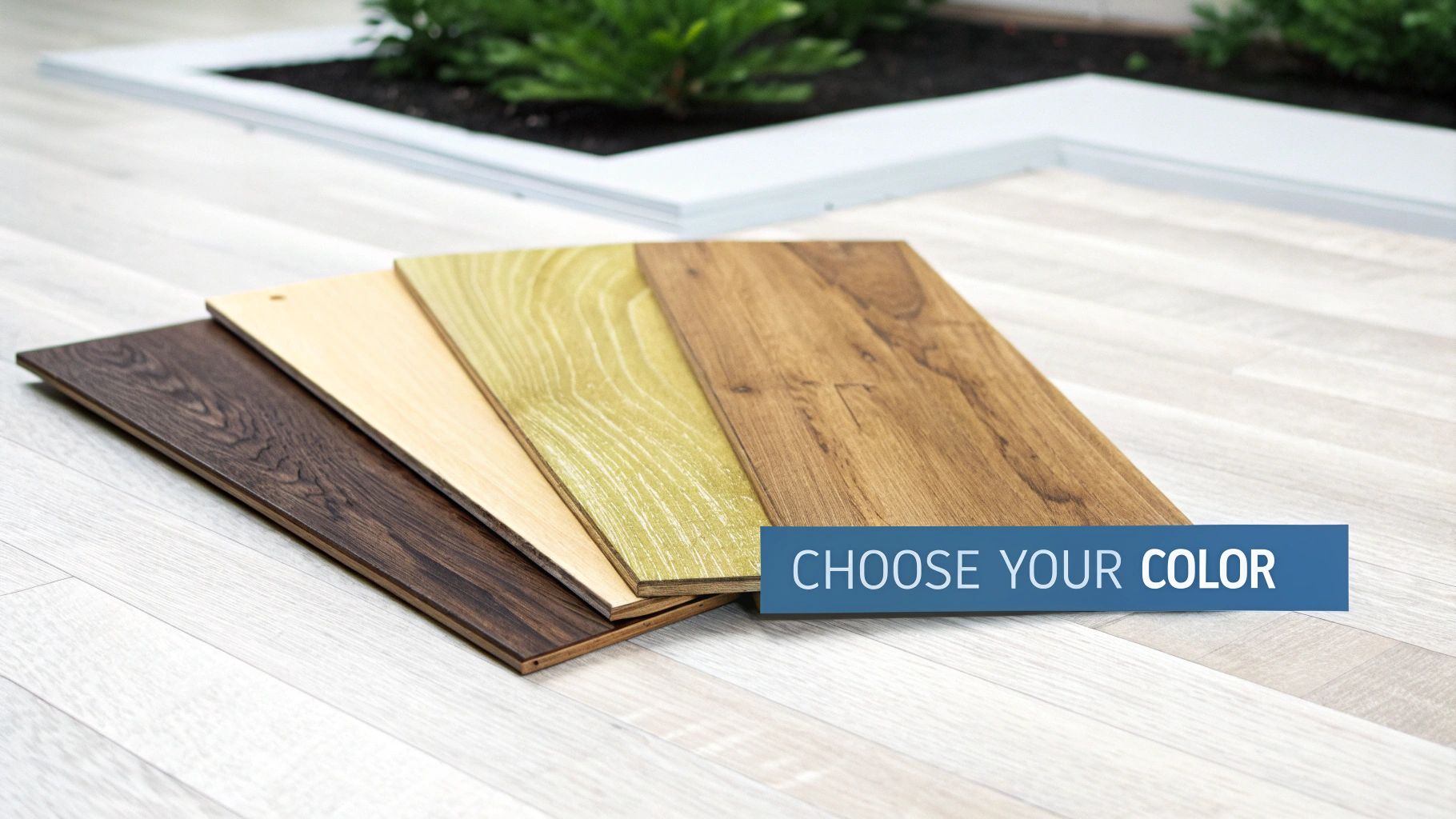
Four varied wood flooring samples, including brown, beige, green, and natural wood, on a light floor.

After the sanding is done, we get to the fun part—choosing the color and sheen that will define your space. This is where your personal style truly comes to life, turning that freshly sanded oak into a key element of your home’s design. It's a decision that will shape not just how your floors look, but how they feel and function for years.

The whole process starts with understanding the wood you already have. Most oak floors are either red oak or white oak, and each has its own personality that plays a big role in how a stain color will turn out.

Understanding Your Oak's Natural Tone

Red oak isn't beet-red, but it definitely has warm, pinkish undertones. Those subtle hues tend to enrich stain colors, giving them a bit more depth and warmth. It’s the classic choice you see in many traditional homes, creating a welcoming, cozy vibe.

White oak, despite the name, is more of a light brown with a neutral, sometimes grayish or yellow cast. This makes it an incredibly versatile base for modern design trends. It’s the perfect canvas for everything from breezy, light stains to the popular grays and dramatic, dark ebony finishes. Really, the best oak hardwood floor stain colors are the ones that work with your floor’s inherent character, not against it.

Here on Long Island, we see how beautifully this plays out in different architectural styles:

  • Coastal & Airy: For those homes near the water in places like Port Jefferson or Stony Brook, a light, natural, or even white-washed finish on white oak is fantastic. It creates that bright, open feel that just belongs by the coast.
  • Classic & Rich: In the gorgeous colonial-style homes you find in Saint James and Old Field, a medium or dark stain on red oak feels just right. It deepens the wood’s natural warmth and adds a layer of timeless elegance.

We always, always apply stain samples directly on your floor after it’s been sanded. It’s the only real way to see how a color will look in your home, with your lighting, on your specific wood grain. A tiny sample chip from a store just can't compare.

Choosing the Right Sheen for Your Lifestyle

Once the color is locked in, the final touch is the sheen—the level of gloss in the protective topcoat. This choice is as much about practicality as it is about aesthetics, affecting both the final look and how much maintenance you’ll be doing.

Popular Sheen Levels:

  • Matte: This is the most natural-looking finish with the lowest gloss. It looks almost like raw, untreated wood. The big win with matte is that it’s incredibly forgiving; it hides minor scuffs, dust, and pet hair better than anything else, making it a dream for busy families.
  • Satin: By far the most popular choice, and for good reason. Satin strikes the perfect balance. It has a soft, low-key glow that adds a bit of elegance without being blindingly shiny. It’s durable and still does a great job of masking the little imperfections of daily life.
  • Semi-Gloss: If you want a more polished, sleek look, semi-gloss is the way to go. It has a noticeable shine that really makes the wood grain pop. The trade-off is that it also highlights everything else—dust, footprints, and any little scratch will be more visible. We typically see this in more formal spaces.

Getting the combination of stain and finish right is what makes the project a true success. By thinking about your oak’s natural color, your home’s style, and how you actually live, you can land on a look you’ll be happy with for a long, long time.

Protecting Your Investment After Refinishing

So, the dust has settled, the finish is cured, and your oak floors look absolutely incredible. Your home feels brand new. Now comes the important part: keeping them that way. A little bit of know-how and a few simple routines are all it takes to protect your investment and ensure those floors stay stunning for years.

Think of it as a simple, three-tiered approach: daily, weekly, and monthly tasks. Breaking it down like this makes it manageable and prevents tiny bits of grit from turning into major headaches down the road.

Simple Maintenance Routines for Lasting Beauty

Protecting your gorgeous new floors doesn't mean spending your weekends scrubbing. It’s all about consistency and using the right tools for the job. A quick daily pass with a soft-bristle broom or a microfiber dust mop is your first line of defense, grabbing the dirt and grit that can act like sandpaper under your feet.

For a deeper weekly clean, a slightly damp microfiber mop is your best friend. Just be sure to use a pH-neutral cleaner designed specifically for hardwood.

Stay away from common household cleaners like vinegar, ammonia, or oil soaps. They might seem harmless, but they can actually strip the protective finish right off your floors, leaving them dull and exposed to damage.

Here are a few game-changing habits to work into your routine:

  • Prevent Scratches: This is non-negotiable. Put felt pads on the bottom of every piece of furniture—chairs, tables, sofas, you name it. It's the single most effective way to prevent scratches.
  • Use Rugs Strategically: A good doormat at every entrance is a must for trapping dirt before it gets tracked inside. In high-traffic areas like hallways and living rooms, area rugs can take the brunt of the daily wear and tear.
  • Wipe Spills Immediately: Spills happen. The key is to blot them up with a soft, dry cloth the second you see them. Any liquid left to sit can easily damage both the finish and the wood beneath.

If you want to dive deeper, we have a lot more information on how to maintain hardwood floors that can help you master the basics.

Beyond the Floor Surface

Even with the best dust containment systems, a refinishing project can kick up a lot of fine particles. This dust doesn't just settle on your floors; it can get pulled into your home's ventilation system. Keeping your indoor air fresh and clean is just as crucial as sweeping the floor.

After a major project like oak floor refinishing, it's a smart move to have your HVAC system professionally cleaned to protect your home's air quality. For more on that, check out a homeowner’s guide to air duct cleaning to help maintain a pristine environment from top to bottom.

By building these simple, proactive habits, you’re not just cleaning—you're actively preserving the flawless finish and durability of your newly refinished oak floors. A little effort now ensures the beauty you invested in will last, adding real value and enjoyment to your Long Island home for a long, long time.

Your Top Questions About Oak Floor Refinishing, Answered

Deciding to refinish your oak floors is a big step, and it's natural to have questions. We get it. Over the years serving homeowners across Long Island, we’ve pretty much heard them all. Here are the most common ones we hear, with straightforward answers drawn from our hands-on experience right here in Setauket and beyond.

How Long Does the Oak Floor Refinishing Process Usually Take?

The timeline really hinges on the size and complexity of your space. For a pretty standard project, say 500 to 1,000 square feet, you can expect the full sanding and coating process to take about 2 to 4 days.

But here's where things get interesting. Our advanced UV-Cure finish completely changes the game. We use a special light to cure it instantly, which means your floor is 100% ready for furniture and foot traffic the very same day we apply the final coat. This gets rid of that annoying 3-7 day waiting period you have to endure with old-school, slow-drying finishes.

Will My House Be Filled with Dust?

Absolutely not. We’ve invested in a top-of-the-line dustless sanding system. Think of it like a powerful, HEPA-filtered vacuum attached directly to our sanding equipment. It’s designed to capture over 99% of airborne dust right at the source, before it ever has a chance to float around your home.

You can breathe easy knowing your home will stay clean and your air quality will remain healthy throughout the project. This modern approach means you can forget about the gritty, house-wide cleanup that traditional sanding methods are infamous for.

Can Refinishing Fix All Types of Floor Damage?

Refinishing is fantastic for most cosmetic issues. It’s the perfect fix for surface scratches, scuffs from moving furniture, sun-faded spots, and the general wear and tear that makes a floor look dull and tired. A thorough sanding essentially erases these surface-level imperfections.

However, it can't solve deeper, structural problems.

  • Deep Gouges: If a scratch goes way down into the wood plank itself, it might be too deep to sand out completely.
  • Severe Stains: Things like pet stains or water damage that have soaked deep into the wood fibers often leave behind permanent discoloration.
  • Warped Boards: Wood that is cupped, buckled, or warped from moisture damage needs the affected planks replaced, not just sanded.

Don't worry, though. We'll carefully check for any of these issues during our initial, no-obligation consultation and walk you through the best way to handle them.

What Is the Average Cost for Oak Floor Refinishing on Long Island?

The final cost for professional oak floor refinishing depends on your floor's current condition, the total square footage, and which finish you choose to fit your lifestyle. At Savera, we believe in being completely upfront and competitive with our pricing.

Here’s a breakdown to give you a clear idea of the value we offer for hardwood floor refinishing in Setauket:

  • Full Refinishing: Our Gold Traffic Plus 2K water-based finish starts at $4.25 per square foot.
  • Premium UV-Cure Finish: Our Diamond Traffic Plus with instant UV curing is our top-tier option for unmatched wear and scratch resistance, starting at $5.00 per square foot.
  • Screen & Recoat: If your floors just have light wear, our Screen & Recoat service is a great value, starting at only $2.00 per square foot.

We always provide a detailed, itemized quote after a thorough in-home assessment. That way, you know exactly what to expect with no hidden fees or surprises.


Homeowners on Long Island trust Savera Wood Floor Refinishing to restore the natural beauty of their hardwood floors with our dust-free sanding system and advanced UV-curable finishes. Unlike traditional methods, our UV technology cures instantly, so you can move furniture back the same day with no lingering odor or downtime. Choose the perfect refinishing service to match your needs and home traffic. Our dust-free process ensures a clean, beautiful finish every time.

📞 Phone: 631-866-1972
🌐 Website: saverawoodfloorrefinishing.com
📍 Service Area: Setauket, Stony Brook, Port Jefferson, Saint James, and surrounding Long Island communities.