Tag Archives: low voc finish

Is Water-Based Finish Good After Sanding in Islip?

A freshly sanded Islip floor can take a water-based finish, provided the wood is dry and clean and the room can be ventilated according to the product's instructions. For an occupied home, check the floor's condition first, then confirm moisture levels and review the finish's written application and re-entry schedule. Low odor does not determine when the family can return; the product's schedule does.

Table of Contents

Water-Based Finish After Sanding in Islip

Water-based finish is generally the stronger choice for an occupied home, particularly when you want to preserve a natural or pale floor color without the amber appearance of oil-based polyurethane. It's also a practical option when the kitchen connects directly to living spaces and keeping strong solvent odors out of the household matters.

The EPA's guidance on indoor environmental concerns during remodeling explains that most paints and finishes release volatile organic compounds, or VOCs, into indoor air. Its comparison of paints finds that water-based products generally emit fewer chemicals and lower levels of chemical vapors than solvent-based alternatives. That supports choosing lower-emission chemistry, not treating every waterborne floor finish as interchangeable.

Finish choices after sanding hardwood

Finish Color over time Odor and emissions Typical pace Best fit
1K water-based Stays clear, no amber with a non-yellowing formulation Low VOC when certified; still ventilate Recoat when the label's drying conditions are met Normal residential rooms
2K water-based Stays clear with the selected clear formulation Low VOC when certified; catalyst mixed on site Product-specific recoat window; cross-linked protective film Kitchens, children, pets, heavier traffic
UV-cured waterborne Stays clear with the selected clear formulation Low odor after professional curing; follow occupancy directions Can be traffic-ready the same day Rentals, businesses, tight move-in dates
Oil-based polyurethane Ambers and deepens Stronger solvent odor and longer off-gassing Slower drying and curing When a warm amber look is specifically wanted

1K means a single-component finish. 2K means a two-component system in which a catalyst is mixed into the coating. Choose between them by expected wear, not by which can sounds more advanced.

For a quiet bedroom, a residential waterborne system may be sufficient. For a kitchen where stools scrape, children eat, and a dog circles the table, a two-component finish is a more appropriate option to evaluate. UV curing addresses a different concern: how soon the finished space can return to use.

An infographic showing that water-based finishes are the best choice for sanding hardwood floors in Islip homes.

Match the film to the color

Gray, whitewash, and natural kitchen floors need a crystal-clear, non-yellowing topcoat if you want the finished result to stay close to the approved sample. An ambering finish can shift a cool sample toward a warmer appearance.

Our overview of hardwood floor finish types can help you distinguish appearance, wear protection, and curing method. Before approving a finish, confirm clean bare wood, acceptable moisture readings, product documentation, and a ventilation plan.

Practical rule: Low odor is a comfort benefit. It isn't permission to ignore the finish manufacturer's re-entry instructions.

When the Sanded Floor Is Ready for Coating

Is the floor ready for a new finish, or does it need a different kind of work first? Choose the restoration method based on the floor's condition, then select a finish suited to the home's use and the approved color.

Savera Wood Floor Refinishing inspects finish thickness and wood integrity before recommending a service. A dull floor with intact finish and sound wood may need only a screen and recoat, which preserves wood thickness. Floors with deep gouges, heavy water stains, bare patches, or a planned full stain-color change generally need sanding to bare wood.

Floor condition and recommended path

Floor condition Recommended path Finish fit
Deep gouges, bare patches, heavy water stains Full sand to bare wood, with repair assessment Water-based finish after dust-controlled sanding
Yellowed oil polyurethane or full color change Full sand to bare wood Clear, non-yellowing water-based finish
Dull or lightly scuffed, grain and structure sound Screen and recoat Compatible water-based topcoat after cleaning
Engineered floor with thin wear layer Check wear layer first; sand only if the veneer allows Confirm the suitable option at inspection
Cupping or excessive wood moisture Investigate and address the moisture source before coating Choose a coating after the floor is ready
Previously coated, stained, or unevenly abraded Professional evaluation before choosing Select a finish after a test area

Red and white oak commonly accept waterborne finishing systems well. Maple needs careful sanding and sealer selection, while porous softwoods can show raised grain.

Some stains penetrate too far to disappear through sanding alone. Where discoloration remains, repair or board replacement may be more appropriate than removing additional wood.

Check what's beneath the surface

Engineered hardwood needs a wear-layer check before sanding. That layer is the floor's reserve for future refinishing, so removing sound wood just to refresh a tired topcoat can use up material unnecessarily.

For occupied Islip homes, coating readiness also depends on moisture readings, product documentation, and ventilation. A finish does not repair moisture damage. The floor-preparation guidance for hardwood refinishing explains the preparation involved before coating. If bare-wood restoration is appropriate, Savera's hardwood restoration and color-change service in West Islip describes that process. A lightly scuffed floor with sound finish may be suited to a recoat instead.

How to Coat a Freshly Sanded Floor

A waterborne finish needs a clean, consistently sanded surface and a controlled room. Trying to compensate for poor preparation with a thicker coat usually creates another problem.

The BioResources review of wood-finishing mechanisms gives useful working conditions: wood moisture approximately 12% or lower, room temperature around 18–25°C, and 40–60% relative humidity during application and drying. It describes typical drying of 1–4 hours per coat at 20°C and 60% relative humidity, but the actual product instructions control.

Keep the preparation and coating sequence intact

  1. Complete the sanding progression so the last abrasive removes the previous scratches without polishing the wood excessively, which can reduce mechanical adhesion. Use the finish system's recommended final abrasive rather than assuming finer is always better.

  2. Vacuum with a HEPA-filtered machine, including board joints, edges, baseboards, and nearby HVAC returns, then use a manufacturer-approved tack method to prevent loose dust from becoming trapped in the film. Don't introduce waxy cloth residue or an incompatible cleaner.

  3. Inspect under raking light before opening the finish, because low-angle illumination exposes scratches, old-finish islands, and residue that ordinary overhead lighting can hide.

  4. Measure moisture and investigate uneven readings rather than judging dryness by touch, because wet boards can undermine film formation. If the floor was intentionally dampened to manage grain raise, let it dry overnight and resand before coating.

  5. Stabilize room temperature and humidity within the stated working conditions to prevent inconsistent drying. In an occupied Islip home, keep climate control operating rather than opening the house indiscriminately during humid weather.

  6. Apply compatible waterborne sealer in a thin, even coat with the grain, maintaining a wet edge so overlapping passes don't leave visible bands. Use an approved applicator and plan the exit before starting.

  7. Let the coat dry fully, then abrade only as the system permits and vacuum again, preventing premature recoating and abrasive debris from compromising the next layer.

  8. Apply the specified finish coats with the same controlled technique, following the system's coverage and coat requirements so you build protection without excessive thickness.

  9. Inspect the completed film before releasing the room, looking for uniform sheen without cloudiness, lap marks, dust nibs, or visible sanding scratches.

The sequence matters more than just getting liquid onto the boards.

A four-step infographic illustrating the professional process for coating a freshly sanded hardwood floor.

Count coats by the system, not appearance alone

A common residential specification uses sealer followed by protective finish coats, but the correct build comes from the selected system. Don't stop merely because the surface looks shiny, and don't add heavy coats because a kitchen feels demanding.

Our guidance on coating hardwood floors explains the application choices homeowners should understand before approving the work.

Cure Times and When You Can Walk On It

A coating can feel dry while still needing time before it can handle furniture, rugs, or pets. The product's instructions set each return-to-use milestone, so plan around the written schedule rather than touch or odor alone.

What each cure stage allows

Stage Ordinary water-based Professional UV-cured What you can do
Between coats Follow the label's recoat window and room conditions Follow the required curing stage for each coat Apply the next coat when the preceding stage is ready
First careful walking Use the final coat's stated walking time, usually with clean socks Often the same day after professional curing Follow the release instructions; keep shoes, pets, and rugs off until permitted
Furniture back Follow the stated furniture-return schedule Often the same day for the specified UV system Lift furniture rather than drag it; wait to damp-mop until permitted
Full hardness Develops after the floor appears dry The surface cures under UV exposure; follow remaining manufacturer requirements Resume normal use within the system's written limits

Why professional UV curing is different

UV equipment cures coatings formulated for that process. A peer-reviewed BioResources study of waterborne UV lacquer on wooden flooring reported 6 seconds of direct UV curing after each coating stage, using 230–260 millijoules per square centimeter of irradiation energy. These are controlled process results, not a promised walking time for every UV finish.

For an occupied Islip home, check the product documentation, moisture conditions, and ventilation plan before setting a return date. Professionally applied UV curing can substantially reduce final-finish downtime for a household move or rental turnover. Sanding, stain preparation, equipment access, and inspection still take time.

Plan occupancy before application

The EPA's Indoor AirPlus requirements recommend outside-air ventilation at the highest practical rate for the longest practical duration during installation and between finishing and occupancy. Plan airflow around weather, window security, children, and pets.

In Islip, humid summer weather can make open windows unsuitable if they disrupt the coating's drying conditions. Winter ventilation also needs planning to keep the home from becoming excessively cold or dry.

Before work starts, plan how you'll reach bedrooms, prepare meals, and take pets outside without crossing the finished floor. This guide to how long hardwood floor refinishing takes explains how preparation time and the final return-to-use schedule fit together.

Problems That Show Up After the First Coat

A water-based label is not a safety certificate. In UL's testing of wood-floor finishes, 80% of tested finishes released some level of toxic VOCs, some traditional water-based products contained water-compatible solvents such as N-methylpyrrolidone, and certain products continued releasing chemicals during testing lasting as long as seven days after application.

Those findings describe the tested products, not every waterborne finish. Review the technical data sheet, safety documentation, and an emissions certification such as GREENGUARD where available. We use GREENGUARD Certified low-VOC water-based finishes, but certification doesn't replace the product's application and occupancy requirements.

Match the symptom to the repair

  • Raised grain: Water can lift surface fibers. Let the coating dry completely, then lightly abrade as permitted and remove the dust instead of burying roughness beneath a heavy coat.
  • Lap marks: An applicator that loses its wet edge can leave overlap bands. Allow drying, assess the affected film, and level and recoat using a planned application route.
  • Cloudy patches: Excess humidity can interfere with drying. Correct the room conditions and let the film stabilize before deciding whether abrasion and recoating are appropriate.
  • Dust nibs: Loose debris can settle into wet finish. Once dry, remove nibs with the approved abrasive and clean thoroughly before recoating.
  • White or soft film: Wet wood, excessive coating thickness, or premature recoating may be responsible. Stop application and identify the cause rather than sealing it beneath another layer.
  • Scratches showing through: Incomplete sanding refinement leaves marks that clear finish emphasizes. Correct the underlying surface instead of expecting more finish to hide it.

Don't diagnose exposure by smell

Persistent odor deserves attention, but the absence of odor doesn't prove the room is ready for children or pets. Keep the written re-entry schedule and continue the prescribed ventilation.

Repair boundary: If contamination prevents reliable adhesion, remove the affected coating and prepare the surface again. Another coat won't make an incompatible layer sound.

Daily Care and Cost Factors for Islip Kitchens

A light kitchen floor makes grit, spills, and chair movement easy to notice. Protect the finish with ordinary habits rather than aggressive cleaning.

Start with felt pads under chairs and stools, and replace pads when they collect grit. Wipe spills promptly, keep pet nails trimmed, and use a sink rug with a non-staining backing approved for the finish once rugs are allowed.

Clean without adding unnecessary water

  • Remove grit first: Vacuum with a soft floor attachment or use a clean microfiber dust mop before damp cleaning.
  • Use compatible cleaner: Apply the recommended wood-floor cleaner sparingly rather than flooding the boards.
  • Avoid steam and soaking: Neither is appropriate for routine care of a site-finished hardwood kitchen.
  • Keep the indoor environment steady: Manage seasonal humidity rather than letting heating and summer dampness create large swings.

Our wood-floor care guidance can help you build a maintenance routine. When traffic lanes become dull but the finish remains intact, arrange a maintenance assessment before wear reaches bare wood.

What changes the estimate

The quote should reflect floor condition and access, not just room area. Deep damage, repairs, stairs, narrow hallways, old coating removal, and a color change all affect preparation.

Finish selection also matters. Standard waterborne, two-component, and professionally UV-cured systems involve different materials and application processes. Coat requirements, dust containment, stain sampling, and how long the household can keep the space closed belong in the written scope.

For an occupied kitchen, the hardest scheduling question is often where the household will cook and walk while the coating reaches its permitted use stage.

Ask for an estimate that separates inspection findings, preparation, finish application, and cure-day planning. Room count affects labor, but coating cure rules determine when furniture, rugs, and normal kitchen routines can return.

Book the Floor Inspection Before Any Sanding

Before setting a start date, ask for a written scope that explains the work sequence and what must happen before the floor is coated. It should identify the preparation method, any stain or color work, the finish system, ventilation requirements, and the product's re-entry instructions.

Savera Wood Floor Refinishing uses HEPA-filtered dust-control sanding systems and low-VOC water-based finishes. For an occupied Islip home, moisture conditions, product documentation, and ventilation all affect scheduling. The finish label's instructions should guide when people can return and when furniture can go back in place.

Savera serves Long Island communities with sanding, recoating, and water-based finishing. Contact the company through its website to discuss an inspection and request a written scope for your floor.

A Homeowner’s Guide to Water-Based Polyurethane Floor Finishes

For decades, the go-to protection for hardwood floors was an oil-based polyurethane. Think of it as a thick, heavy shield. It was tough, no doubt, but it came with some serious baggage: powerful fumes that lingered for days and an amber tint that would yellow your floors over time.

But technology marches on. Today, we have water-based polyurethane floor finishes. These are the modern, advanced alternative, using water as the carrier for the protective polyurethane resins. For homeowners considering hardwood floor refinishing in Setauket, this means a crystal-clear, incredibly durable layer that guards your floor without the old-school drawbacks. It’s all about getting that beautiful, lasting finish while keeping your home’s air clean and healthy.

The Modern Shield for Hardwood Floor Refinishing in Setauket

When you’re getting your hardwood floors refinished here in Setauket, choosing the final topcoat is one of the most important decisions you’ll make. A water-based polyurethane finish is a massive leap forward in floor protection, leaving the high-VOC (Volatile Organic Compounds) and slow-curing oil-based products in the past where they belong. We recently brought a new lease of life to a classic red oak floor in a Setauket colonial, where a water-based finish preserved the wood’s natural charm without the yellowing of old oil-based products.

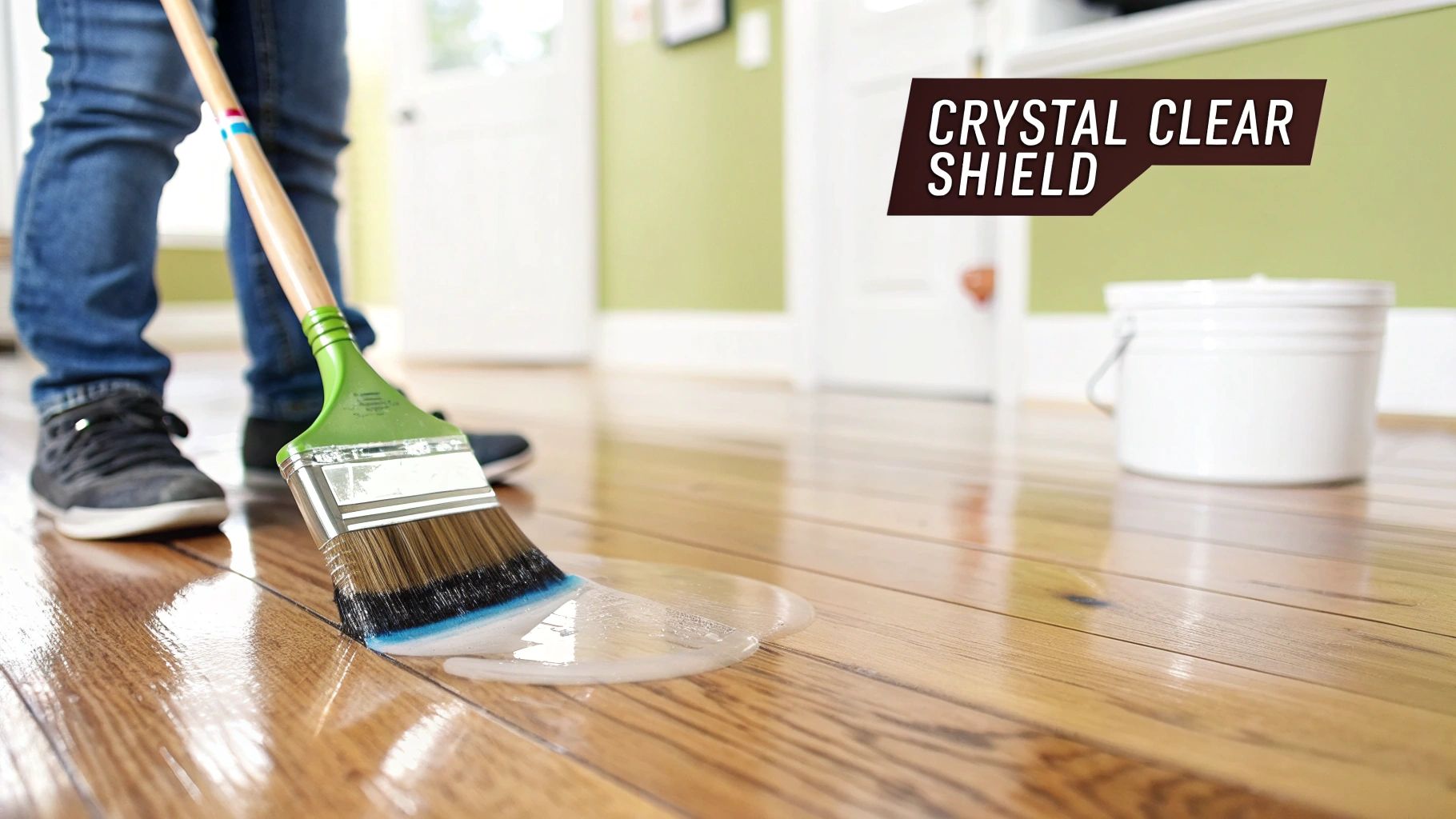
A person applies crystal clear shield finish to a hardwood floor with a brush.

The science behind it is both simple and brilliant. The finish is a liquid where tiny polyurethane resin particles are suspended in water. As you spread it across the floor, the water evaporates. This triggers the polyurethane molecules to link together, or “crosslink,” forming a hard, transparent film that cures right over the wood. The whole process is much faster and cleaner than what you get with oil.

This isn’t just a local preference; it’s a global shift. The market for these finishes has ballooned to around USD 1.62 billion, fueled by homeowners who want better products and by tightening environmental rules. Some of these modern formulas can release up to 90% fewer VOCs than traditional oil finishes, which is a huge deal for the air quality inside your home.

Why It Matters for Your Setauket Home

If you have kids, pets, or anyone with sensitivities, the benefits are obvious right away. The low odor from professional hardwood floor refinishing in Setauket means you don’t have to clear out of your house for days on end just to escape the chemical smell.

Here’s what you get:

  • Healthier Indoor Air: The low-VOC formula means minimal off-gassing. You’re protecting your family from breathing in potentially harmful chemicals.
  • True Color Preservation: Oil-based finishes always add a yellowish, amber hue. Water-based options dry crystal clear. This is fantastic because it lets the true, natural color of your wood shine through—perfect for the lighter, brighter styles so popular in Long Island homes.
  • Faster Project Turnaround: Because it dries and cures so much faster, your floor refinishing project gets wrapped up quicker. That means less disruption and getting your home back to normal sooner.

This technology is a game-changer. It delivers incredible durability without the health compromises and yellowing of older finishes. It’s about getting a beautiful floor that lasts, and one you can feel genuinely good about. We get into the nitty-gritty in our guide to finishing a wood floor with polyurethane, which walks through the whole process.

Ultimately, choosing a water-based polyurethane is an investment in both your floors and your family’s health. It’s the clear choice for a modern, beautiful, and healthy home, allowing the gorgeous natural grain of a red oak floor in a classic Setauket colonial to stand out without being discolored.

Real-World Benefits of Hardwood Floor Refinishing in Setauket

Choosing a water based polyurethane floor finish goes beyond the technical specs; it’s about making a practical choice that improves your life at home. The high-tech chemistry behind these finishes translates into real-world benefits that protect your floors, your family’s health, and your peace of mind.

Think about what a hardwood floor refinishing in Setauket project usually entails. If you’ve ever dealt with traditional oil-based finishes, you know the routine: days of harsh fumes, the hassle of staying off the floors, and having your home turned upside down. Water-based polyurethane completely flips that script.

Get Your Home Back, Faster

Let’s be honest, the best part of any renovation is when it’s over. The single biggest advantage of a water-based finish is how incredibly fast it dries. An old-school oil finish can take 8-12 hours to dry between coats, with a full cure taking days or even weeks. Water-based poly, on the other hand, is often ready for another coat in just two hours.

What does this rapid turnaround mean for you?

  • Less Chaos: We can often get a whole project done in half the time it would take with oil-based products.
  • Furniture Back in Place: You can usually move your furniture back in 24 to 48 hours, not a week later.
  • A Shorter Interruption: The whole process is compressed, dramatically reducing the stress on your family and your schedule.

This speed is a lifesaver, especially for busy families or when we’re working in essential areas like your kitchen or main living room. You get back to normal life in a fraction of the time.

A Breath of Fresh Air (Literally)

For families, this might be the most important benefit of all. Oil-based finishes are infamous for their high levels of Volatile Organic Compounds (VOCs)—those harsh chemicals that evaporate into your air and cause that overpowering smell, not to mention headaches and respiratory issues.

Water-based finishes have incredibly low VOCs. This makes them the clear winner for homes with kids, pets, or anyone with allergies or sensitivities. The smell is faint, not offensive, and disappears quickly, leaving your air clean.

This isn’t just about avoiding a bad smell for a few days. It means no long-term “off-gassing” of chemicals into your home, which gives you confidence in the health of your living space long after we’ve packed up our tools.

See the True Beauty of Your Wood

From the classic red oak floors in a South Shore colonial to the light, beachy maple in a Hamptons home, Long Island homeowners want to showcase their wood’s natural character. Oil-based finishes can’t do that—they apply with a yellow-amber tint that only darkens and yellows more over time, completely changing how your floors look.

Water-based polyurethane, in contrast, dries perfectly clear and stays that way.

  • Honest Color: It lets the true, natural color and grain of the hardwood shine through without distortion.
  • Perfect for Modern Styles: It’s the only real choice for achieving those popular light, gray, or whitewashed looks that are ruined by an amber tint.
  • Stays True Over Time: Your floors will look the same in ten years as they did the day we finished them, with no surprise yellowing.

This clarity ensures the color you picked is the color you get to live with. To see how different coatings affect the final look, explore our comprehensive articles on various types of wood floor coating.

The Perfect Match for Dust-Free Sanding

A clean, modern finish deserves a clean, modern process. Here at Savera, our advanced dust-free sanding system and water-based finishes are a natural pair. Old-fashioned sanding blasts fine dust into every nook and cranny of your home, leading to a massive cleanup job.

Our system is different. We connect powerful, HEPA-filtered vacuums directly to our sanding machines, capturing over 99% of dust before it ever has a chance to go airborne. Pairing this clean preparation with a low-VOC water-based finish creates a hardwood floor refinishing in Setauket process that’s designed from the ground up to be as healthy and undisruptive as possible for you and your home.

Water Based Versus Oil Based: A Clear Comparison for Setauket Homes

When it’s time for hardwood floor refinishing in Setauket, the single biggest choice you’ll make is the type of finish. For years, oil-based polyurethane was the only game in town, but today’s high-tech water based polyurethane floor finishes have completely changed the conversation.

Knowing the real-world differences between these two options is what separates a good result from a great one. It’s not just about chemistry; it’s about how your floors will look, feel, and hold up in your home. A busy Long Island household with kids and pets has entirely different demands than a quiet, formal living room.

The Durability Myth Busted

Let’s clear the air on a common myth: that water-based finishes just aren’t as tough as old-school oil-based poly. While that might have been true a couple of decades ago, modern formulas are a whole different beast.

The secret is in the chemistry. Today’s best two-component (2K) water-based polyurethanes, like our Gold and Platinum systems, use a separate hardener that’s mixed in right before we apply it. This kicks off a chemical reaction, creating an incredibly strong, cross-linked surface that’s a champion against scratches, scuffs, and spills—often outperforming traditional oil-based options.

This isn’t just marketing speak. This is the same commercial-grade technology trusted to protect floors in high-traffic places like retail stores, restaurants, and even basketball courts. If it can handle that, it can definitely handle your family’s daily life.

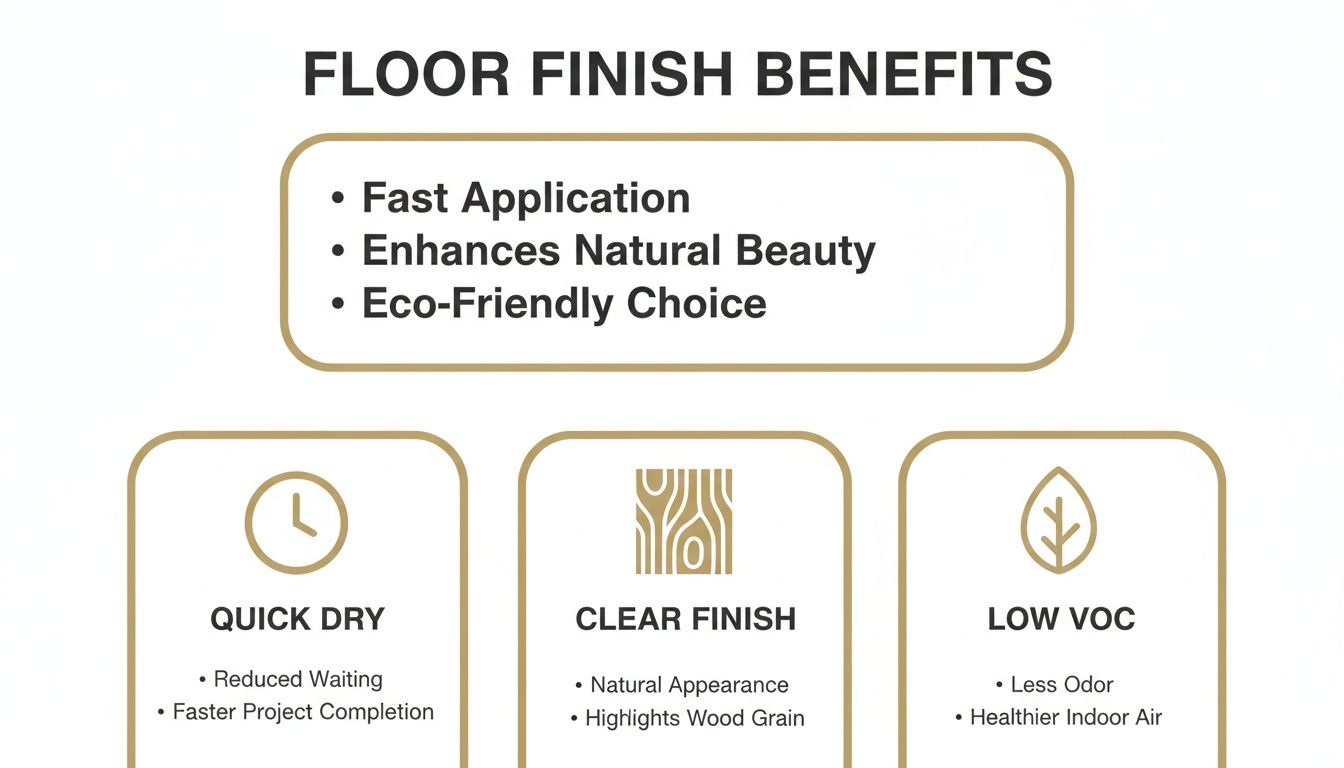
This infographic breaks down the core benefits that make water-based polyurethane such a smart choice for modern homes.

Infographic detailing floor finish benefits: quick dry, clear finish, and low VOC for natural beauty.

As you can see, the combination of a faster project, a healthier home, and a finish that lets your wood’s true color shine through makes it a compelling choice for many Long Island homeowners.

A Head-to-Head Finish Comparison

To really put things in perspective, this side-by-side comparison breaks down the key differences between water-based and oil-based finishes, focusing on what truly matters for your home and family.

Water Based vs Oil Based Polyurethane Finishes

Feature Water Based Polyurethane Oil Based Polyurethane
Dry Time Very fast. Recoat in just 2-3 hours, allowing the entire job to be done in a single day. Very slow. Takes 8-12 hours between coats and up to 30 days to fully cure and harden.
Odor Very low. The mild scent disappears quickly, making it a far better choice for homes with kids, pets, or anyone with sensitivities. Very high. Pungent, lingering fumes high in VOCs that require major ventilation and can make your home unlivable for days.
Final Look Crystal clear and non-yellowing. It protects the wood without changing its natural color—perfect for light woods like maple or modern gray and whitewashed stains. Amber tint. It adds a warm, yellowish glow that continues to deepen and darken over time, which will alter the wood’s original color.
Durability Excellent. Advanced 2K formulas offer superior scratch and chemical resistance, easily standing up to heavy foot traffic. Good. It provides solid protection but is generally a softer finish, making it more prone to scratches than premium 2K water-based products.

This table makes it easy to see why water-based technology has taken over. For most homeowners, the benefits of faster project times, better air quality, and superior long-term appearance and durability are simply too significant to ignore.

Since their commercial breakthrough, water based polyurethane floor finishes have transformed the industry. Driven by environmental regulations that have cut solvent use by 45% since 2015, these finishes are now used on an estimated 55% of refinished floors in the U.S. and can enhance home resale values by $2,000-$5,000.

For an even deeper look at the pros and cons, check out our guide on the differences between water vs oil-based polyurethane. This will help you make a fully informed decision that fits your specific needs and lifestyle. For the vast majority of Long Island homes, the clear winner is a modern water-based finish, delivering incredible performance without the serious downsides of older, solvent-heavy products.

Our Advanced Hardwood Floor Refinishing in Setauket

Choosing the right water-based polyurethane floor finish is a lot like picking the perfect armor for your hardwood floors. Every home is different. A quiet bedroom in a Plandome Manor home just doesn’t face the same kind of daily abuse as a busy family kitchen in a Levittown cape.

That’s exactly why we’ve developed a tiered system of advanced finishes. It allows us to match the level of protection precisely to your lifestyle, ensuring you’re not overpaying for durability you don’t need or under-protecting floors that see a lot of action. At Savera, our approach to hardwood floor refinishing in Setauket isn’t about a one-size-fits-all solution; it’s about getting it right for your home.

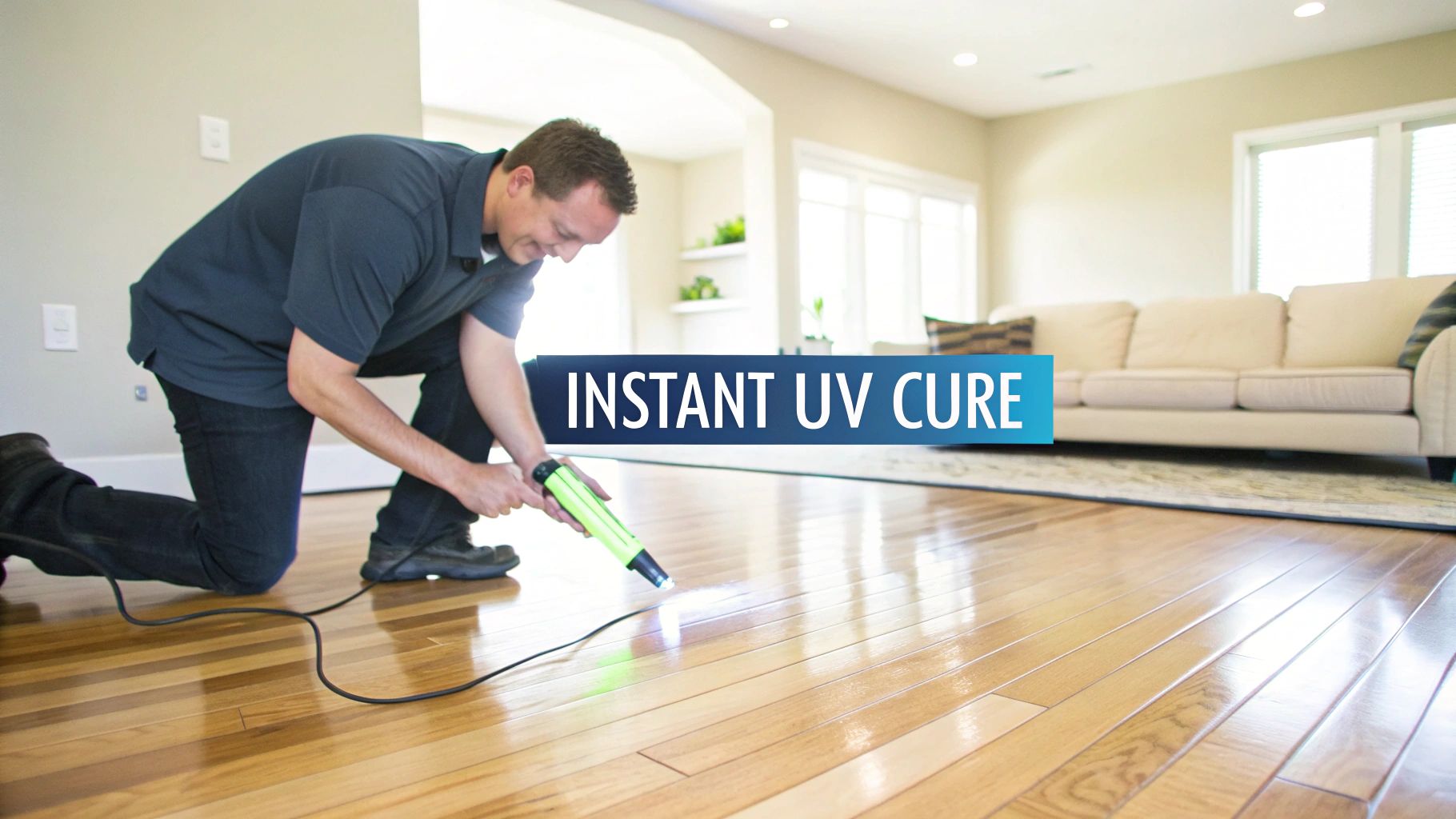
A man kneels on a wooden floor, using a UV light device to instantly cure a floor finish.

From Durable To Indestructible: Our Finish Tiers

Let’s break down the options. Understanding what goes into each finish will help you make a smart choice for your floors. Each tier builds on the last, offering more and more durability.

  • Silver Traffic Plus ($4.00/sqft): Our Silver package is built around a premium single-component (1K) water-based polyurethane. Think of it as our professional-grade starting point. It’s tough, low-odor, and dries crystal clear, making it a fantastic choice for lower-traffic spots like guest rooms or formal dining rooms.
  • Gold Traffic Plus ($4.25/sqft): The Gold package steps things up with a two-component (2K) water-based finish. This is where we mix a separate hardener into the polyurethane right before applying it. This triggers a chemical reaction, creating a cross-linked surface that’s significantly tougher and more scratch-resistant. It’s perfect for hallways, living rooms, and other areas with moderate, everyday traffic.
  • Platinum Traffic Plus ($4.50/sqft): For the busiest households with kids, pets, and constant foot traffic, our Platinum tier is the answer. We start with the high-performance 2K formula and fortify it with a nano wear oxide additive. These microscopic particles embed themselves into the finish, dramatically increasing its hardness and its ability to shrug off scuffs and scratches.

These advanced formulas show just how far flooring technology has come. It’s no surprise that water-based polyurethane finishes now hold a 53.40% share of the sustainable coatings market. People are choosing them for their performance and eco-friendly benefits, as highlighted in this detailed market analysis.

Diamond Traffic Plus ($5.00/sqft): The Power Of Instant UV Curing

Our Diamond package is the absolute pinnacle of floor protection. It takes our toughest 2K nano-fortified finish and pairs it with revolutionary UV-cure technology. After we apply the final coat, we roll a specialized machine over the floor that bathes it in powerful ultraviolet light. This process doesn’t just dry the finish—it cures it instantly.

Imagine having your historic oak floors restored in a Brooklyn brownstone and being able to move all your furniture back and walk on them the very same day. That’s the reality with UV curing. There is zero downtime and no waiting period.

This technology is a complete game-changer, especially for families who can’t afford to be out of their space for days. We recently completed a project in Forest Hills where the homeowners needed their first floor back immediately. We refinished the entire space, and they were back to their normal routine that evening, enjoying beautiful, fully protected floors without any disruption.

This kind of advanced application is a key reason why professional service is so critical. For homeowners curious about the steps involved, our guide on how to apply polyurethane floor finishes can shed some light on the precision required for a flawless result. Our tiered system ensures that no matter what your home throws at your floors, we have a scientifically advanced water-based polyurethane floor finish ready to protect your investment for years to come.

Looking After Your Newly Refinished Hardwood Floors

You’ve just invested in a professional hardwood floor refinishing in Setauket, likely with a modern water based polyurethane floor finish, and your floors look incredible. Now, how do you keep them that way? The good news is, protecting that investment is simpler than you might think. With just a little bit of know-how and a consistent routine, you can keep that crystal-clear, durable finish looking its best for years to come.

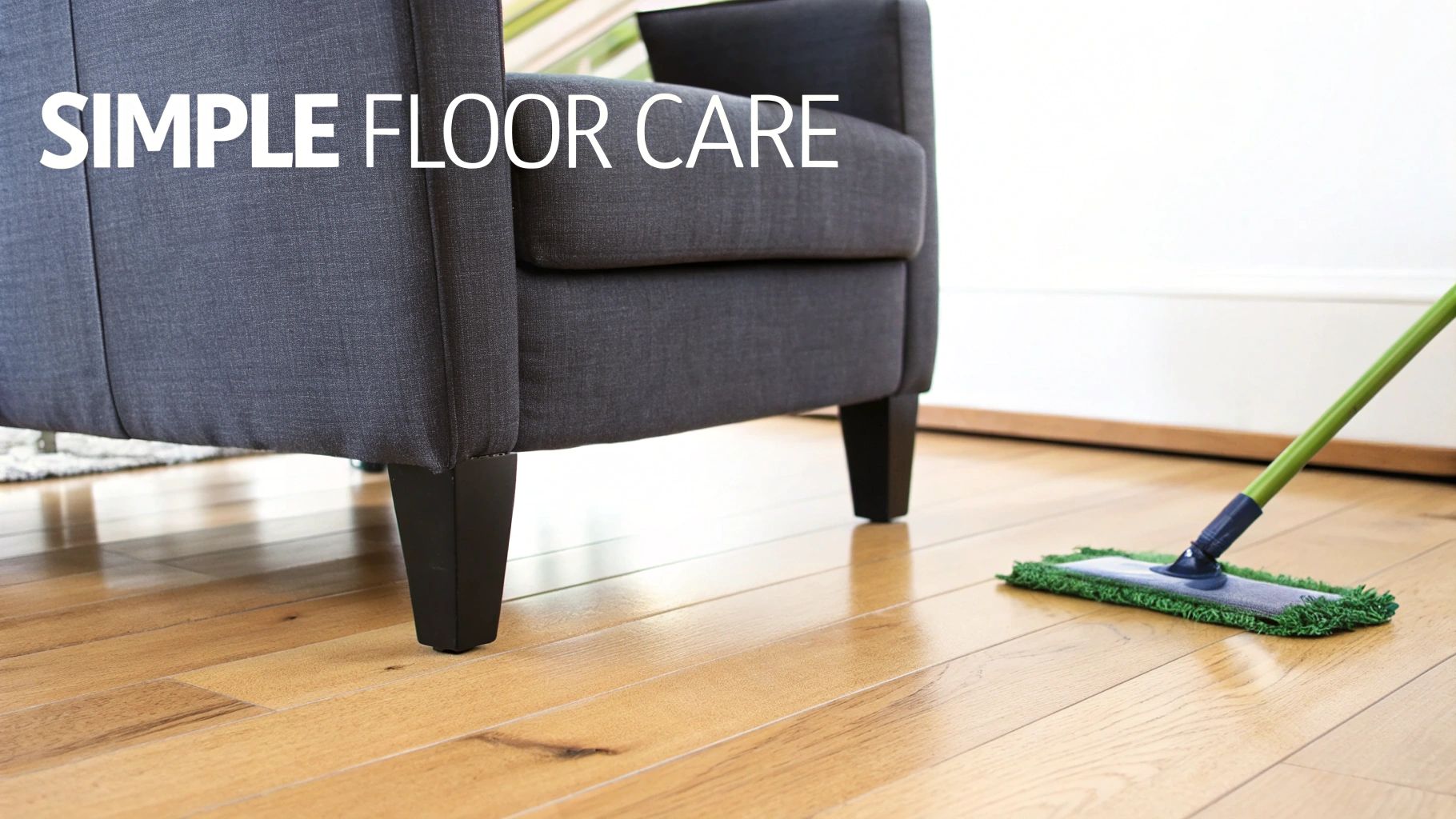
A green mop cleans a shiny hardwood floor next to a dark grey armchair, showing simple floor care.

The secret to long-term beauty is all about gentle, regular care. While your new finish is tough, it’s not indestructible. A few simple habits are all it takes to prevent the kind of premature wear and tear that can dull your floors.

Daily and Weekly Care: The Dos and Don’ts

Your cleaning routine doesn’t need to be a chore. The main goal is to simply keep abrasive grit and dirt off the floor. Think of dirt like sandpaper—every step grinds it into the finish, creating tiny scratches that eventually dull the surface.

Essential Dos:

  • Sweep or Dust Mop Often: Grab a soft-bristle broom or, even better, a microfiber dust mop to pick up dust, pet hair, and other bits of debris every day or two. This is your first line of defense.
  • Stick to pH-Neutral Cleaners: When you need to do a more thorough clean, only use a cleaner made specifically for hardwood floors with a water-based finish. These are designed to clean effectively without leaving behind a hazy, dulling residue.
  • Use Felt Pads on Everything: This is a big one. Put felt protector pads on the bottom of all your furniture legs—chairs, tables, sofas, you name it. This is the absolute number one way to prevent scratches.
  • Lay Down Area Rugs: Place rugs in high-traffic zones like entryways, hallways, and right in front of the kitchen sink. They do a fantastic job of trapping dirt and absorbing moisture before it hits your hardwood.

Critical Don’ts:

  • Never Use a Soaking Wet Mop: Too much water is the enemy of wood floors. It can damage not just the finish but the wood underneath. Always use a lightly dampened microfiber mop.
  • Avoid Wax, Oil Soaps, or Vinegar: These products are bad news for a polyurethane finish. They can create a slick, hazy film, dull the sheen, or even start to break down that protective layer you paid for.
  • Steer Clear of Steam Cleaners: The combination of intense heat and moisture from a steam cleaner is a recipe for disaster. It can cause the finish to bubble and peel and may even lead to the wood warping.

Professional Maintenance for Long-Term Protection

Think of professional maintenance as a regular check-up for your floors. While your daily care is the most important part, having a pro come in periodically can seriously extend the life of your finish and save you from needing a full sand-down and refinishing project later on. While hardwood has specific needs, you can find general wisdom in guides like these pro tips for pristine floors.

A Screen & Recoat (starting at $2.00/sq. ft.) is your floor’s best friend. This process involves lightly abrading, or “screening,” the top layer of the existing finish to create a bond for a fresh coat of polyurethane. It’s a fast, affordable way to restore the original luster and add a new layer of protection without the cost of a full refinishing.

A professional Wood Floor Cleaning (from $1.50/sq. ft.) or a Screen & Recoat every 3-5 years is a smart move, especially depending on the foot traffic in your home. This proactive step keeps your floors looking brand new and makes sure your water-based finish continues to protect the wood as it should.

FAQs: Hardwood Floor Refinishing in Setauket

If you’re thinking about hardwood floor refinishing in Setauket, you’ve probably got some questions, especially about the products we’ll be using in your home. That’s completely normal. Water-based polyurethane floor finishes are the modern gold standard, but let’s break down what that really means for you. Here are some straightforward answers to the questions we hear most often.

Are Water-Based Finishes Really As Durable As Oil-Based?

They absolutely are. This is probably the biggest myth still floating around, but it’s based on outdated information. Today’s professional-grade, two-component (2K) water-based polyurethane floor finishes are a completely different animal.

These advanced formulas use a separate hardener that gets mixed in right before application. This triggers a chemical reaction, called cross-linking, that creates an incredibly tough, resilient surface. We’re talking about a finish that’s often superior to old-school oil-based options in resisting both scratches and chemical spills. It’s the same class of finish trusted to protect floors in high-traffic commercial spaces like museums, shops, and even basketball courts. If it can handle that, it can definitely handle daily life in a busy Long Island home.

Is This Finish Safe For My Family and Pets?

Yes, and this is one of the most important reasons we champion these products. We get it—bringing chemicals into your home is a big deal. That’s why we’ve built our business around using finishes that are better for your indoor environment.

Water-based poly has a very mild, non-offensive odor that’s gone in a few hours, unlike the harsh chemical smell from oil-based finishes that can linger for days and make your home unpleasant. More importantly, these are low-VOC (Volatile Organic Compounds) products, which means they don’t release harmful fumes into your air. This makes them the hands-down best choice for homes with children, pets, or anyone with allergies or sensitivities.

Will a Water-Based Finish Change My Floor’s Color?

No, and that’s one of its best features. Water-based finishes are known for being crystal clear. They go on clear, and they stay clear.

This means you see the true, natural color and beauty of your hardwood—no artificial yellowing or amber tint. This is a huge plus for lighter woods like maple or birch, where you want to preserve that bright, clean look. It’s also essential if you’re going for a modern style like a Scandinavian whitewash or a cool gray stain, which would be ruined by the ambering effect of an oil-based finish. With water-based, the color you fall in love with is the color you get to live with.

Why Choose a Professional Over a DIY Job?

Achieving a beautiful, lasting result with professional-grade water-based polyurethane floor finishes takes a lot more than just a paintbrush and some ambition. Floor refinishing is one of those jobs where experience truly matters, and mistakes can be tough—and expensive—to fix.

Here’s where a pro makes all the difference:

  • The Prep Work is Everything: A perfect finish starts with perfect sanding. Our dust-free sanding system creates a flawlessly smooth surface, which is absolutely critical for the polyurethane to adhere properly and look amazing.
  • Product Know-How: Those high-performance 2K water-based finishes have a short “pot life” once the hardener is mixed in. You have to work quickly, efficiently, and with a practiced hand to get a smooth, even coat. It’s a skill that takes years to master.
  • Better Technology: We can offer services like our instant UV-curing technology, which just isn’t an option for a DIYer. This gives you unparalleled durability and convenience.

Hiring a professional for your hardwood floor refinishing in Setauket simply guarantees a cleaner process, a quicker turnaround, and a much better result that will protect your investment for years to come. For homeowners in Hicksville, finding a reliable hardwood floor refinishing Hicksville team that uses these advanced systems is the key to getting it done right.


Homeowners on Long Island trust Savera Wood Floor Refinishing to restore the natural beauty of their hardwood floors. Our dust-free sanding system and advanced UV-curable finishes provide a modern alternative to traditional refinishing methods. With UV technology that cures instantly, you can move your furniture back the same day—no lingering odors, no downtime.

Whether you’re looking for a Scandinavian whitewash, a natural raw wood look, a soft warm amber tone, or a custom stain to complement your home, we have the perfect refinishing solution for your style and home traffic.

All our services include dust-free containment and low-VOC, water-based finishes for a healthier, cleaner home environment. For homeowners seeking fast results, our UV-cured finish gets your floors ready the same day, so you can enjoy your beautifully restored hardwood floors immediately.

Transform your hardwood floors with Savera Wood Floor Refinishing — clean, modern, and stunning every time! 🌟

📞 Phone: 631-866-1972
🌐 Website: saverawoodfloorrefinishing.com
📍 Service Area: Setauket, Stony Brook, Port Jefferson, Old Field, Poquott, and surrounding Suffolk County towns.

New Homeowner Offer