Tag Archives: Massapequa Park

Water Based Hardwood Floor Refinishing Massapequa Park Guide

Your floors probably still have good bones. They just don't look like it anymore.

That's the usual starting point in Massapequa Park. A Colonial off Merrick Road has dull traffic lanes in the hallway. A ranch near Massapequa Preserve has claw marks, cloudy finish, and old yellow tones that make the whole room feel dated. Most homeowners don't need replacement. They need the right refinishing plan, and they need a contractor who knows when water based systems help and when they create long-term maintenance issues on older floors.

If you're comparing options, start with a practical overview of wood floor refinishing services and then focus on how your home is used. Busy entryways, kids, dogs, and open-plan living spaces change the finish decision. If you're also thinking broadly about durability in active homes, this guide to Albany NY flooring for busy areas gives helpful context on how traffic patterns affect surface wear.

Massapequa Park Hardwood Floor Refinishing Overview

Water based hardwood floor refinishing in Massapequa Park makes sense for most homeowners because it solves the biggest complaint people have about older refinishing jobs. They don't want strong fumes, long shutdowns, or ambered floors that darken the room.

That matters in local homes where the kitchen, living room, and hallway all feed into each other. If one zone is out of service, the whole house feels disrupted. Water based systems cut that disruption sharply, and they're especially appealing for families with pets.

A common local scenario is straightforward. The floor isn't structurally ruined. It's scratched, tired, and worn in the high-traffic lanes, while bedrooms still look decent. In that case, the smart move is not guessing. It's identifying whether the floor needs a full sand, a screen and recoat, or a non-sanding approach because the wood is too thin to push further.

Older Long Island floors often fail because someone chose the wrong process, not because the wood was beyond saving.

Massapequa Park Hardwood Floor Refinishing Key Concepts

Water based hardwood floor refinishing in Massapequa Park starts with one core material. That material is water based polyurethane, a clear protective finish that dries fast, keeps color more natural, and avoids the heavy smell people associate with traditional oil finishes.

Modern formulas changed the conversation. Water based polyurethane finishes for hardwood floors now match the durability of traditional oil based finishes, with 50% to 70% fewer volatile organic compounds (VOCs) for a healthier home environment. For homeowners, that means you no longer have to trade durability for cleaner indoor air.

An infographic detailing the benefits of water-based polyurethane for hardwood floor refinishing in Massapequa Park, New York.

What water based finish actually does

Think of water based polyurethane like a clear topcoat that protects wood without tinting it heavily. Oil based finish behaves more like an older varnish look. It adds warmth, but it also shifts the floor's color over time.

That's why water based refinishing works so well when homeowners want:

  • A lighter visual tone that doesn't push oak toward orange or yellow
  • Lower odor indoors during the project
  • A cleaner, more modern appearance in open living spaces
  • Better compatibility with low-VOC goals, especially if you're already researching eco-friendly hardwood floor finish options

Why the process matters as much as the product

The finish isn't the whole job. Application method matters. Sanding quality matters. So does deciding whether your floor should be sanded at all.

For traditional solid hardwood, Full Sanding & Refinishing is the complete reset. The old finish and surface imperfections are removed through precision full sanding, then new stains and high-quality finishes are applied for a smooth, durable, like-new appearance. That's the right call when the wear goes beyond surface scuffs.

For older engineered floors or thin historic boards, a contractor should slow down and inspect before touching a drum sander.

Practical rule: If a contractor recommends sanding before checking floor thickness and wear pattern, keep looking.

Massapequa Park Hardwood Floor Refinishing Compare Finishes

Choosing between water based and oil based finish isn't complicated once you stop listening to generic sales talk. The right question is simple. Do you want a clearer look and faster turnaround, or do you specifically want the warmer amber tone that oil creates?

A comparison chart showing the differences between water-based and oil-based finishes for hardwood floor refinishing in Massapequa Park.

Water based versus oil based in real homes

Water based finish is the better fit for most occupied homes in Massapequa Park. It keeps the room usable sooner, smells far less aggressive, and preserves a more natural wood color.

Oil based finish still has a place. Some homeowners prefer that classic warm cast on red oak or older traditional interiors. But it comes with more odor and more waiting.

Water based polyurethane finishes typically require three coats with one hour dry time between each, allowing foot traffic within 24 hours, while oil based finishes need 12 hours between coats and 24–48 hours before traffic.

The hidden trade-off most contractors skip

Much local marketing often gets lazy. Water based finishes are strong, but coat count matters. Some systems call for more coats to build enough film thickness, and that changes labor, scheduling, and long-term wear expectations. That's why it's worth reading a grounded discussion of water based vs oil based floor finish before you approve a proposal.

If you own an older home near Park Boulevard or a house with thinner boards from prior refinishing cycles, don't let anyone frame water based as an automatic upgrade. It's a good system. It still has to match the floor.

Massapequa Park Hardwood Floor Refinishing Process and Timelines

Good refinishing follows a sequence. Bad refinishing feels rushed from the first hour.

The process usually starts with room prep, floor inspection, and containment. Then comes sanding or screening, detailed cleaning, finish application, and final cure planning. Homeowners should know the timeline before the first machine comes through the door.

A quick reference on how long it takes to refinish hardwood floors helps set expectations, especially if you're coordinating movers, pets, or a family schedule.

A seven-step infographic detailing the professional dust-free hardwood floor refinishing process by Savera in Massapequa Park.

What the process should look like

  • Site preparation includes clearing furniture, isolating work areas, and protecting adjacent rooms.
  • Dust-free sanding should use capture equipment at the source, not just a vacuum after the mess is made.
  • Deep cleaning removes residue before finish coats go down.
  • Optional stain work happens only after the floor is sanded and evaluated.
  • Finish coats are applied in sequence, with proper dry times and light abrasion between coats where the system requires it.
  • Final inspection confirms sheen consistency, edge detail, and traffic readiness.

For many homeowners, the biggest quality-of-life upgrade is modern dust control. Dustless sanding systems capture 98% to 99% of the dust generated at the source, which keeps the house far cleaner than old-style sanding methods.

Typical timelines in Long Island homes

Timing depends on the process you need. A full refinish is not a one-day job. A screen and recoat often is.

Most 1,000–1,500 sq ft refinishing projects in Long Island span 4–6 working days for full sanding and three finish coats, while a one-day screen & recoat takes only one business day.

Here's the modern wildcard. UV curing changes the schedule dramatically.

This short video shows how instant-cure systems work in practice:

Massapequa Park Hardwood Floor Refinishing Benefits and Limitations

Water based hardwood floor refinishing in Massapequa Park is a strong option. It is not a magic option. That distinction matters if you want floors that still perform years from now.

A comparison infographic showing the pros and cons of water-based hardwood floor refinishing in Massapequa Park.

Where water based refinishing wins

The first win is indoor livability. Families don't want the old oil-finish smell hanging in the house. Water based systems solve that problem and fit better with households already focused on healthier materials. If that's part of your renovation mindset, this article on choosing low VOC building materials is worth reading alongside finish decisions.

The second win is appearance. Water based finishes stay clearer. That matters in homes with lighter oak, modern trim colors, and rooms that already struggle for natural light.

The third win is downtime. For some projects, UV systems push that advantage even further. UV-cured finish technology enables hardwood floors to harden instantly, allowing homeowners to resume normal use and place furniture back the same day. That's a serious advantage for occupied homes, landlords between tenants, and real estate prep.

Where homeowners get caught off guard

The weak point isn't usually the finish itself. It's the assumption that every floor should receive the same treatment.

Older at-risk floors need more caution. Thin boards, previously sanded strips, and engineered planks with limited veneer don't give you much margin. For engineered hardwood with veneer under 2mm, full sanding is prohibited because it can cut through the veneer and damage the core. In those cases, a screen-and-recoat method is the safer route. The same guidance explains the water-bead test: if water beads, the finish is still intact and recoat may be appropriate. If water soaks in within one minute and leaves a dark spot, the finish has failed and a more involved refinishing decision is needed, as outlined by this engineered floor refinishing guidance.

That's especially relevant in a humid coastal area. Massapequa Park homes don't all age the same way. A dry, stable floor in one house may tolerate refinishing well, while a thinner or movement-prone floor a few blocks away may need a conservative approach.

If your floor is older, the smartest question isn't “Can you sand it?” It's “How much wood is left?”

The maintenance trade-offs that local posts usually ignore

This is the part I wish more homeowners heard before signing a contract.

Some water based systems need more coats to match the protective build people assume they're getting. One industry reference says water-based polyurethane finishes require a minimum of four coats to match durability benchmarks equivalent to three coats of oil-based finish, with 24 hours between coats and light sanding between each coat, according to this refinishing guide. Another local industry source points out a different but related concern: older Long Island floors should get a remaining-thickness probe test before sanding, and some guidance notes that water-based poly may require 5 coats to match the durability of 3 coats of oil-based poly in certain scenarios, as discussed in this Long Island flooring article.

You don't need to panic over the exact number. You do need to ask the contractor what system they're using, how many coats they're specifying, and why that plan matches your floor.

What I recommend in Massapequa Park homes

For most solid hardwood floors in decent condition, water based refinishing is the right call. It gives cleaner air, less disruption, and a more current look.

For delicate or older floors, slow down. Ask for a thickness check. Ask whether a screen and recoat, deep cleaning, or wax removal can buy you more life without aggressive sanding. If the floor still has a sound finish layer, preserving wood is often smarter than stripping it again.

One practical local example is an oak floor in a Setauket colonial that had strong structure but dull wear in the traffic path. That kind of floor often responds well to the right refresh strategy instead of replacement. The same logic applies in many Massapequa Park homes. Replacement is expensive and often unnecessary when the floor's structure is still serviceable.

Massapequa Park Hardwood Floor Refinishing Contractor Selection and Cost Guide

The finish matters. The contractor matters more.

A weak crew can turn a good floor into a maintenance headache by oversanding, undercoating, or skipping the diagnostic steps older Long Island floors need. Before you compare bids, review realistic cost to refinish hardwood floors and then compare scope, not just price.

What to check before hiring

  • Ask about dust capture because dustless sanding systems keep the home cleaner, and modern systems capture 98% to 99% of dust at the source according to this sanding service reference.
  • Ask about floor type and whether the contractor handles engineered hardwood conservatively.
  • Ask for examples of prior work, such as restoring a red oak floor in a Park Slope brownstone or refinishing oak in a Setauket colonial.
  • Ask about service range beyond sanding, including dust-free sanding, UV-cure finishes, screen and recoat, deep cleaning, and wax removal.
  • Ask how they explain coat count for water based systems on your specific floor.

A side note. If you're evaluating flooring businesses online, even a company's website can tell you how organized they are. This overview of website development for flooring companies is useful for spotting whether a contractor presents detailed process information or hides behind vague promises.

Refinishing service cost comparison

Service Type Cost per sq ft Duration Advantages
Full refinish $3 to $8 nationally, with Long Island reports averaging $5.16 per sq ft, based on Nassau and Suffolk refinishing cost benchmarks Typically 4–6 working days for a standard full project Removes old finish, addresses deeper wear, allows stain changes
Screen & recoat $1.50–$2.50 per sq ft from the same Long Island cost guide One business day Fast refresh when finish is intact
Wood floor cleaning Starts at $1.50/sq. ft. Varies by condition Improves appearance without sanding
Wax removal Starts at $2.50/sq. ft. Varies by buildup Removes contaminating residue before proper maintenance
Screen & recoat with color correction Starts at $2.50/sq. ft. Short turnaround Refreshes protection while adjusting look
Instant UV-curable finish add-on $1.00/sq. ft. Same project timeline with instant cure benefit Same-day usability after curing

Labor accounts for about 80% of the total job cost on a typical refinishing project, and the average total project cost falls between $1,107 and $2,680, with a national average of $1,891, based on the same Long Island refinishing article.

Massapequa Park Hardwood Floor Refinishing Next Steps

If your floors are scratched, yellowed, or just tired, don't jump straight to replacement. Start with an honest assessment. Check whether you have solid hardwood or engineered wood. Ask whether the floor needs full sanding, a screen and recoat, deep cleaning, or wax removal. Then ask about dust containment, low-VOC water based finish options, and UV curing if downtime matters.

For water based hardwood floor refinishing in Massapequa Park, the right plan is the one that protects the wood you still have. Midweek scheduling usually makes household disruption easier to manage, and a detailed written scope will tell you more than a low quote ever will.

Massapequa Park Hardwood Floor Refinishing FAQs

How often should hardwood floors be refinished in Massapequa Park

High-traffic areas usually need refinishing every 7–10 years, while bedrooms and formal dining rooms can often go 10–15 years between refinishing cycles, according to Long Island market guidance.

When is a screen and recoat enough

A screen and recoat makes sense when the existing finish is still intact and the wear is mostly surface-level. If the finish has failed or the damage reaches bare wood, a more involved solution is usually needed.

How should I maintain newly refinished floors

Use a microfiber dust mop, clean spills quickly, and avoid harsh cleaners. Put felt pads under furniture and protect entry paths where grit gets tracked in.

Is water based finish good for homes with pets

Yes. It's usually the better fit because indoor odor is lower and the finish dries faster than traditional oil systems.

Can I move furniture back the same day

With UV-cured systems, yes. Instant-cure technology allows normal use and furniture return the same day, but traditional systems need more waiting.


Homeowners on Long Island trust Savera Wood Floor Refinishing to restore the natural beauty of their hardwood floors. Our dust-free sanding system and advanced UV-curable finishes provide a modern alternative to traditional refinishing methods. With UV technology that cures instantly, you can move your furniture back the same day, no lingering odors, no downtime.
Whether you're looking for a Scandinavian whitewash, a natural raw wood look, a soft warm amber tone, or a custom stain to complement your home, we have the perfect refinishing solution for your style and home traffic.
All our services include dust-free containment and low-VOC, water-based finishes for a healthier, cleaner home environment. For homeowners seeking fast results, our UV-cured finish gets your floors ready the same day, so
you can enjoy your beautifully restored hardwood floors immediately.
Transform your hardwood floors with Savera Wood Floor Refinishing, clean, modern, and stunning every time! 🌟

📞 Phone: 631-866-1972
🌐 Website: saverawoodfloorrefinishing.com
📍 Service Area: Massapequa Park, Massapequa, Seaford, Wantagh, Amityville, Merrick, Bellmore, and nearby Long Island towns.

Water Damage Wood Floor: How to Restore Your Hardwood After Spills or Flooding in Massapequa Park

There's nothing quite like the sinking feeling you get when you spot a puddle spreading across your beautiful hardwood floors. It's a true nightmare scenario for any homeowner in Massapequa Park. From classic Colonials near the Preserve to modern ranches, wood floors are a timeless feature, and water is their biggest threat. Whether it's a slow leak from a dishwasher or a sudden burst pipe, moisture can cause warping, staining, or cupping. When you're faced with a water damage wood floor, knowing who to call for professional Massapequa Park hardwood floor refinishing can make all the difference.

Whether it's a slow leak from a dishwasher or a sudden burst pipe, moisture forces the wood to swell. This leads to ugly—and often dangerous—warping, cupping, or buckling that can ruin the entire floor.

Responding to a Water Damaged Wood Floor Emergency

Seeing a water damage wood floor can spark instant panic, and honestly, that's a pretty normal reaction. What you do in the first few hours is absolutely critical. It can mean the difference between saving your floors and facing a costly, disruptive replacement. Acting fast isn't just a suggestion; it's non-negotiable.

If you're dealing with a major plumbing failure, your first call should always be to reliable emergency plumbing services. They can stop the source of the water. Once that's under control, your focus has to shift immediately to damage control for your hardwood.

The Immediate Aftermath

Water damage is more than just an eyesore; it's a shockingly common and expensive problem. Think about this: roughly 14,000 residents file water damage claims every single day in the United States. That breaks down to about 1 in 60 insured homes making a claim each year.

The average insurance payout for these claims hovers around $11,605, which really highlights the financial gut punch these situations can deliver. Reading up on water damage trends can give you a better sense of just how widespread the issue is.

The good news is that your quick response can dramatically reduce the long-term impact. This guide will walk you through those crucial first steps and show you how professional hardwood water damage repair can often save your floors, sparing you the headache of a full replacement.

Here at Savera Wood Floor Refinishing, we combine a rapid response with expert techniques to restore not just your floors, but your peace of mind. And for future protection, it's always a good idea to know the best practices for a wood floor cleaning service near me to keep your investment in top shape.

Signs of Water Damage to Your Hardwood Floors

Before you can even think about a fix, you have to know what you’re up against. The first, most critical step is figuring out the type and severity of the water damage to your wood floors. For homeowners in Massapequa Park, distinguishing between a small spill and a serious subfloor issue can make all the difference in cost, time, and stress.

The signs aren't always a dramatic puddle. Sometimes, the damage is subtle, with water seeping into the wood fibers and causing problems that don't show up for days. Learning to read these clues is a skill every homeowner should have.

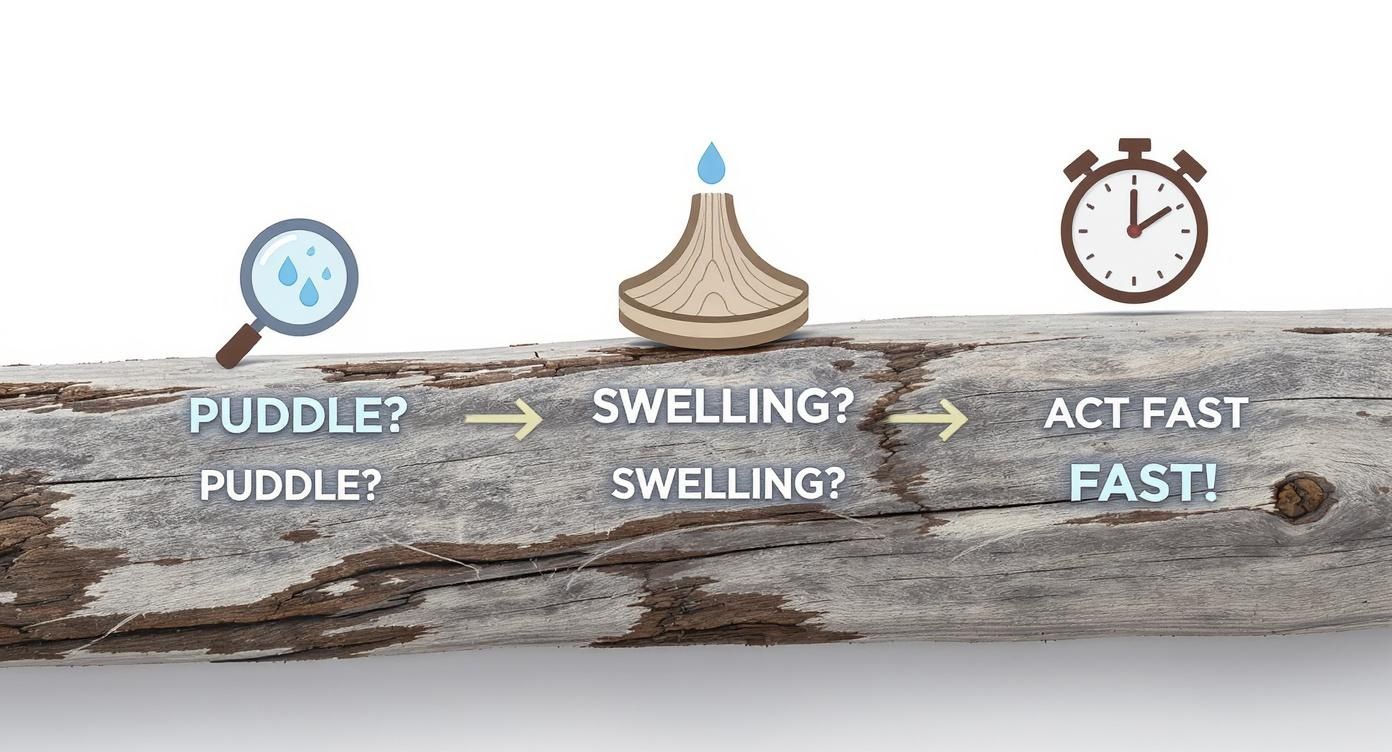
This visual guide is a great starting point for that initial assessment.

Infographic about water damage wood floor

As the infographic highlights, any sign of swelling or warping is your cue to act fast. Hesitation allows the damage to get worse, often much worse.

Common Signs of Water Damage to Look For:

  • Warping or buckling boards: This is the most alarming sign. When planks are literally pulling away and lifting off the subfloor, sometimes by several inches, it’s a hardwood water damage repair emergency. It means the wood has soaked up a massive amount of water and has nowhere to go but up.
  • Discoloration or stains: If you see dark, almost black stains, you’re looking at a classic sign of long-term water exposure. Those stains often mean mold or mildew has set in. On the other hand, lighter, whitish stains might just be damage to the polyurethane finish, which is a much easier fix.
  • Cupping or gaps between boards: Think of cupping as the wood forming a "U" shape. The edges of the board curl up because the underside has absorbed more moisture than the top. You might also see new gaps forming between planks. This happens when the boards swell up with water and then shrink back down unevenly as they dry, a crucial detail to know when you're deciding when to refinish hardwood floors.
  • Musty Odors: Don't ignore your nose. That persistent, damp smell that won’t go away points to hidden mold or mildew.

Catching these signs early is everything. Minor cupping can often be reversed with professional drying techniques. But buckling? That almost always means those boards are a lost cause and will need to be replaced as part of a larger wood floor restoration Long Island project. If you're seeing any of this in your Massapequa Park home, it’s time to get a professional opinion.

Immediate Steps Homeowners Can Take

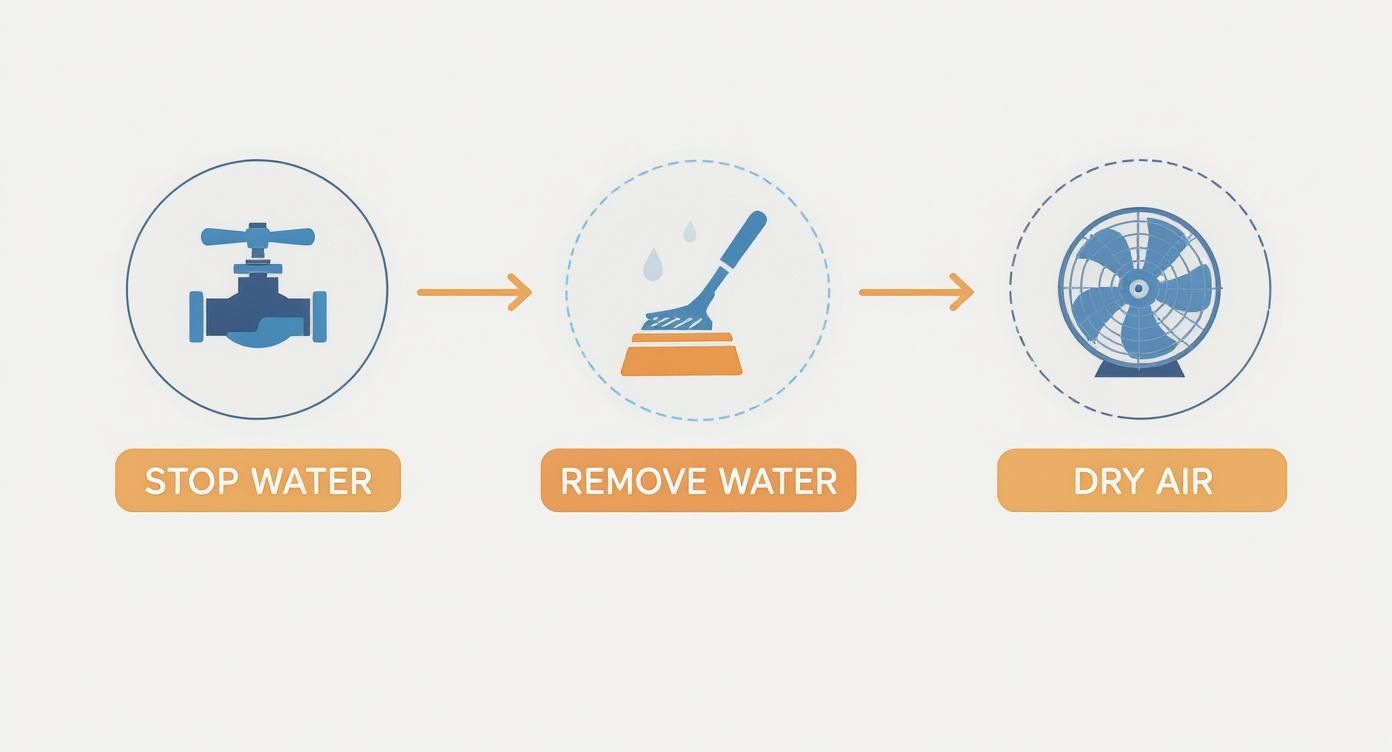
The moment you spot a water damage wood floor, you’re on the clock. What you do in that first hour is absolutely critical and can be the difference between a simple repair and a full-blown replacement. The very first thing to do? Stop the water at its source. It doesn't matter if it's a busted pipe under the sink or a dishwasher that’s decided to flood the kitchen—find the shut-off valve and turn it off.

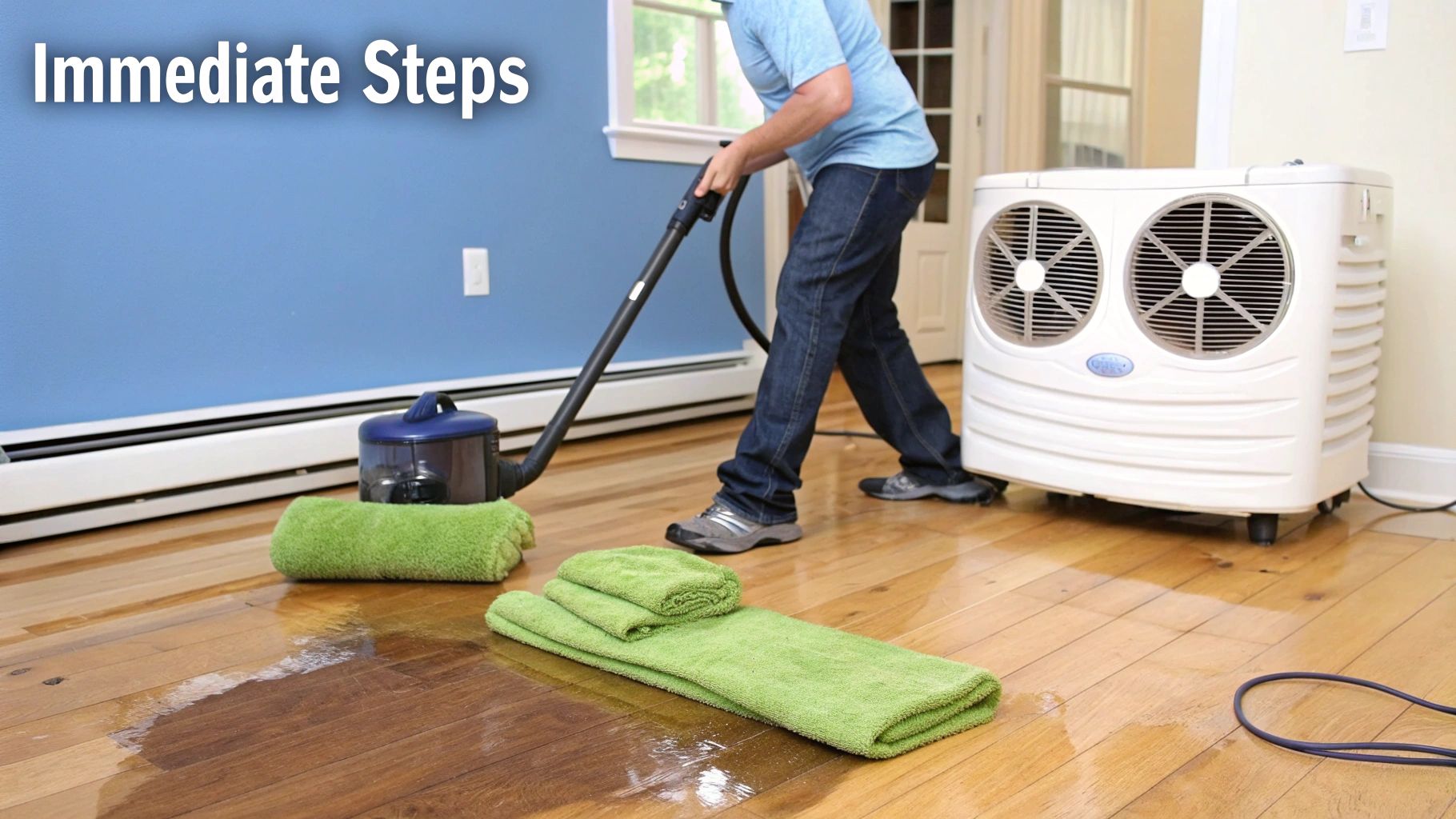
With the source handled, your next job is to get rid of any standing water. Grab towels, a mop, a wet-dry vac, whatever you have, and get every last drop off the surface. The faster you get the water up, the less chance it has to sneak past the finish and into the seams of your floorboards.

Homeowner drying a water-damaged wood floor with a towel

Promoting Air Circulation and Drying

Once the puddles are gone, the real work begins: dealing with the moisture you can't see. You need to get air moving across the floor right away.

Throw open the windows to get a good cross-breeze going. Then, set up any fans you have—box fans, oscillating fans, it doesn't matter—and aim them low, blowing directly across the surface of the floor. This constant airflow is key to helping the absorbed moisture evaporate out of the wood.

If you have a dehumidifier, this is its moment to shine. Set it up in the middle of the room, crank it to the highest setting, and let it run. A good dehumidifier is your best bet for pulling stubborn moisture out of the wood, the subfloor, and even the air itself.

Crucial Tip: Whatever you do, resist the urge to blast the floor with heat from a space heater or hairdryer. It seems like a good idea, but it’s not. Heating the wood too quickly will cause it to dry unevenly, leading to splintering, cracking, and even worse warping. Slow and steady wins this race.

Think of these actions as first aid for your floors. They're designed to stop the bleeding, so to speak, but they won't always fix moisture that has penetrated deep into the wood or the subfloor beneath. The financial fallout from moisture-related flooring failures is staggering, costing property owners an estimated $2.4 billion annually. You can read these industry findings on flooring problems to get a better sense of the scope.

As you clean up, make sure you aren't using products that could harm the finish. If you're unsure, our guide on the best cleaning products for hardwood floors can help you protect your investment. For anything more than a small, quickly-handled spill, getting a professional opinion is the smartest move to head off serious, long-term structural problems.

Savera’s Water Damage Repair Process for Massapequa Park Hardwood Floor Refinishing

Once you’ve handled the immediate mess and the surface feels dry, it’s time to call in the pros to deal with what’s happening underneath. Tackling hardwood water damage repair in a place like Massapequa Park isn’t just about making it look good again; it’s about a methodical approach to prevent serious long-term issues like mold growth or a weakened subfloor.

Our first step is always inspecting and assessing the affected areas. We don't just eyeball the damage. We pull out our professional moisture meters to map exactly how far the water has spread. This gear lets us find hidden moisture that has seeped into the subfloor—a classic culprit for boards that just won't lay flat and that lingering musty smell.

Tailoring the Repair to the Damage

No two water damage wood floor situations are identical, so a one-size-fits-all solution just won't cut it. The right repair strategy depends entirely on what we find during that initial assessment.

If we're looking at light surface stains or some minor cupping, our Screen & Recoat Service is often the perfect fix. It's a less invasive process where we lightly abrade the existing finish and apply a fresh, new topcoat. This can bring a floor back to life without the dust and disruption of a full-scale sanding.

But for the more stubborn problems—think deep water-stained hardwood, warped boards, or buckling—we have to get more aggressive.

Advanced Sanding for a Deep Restoration

When the damage runs deeper than the finish, our Dust-Free Sanding Service is the answer. We methodically sand down the damaged layers of wood, which completely removes stains and levels out any cupping or warping. It's like a reset button, revealing the clean, undamaged wood underneath and giving us a perfect canvas for the new finish.

This is where true wood floor restoration Long Island begins. Our dustless system is a game-changer, keeping your home clean by capturing virtually all the airborne particles. If you're curious about how it works, you can read up on the benefits of dustless floor refinishing in one of our guides.

After sanding, the finish we apply is what protects your newly restored floors for years to come. For busy Massapequa Park homes with kids and pets, we often recommend our advanced UV-curable finishes. While traditional polyurethanes can take days to fully cure, our UV finish hardens instantly. You can literally move your furniture back in and walk on your beautiful floors the very same day.

This push for more resilient solutions is something we're seeing across the entire industry. The market for water-resistant and waterproof wood flooring is exploding, with projections showing it could hit $5 billion by 2025. It’s clear that homeowners want floors that look incredible but can also stand up to real life. You can discover more insights about this growing market to see how technology is evolving. Our professional refinishing process gives your existing floors that same level of modern protection and durability.

Benefits of Professional Restoration: Protecting Your Long Island Home

After the headache of dealing with a water damage wood floor and going through the whole restoration process, the last thing you want is a repeat. Choosing professional Massapequa Park hardwood floor refinishing offers more than just a beautiful result—it provides peace of mind. A few simple, consistent habits can make all the difference, dramatically lowering your risk and keeping those beautiful floors looking their best.

A clean, well-maintained hardwood floor with protective felt pads visible under furniture legs.

Think of your floor's finish as its coat of armor. Our job is to restore that seal, and your job is to protect it. Here’s why letting experts handle the job is crucial:

  • Prevents further structural damage: We use moisture meters to ensure the subfloor is completely dry, stopping hidden mold and rot before they start.
  • Restores natural beauty of hardwood: Our dust-free sanding removes all traces of stains and warping, bringing back the wood's original warmth and character. We've brought back to life countless floors, from historic oaks in waterfront homes to modern maples in new constructions.
  • Protects against future water issues with proper finishes: We apply high-quality, water-resistant finishes, including instant UV-cure options, that provide a durable barrier against future spills and moisture.

Maintenance Tips: How to Protect Floors From Future Spills and Moisture

Most of the time, water damage stems from two places: outside water getting in or an inside appliance giving out. If you can get ahead of these risks, you’re creating a much safer space for your floors.

Here are a few practical things you can start doing today:

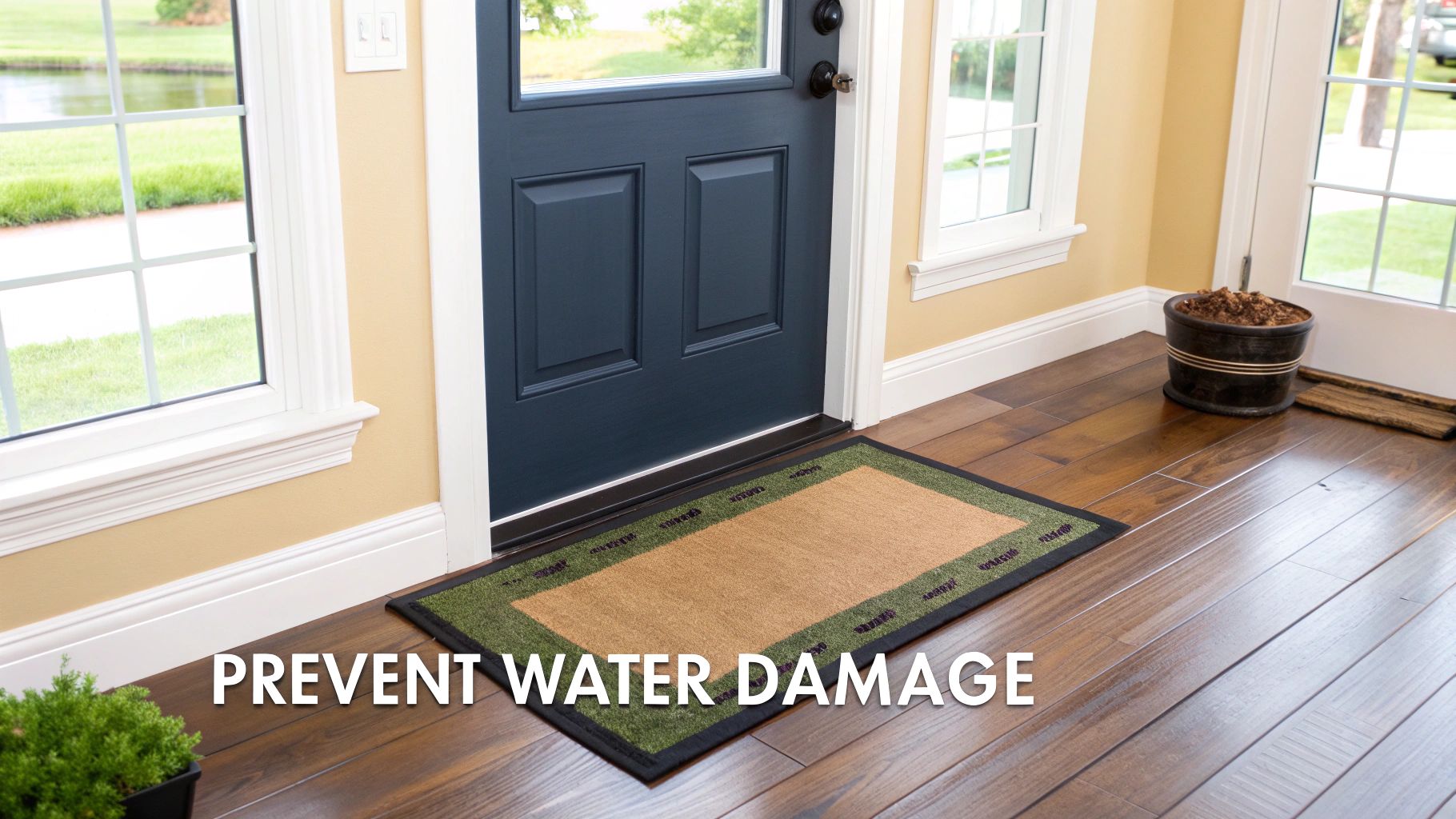
  • Put Down Good Mats: Place high-quality, absorbent mats at every single entrance. This is your first line of defense, trapping water, snow, and dirt right at the door.
  • Get Serious About Furniture Pads: Furniture legs scraping across the floor can easily scratch and gouge the finish. Those little blemishes create weak spots where water can sneak in. Always stick felt pads under the legs of chairs, tables, and couches.
  • Attack Spills Immediately: This one is non-negotiable. The second something spills, grab a soft, dry cloth and wipe it up. Don't let liquids sit—even for a minute.

Expert Tip: Every few months, take a flashlight and inspect the hoses connected to your dishwasher, washing machine, and refrigerator ice maker. These are notorious for developing slow, hidden leaks. If you see any cracking, bulging, or brittleness, replace them. It’s a cheap preventative fix that can save you thousands.

For a deeper dive, check out our other tips on how to maintain hardwood floors and keep them looking brand new. These small efforts are what will keep you from ever having to tackle another hardwood water damage repair project. If your hardwood floors have suffered water damage, call Savera Wood Floor Refinishing via saverawoodfloorrefinishing.com for professional repair and refinishing services.

FAQs About Water Damage and Massapequa Park Hardwood Floor Refinishing

Facing a water-damaged wood floor in your Massapequa Park home can feel overwhelming. It's a stressful situation, and you've undoubtedly got a lot of questions running through your mind. Let's walk through some of the most common concerns we hear from homeowners, giving you the clear answers you need to move forward.

Can My Water-Damaged Wood Floor Actually Be Saved?

In many cases, the answer is a resounding yes. Whether or not we can save your floor really boils down to a few critical things: the type of wood you have, the severity of the damage, and—most importantly—how fast you take action.

Solid hardwood floors have an incredible ability to bounce back. If you're looking at minor issues like cupping, some surface discoloration, or light water stains, a professional Hardwood Floor Refinishing Service can often work wonders. We can typically sand down past the damaged layer, revealing the beautiful, untouched wood just beneath the surface.

Now, if the damage is more serious—think boards that are buckling and pulling away from the subfloor or significant mold has taken hold—some replacement will likely be necessary. Our first step is always a thorough, honest inspection to figure out the most effective and budget-friendly path forward for your home.

How Long Does Hardwood Water Damage Repair Take?

The biggest variable in any hardwood water damage repair timeline is moisture. Plain and simple. Before we can even think about sanding or refinishing, both the wood and the subfloor underneath have to be 100% dry. Depending on how saturated everything is, this drying-out period can take anywhere from a few days to a couple of weeks.

Once we get the all-clear that the floors are completely dry, the real restoration work begins.

We know how disruptive this can be, which is why we offer an advanced UV-curable finish to get you back to normal faster. Traditional finishes can take days to fully cure, but our UV technology hardens the finish instantly. You can literally move your furniture back in and walk on your beautiful new floors the same day we finish the job.

Will My Homeowners Insurance Cover This Repair?

This is the big question for most people. Coverage really hinges on where the water came from. A primary concern for many dealing with water damage to their wood floors is understanding their financial options; you can learn more about whether homeowners insurance covers water damage from experts in the field.

Generally speaking, most standard policies will cover damage from a sudden and accidental event. Think of a burst pipe, a washing machine hose that gives out, or a dishwasher that overflows unexpectedly.

However, policies often exclude damage that happens over time. This includes things like gradual leaks you didn't fix, poor maintenance issues, or natural flooding from a storm. For that, you’d need a separate flood insurance policy.

Our best advice? Call your insurance agent the moment you discover the damage. They can clarify what your specific policy covers. We'll provide a detailed, professional estimate and all the paperwork you need to support your claim and make the process as smooth as possible.

Homeowners on Long Island trust Savera Wood Floor Refinishing to restore the natural beauty of their hardwood floors with our dust-free sanding system and advanced UV-curable finishes. Unlike traditional methods, our UV technology cures instantly, so you can move furniture back the same day with no lingering odor or downtime. Choose the perfect refinishing service to match your needs and home traffic. Our dust-free process ensures a clean, beautiful finish every time.

📞 Phone: 631-866-1972
🌐 Website: saverawoodfloorrefinishing.com
📍 Service Area: Massapequa Park, Seaford, Wantagh, Bellmore, and surrounding Long Island towns.

Restoring Your Water Damage Wood Floor in Massapequa Park

Finding water pooled on your hardwood floors is a gut-wrenching moment for any homeowner in Massapequa Park. Whether it's from a burst pipe, a slow leak from the dishwasher, or the aftermath of a nasty Long Island storm, moisture is the absolute worst enemy of wood. The damage can range from ugly stains to severe structural warping, and it happens fast. For homeowners in Massapequa Park, understanding the risks and knowing who to call for professional hardwood floor refinishing in Massapequa Park is the first step toward saving your beautiful floors.

Why Water Is Your Hardwood Floor's Biggest Threat

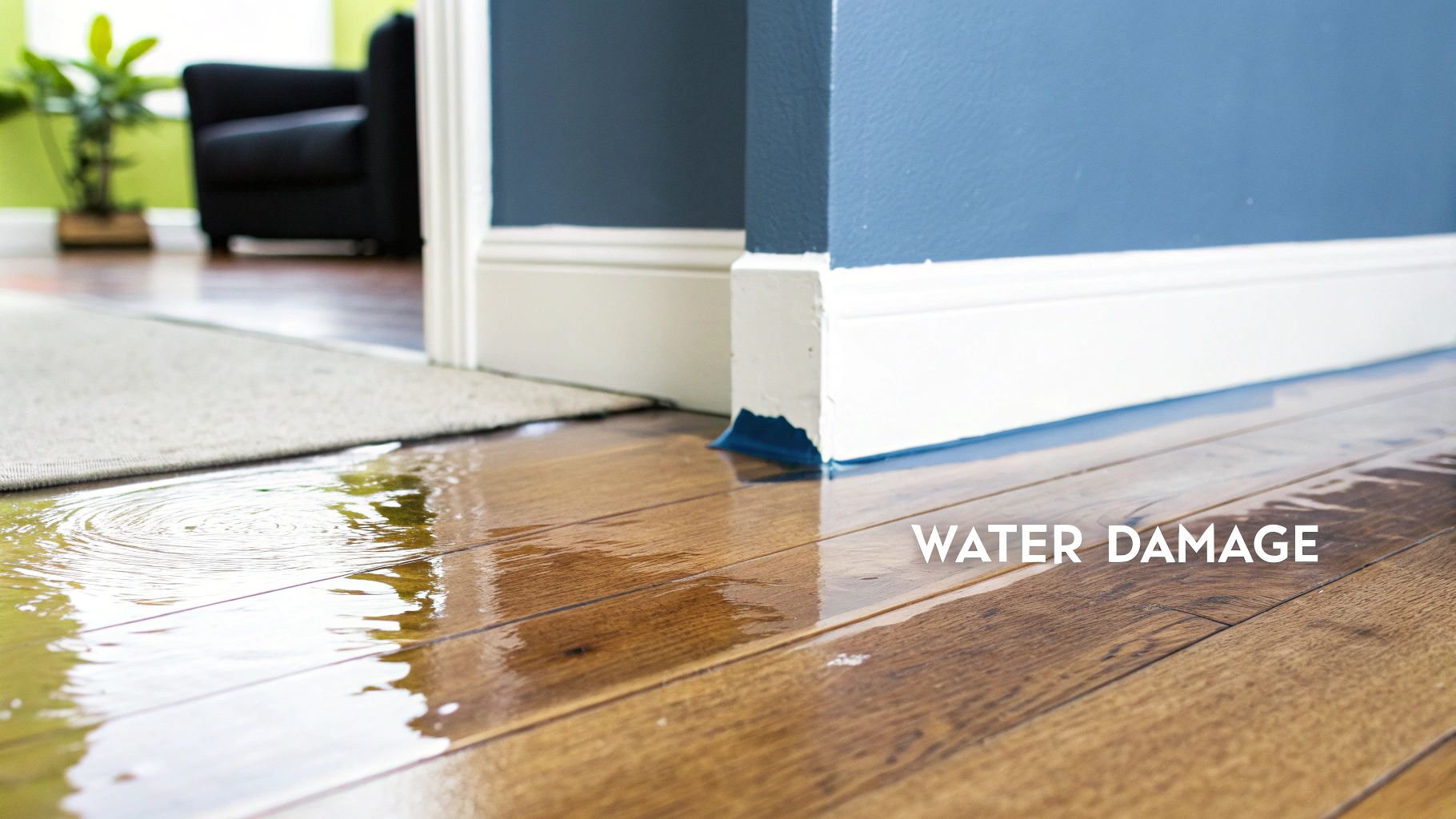
A close-up of a hardwood floor showing signs of water damage, such as warping and dark stains.

There’s a reason hardwood floors and water don’t mix. Wood is a porous, organic material, and just like a sponge, it absorbs moisture. When wood fibers get soaked, they swell up, leading to dramatic and often destructive changes that require professional intervention.

This isn't a rare event. It’s a daily headache for people across the country. Around 14,000 U.S. residents deal with water damage claims every single day, and roughly 1 in 60 insured homes face this issue each year. Acting quickly is everything if you want to save your floors and keep costs down. You can find more insights about water damage trends for homeowners to see the full financial impact.

Immediate Risks and Telltale Signs

Whether you live in Nassau Shores or closer to John J. Burns Park, spotting the signs of a water damage wood floor early on can make all the difference. You need to know what you’re looking for.

When water gets into your floorboards, it leaves behind obvious clues. The table below breaks down what you might see and why you shouldn't ignore it.

Immediate Water Damage Signs and Risks

Visual Sign of Damage What It Means Potential Long-Term Risk
Dark Stains or Discoloration The wood has been wet for a while. These dark spots are often the first sign of mildew or mold starting to grow within the fibers. Permanent staining, widespread mold that can affect air quality, and wood rot.
Cupping or Crowning The moisture balance is off. "Cupping" (edges rise up) means the bottom is wetter than the top. "Crowning" (center bulges) means the top is wetter. The boards can permanently lose their shape, creating an uneven and potentially hazardous surface.
Buckling or Warping This is a severe reaction. The planks have absorbed so much water that they've expanded and are literally pulling away from the subfloor. Complete floor failure, requiring a full replacement. This can also indicate serious moisture issues in the subfloor.
A Musty Odor There’s trapped moisture you can't see, likely under the floorboards. That smell is a clear indicator of mold or mildew growth. Health issues from mold spores, damage to the subfloor, and potential structural rot.

Each of these signs is your floor's way of telling you it’s in serious trouble. The longer you wait, the worse—and more expensive—the problem gets.

Ignoring these red flags is a recipe for disaster. What starts as a small issue can quickly compromise your subfloor and even the structural integrity of your home. The only way to know how bad it really is is to get a professional assessment.

At Savera Wood Floor Refinishing, we’ve seen countless times how a tiny leak spirals into a major restoration project. It's why our approach to hardwood floor refinishing in Massapequa Park always starts with tackling the root cause—the hidden moisture—not just the surface symptoms. If you act fast, you stand a much better chance of saving your beautiful floors from a complete tear-out and replacement.

Signs of Water Damage to Look For in Your Massapequa Park Home

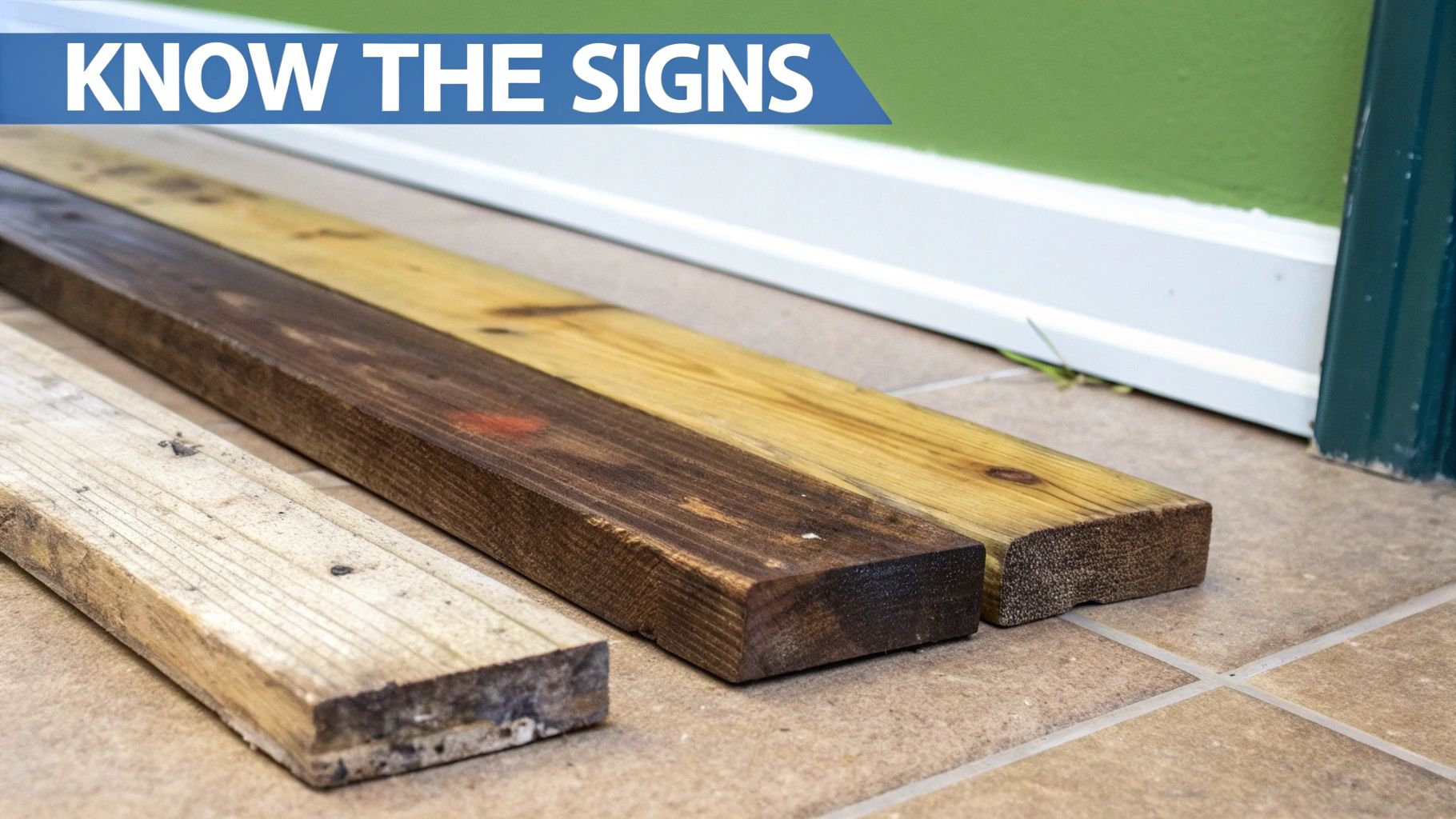
A detailed view of a water-damaged wood floor showing cupping and dark discoloration.

Before you can even think about hardwood water damage repair, you have to learn how to read the floor. It tells a story—where the water came from, how long it’s been there, and how bad the problem really is. For homeowners here in Massapequa Park, spotting these clues early is the first critical step toward saving your floor.

Water damage isn't always a dramatic flood. It can be subtle, and it shows up in different ways. Each sign gives you a hint about the moisture level and the potential for hidden issues that need professional hardwood floor refinishing in Massapequa Park.

Common Shapes of Damage

The most obvious signs you'll see on a water damage wood floor are the physical changes to the boards themselves. It usually comes down to one of these three problems:

  • Cupping: This is when the edges of a board are higher than the middle, creating a concave or "cupped" look. It’s a classic sign that the wood soaked up more moisture from the bottom than the top, which usually points to a damp subfloor.
  • Crowning: The exact opposite of cupping. Crowning is when the center of the board swells up, becoming higher than the edges. This typically happens when the surface gets hit with a lot of moisture, like a big spill left to sit for too long.
  • Buckling: This is the most severe warping you'll see. Buckling is when the floorboards actually lift right off the subfloor, sometimes by several inches. It's a clear signal of a major water event and means you need a professional, fast.

Stains and Discoloration

Besides the shape of the boards, stains are another dead giveaway. The color of the stain on your water-stained hardwood can tell you a lot. White rings or hazy, cloudy spots are usually just moisture trapped in the finish itself and are often fixable.

Dark, blackish stains, however, are a much bigger deal. This deep discoloration means water has soaked all the way into the wood fibers, and you've likely got mold or mildew starting to grow. Ignoring these dark spots is a recipe for wood rot, which can destroy the floor's integrity. It’s at this point you really have to decide when to refinish hardwood floors versus when a full replacement is the only option.

A professional assessment is vital because what you see on the surface is often just the tip of the iceberg. Moisture is sneaky; it can travel under floorboards and seep into the subfloor, causing major problems you can't even see.

At Savera, our process for wood floor restoration on Long Island always starts with a thorough inspection. We use specialized tools to find every bit of hidden moisture, allowing us to see the full picture without tearing anything up. These modern moisture detection techniques for hardwood floors are non-negotiable for a proper repair. By getting to the root cause, we can guarantee the final result isn't just beautiful, but built to last.

Immediate Steps Homeowners Can Take

The second you spot water pooling on your hardwood, the timer starts. What you do in those first critical moments can make a world of difference, often spelling the difference between a minor repair and a full-scale replacement of a water damage wood floor. The goal is to act fast, but always with safety in mind.

Your number one priority, before anything else, is to stop more water from coming in. If you're dealing with a burst pipe or a rebellious dishwasher, you'll likely need to shut off the main water supply to your house. It’s a skill every homeowner should have; knowing how to turn off your water main can turn a catastrophe into a manageable inconvenience.

Removing Water and Starting the Drying Process

With the water source handled, it's time to get that standing water up. Grab every towel you can find, a mop, or even a wet/dry shop vac to pull as much of the liquid off the surface as you can. A good tip is to work from the outside edge of the puddle toward the center to keep it from spreading.

Now, let's get some air moving. This is about tackling the moisture that’s already starting to seep into the wood.

  • Fans are your best friend. Turn on ceiling fans and set up any portable or box fans you have. The trick is to aim them so they blow air across the floor's surface, not straight down at it.
  • Open up the windows. If it’s not too humid outside, this creates a cross-breeze that helps carry moisture out.
  • Fire up a dehumidifier. If you own one, get it running in the room immediately. Set it to the lowest humidity setting to start pulling moisture not just from the air, but from deep within the floorboards.

Important Safety Note: When dealing with significant water, be incredibly careful around electrical outlets and cords. Water and electricity are a dangerous mix. Never, ever use a regular household vacuum for water, and if you're worried about safety, shut off the power to that area at the circuit breaker.

Think of these actions as first aid for your floors. They are essential for damage control while you figure out your next steps. Real, thorough drying is a precise process, and a DIY approach can sometimes trap moisture and cause hidden mold or rot down the line. If you're unsure about any part of this initial cleanup, feel free to give us a call. For ongoing care, you can also check out our general tips for finding a quality wood floor cleaning service near me.

Savera’s Water Damage Repair Process

Once you've stopped the immediate leak and cleared the standing water, our real work begins. This is where our experience with hardwood floor refinishing in Massapequa Park truly shines. We've spent years perfecting our process, so when we approach a water damage wood floor, we do it with a plan that's been tested time and time again.

It always kicks off with a thorough assessment. Our team shows up at your Massapequa Park home with professional moisture meters to get the real story—how far the water has actually traveled. We'll map out the affected zones, figuring out what's salvageable and what might need more serious intervention. This initial diagnosis is everything; it sets the stage for a hardwood water damage repair that will actually last.

The infographic below shows the emergency steps we advise homeowners to take immediately. Getting these right makes a huge difference in what we have to work with when we arrive.

Infographic outlining the 3-step water emergency response: Stop Water, Remove Water, and Dry Air.

Taking these first actions helps contain the problem, giving us a much better shot at a successful restoration.

Inspection and Targeted Drying

With a clear picture of the damage, we bring in heavy-duty equipment like high-powered air movers and commercial dehumidifiers. The goal here is to carefully pull moisture not just from the wood planks you can see, but from the subfloor hidden underneath. This controlled drying is absolutely essential to prevent mold from taking hold and to stop the boards from warping or cupping any further.

Sometimes, drying isn't enough. If boards are severely buckled, crowned, or have pulled away from the subfloor, they have to go. We'll carefully remove the damaged planks and seamlessly weave in new ones to match your existing floor. We've detailed our process for the repair of damaged or weakened wood boards so you can see exactly how we make it look like nothing ever happened.

Dust-Free Sanding and Restoration

Once the floor is bone dry and structurally sound, we shift to restoration. Our Dust-Free Sanding Service is a huge relief for homeowners. It strips away the damaged surface—along with stains, minor warping, and scratches—without coating your entire house in a layer of fine wood dust. This prepares the raw wood to properly absorb a new finish, erasing the evidence of water damage and restoring the floor's natural beauty.

Key Takeaway: A successful repair absolutely depends on two things: meticulous drying and professional sanding. If you rush or cut corners on either of these, you're just asking for trouble later, whether it's a peeling finish or a recurring mold problem.

Choosing the Right Finish

The last decision is how to best protect your newly restored floor. We have two main paths, depending on the extent of the initial damage.

  • Screen & Recoat: If the water damage was superficial and only affected the top protective layer, this is a great option. We lightly scuff up the old finish and apply a fresh coat. It’s a fantastic way to restore that original luster and add a new layer of defense.
  • Full Refinishing: This is the go-to for floors that we had to sand down to remove stains and warping. It involves applying a new stain color if you want a change, followed by multiple coats of a tough, water-resistant finish. It’s a total transformation for your water-stained hardwood.

Following this careful, proven process ensures your floors don't just get a cosmetic facelift. They are genuinely restored, solid, and ready for whatever life throws at them next.

Benefits of Professional Restoration for Your Water Damage Wood Floor

When you're staring at a water damage wood floor, the big question always looms: can we save it, or is it a lost cause? It's a dilemma I see Massapequa Park homeowners face all the time. The good news is, professional hardwood floor refinishing in Massapequa Park can often work miracles. But you have to be realistic—sometimes, replacement is the only safe and practical way forward.

The whole decision really boils down to the extent and type of damage. If the problems are mostly cosmetic and haven't compromised the wood's core structure, refinishing is a fantastic option. This is especially true for classic solid hardwood floors, which have enough thickness to be sanded down and brought back to life multiple times.

When Refinishing Is the Right Choice

Think of refinishing as the go-to solution for moderate damage where the wood and, just as importantly, the subfloor beneath it are still structurally sound.

  • Surface Stains and Discoloration: Those ugly dark water stains often look worse than they are. In many cases, our dust-free sanding process can take them right out, revealing fresh, beautiful wood underneath.
  • Minor Cupping or Crowning: If your boards have developed a slight wave or hump, we can usually sand the floor back to a perfectly flat, smooth surface.
  • Solid Hardwood Construction: Floors made from solid planks are the best candidates for restoration, as they provide more material to work with to correct imperfections.

I remember a project in a beautiful Massapequa Park colonial where a burst pipe left the historic red oak floors looking like a total write-off. The homeowner was sure they'd have to tear it all out. They were absolutely floored when our hardwood water damage repair process restored the floor to its original glory, saving them a small fortune in the process.

When Replacement Becomes Necessary

On the other hand, there are times when the damage is just too deep and a refinishing job won't cut it. Replacement becomes the only real choice when the floor's integrity is shot.

If you see widespread mold, feel soft or spongy spots when you walk, or notice the floorboards have completely pulled away from the subfloor, those are major red flags. Trying to refinish a floor with these problems is just papering over the cracks—it doesn't solve the serious underlying issues.

  • Severe Buckling: When boards have aggressively lifted and warped, they've often lost their original shape for good and won't lay flat again.
  • Widespread Mold Growth: If you suspect mold has gotten deep into the wood and into the subfloor, those materials have to come out. It’s a health and safety issue, plain and simple.
  • Subfloor Damage: A waterlogged, weak, or rotting subfloor can't support anything. It must be fully repaired or replaced before any new flooring goes down.
  • Engineered Flooring Delamination: Engineered floors are made of layers bonded together. When water gets in, those layers can peel apart. A delaminated board is toast; it can't be sanded or repaired.

Decision Guide: Refinish vs. Replace

For homeowners in Massapequa Park, choosing the right path for a water-damaged wood floor can feel overwhelming. This table breaks down the key factors to help you assess your situation and make a confident, informed decision.

Factor Choose Refinishing If… Consider Replacement If…
Board Shape The boards show minor cupping (edges are higher than the center) or crowning (center is higher than the edges). The boards are severely buckled, lifted significantly, or have pulled away from the subfloor entirely.
Subfloor Condition The subfloor is dry, solid, and completely unaffected by the water. You feel soft or spongy spots when walking, indicating a rotting or waterlogged subfloor.
Type of Wood You have solid hardwood, which offers plenty of thickness for sanding and leveling. You have engineered flooring where the top veneer layer has delaminated (peeled away) from the core.
Mold Presence There is no visible mold, or only a small amount of surface-level mildew that can be cleaned and sanded away. Mold is widespread, has penetrated deep into the wood grain, or is present on the subfloor.
Extent of Damage The water damage is contained to a specific area and hasn't compromised the majority of the floor. More than 30-40% of the floor is severely damaged, making a full replacement more cost-effective.

Ultimately, a professional assessment is the best way to determine your next steps. Understanding the difference between these scenarios is key to making a smart investment in your home. For a deeper dive, you can learn more about hardwood floor resurfacing vs refinishing. Our team at Savera is always here to provide a clear evaluation to help you make the right call.

Maintenance Tips: Protecting Floors from Future Spills

You've just gone through the whole process of bringing your beautiful Massapequa Park floors back to life after a water damage wood floor event. The last thing you want is to do it all over again. Thankfully, protecting that investment is mostly about smart, simple habits.

With a little proactive care, you can drastically cut down the risk of future water problems and keep those floors looking perfect.

It all starts at the front door. Having high-quality, absorbent mats at every entrance is a must here on Long Island, especially with our wet and snowy seasons. This is your first and best defense, catching water, salt, and dirt before anyone has a chance to track it across your hardwood.

Smart Habits for a Drier Home

Once inside, there are a few hotspots that need special attention. I always recommend placing small, waterproof mats under pet water bowls and right in front of the kitchen sink. These are the places where small spills happen daily, and a mat acts as a fantastic buffer against those constant drips and splashes.

You also need to think about the air inside your home.

  • Keep an Eye on Humidity: Wood floors are most stable and happy when your home's humidity level stays between 35% and 55%. Running a dehumidifier during those sticky Long Island summers is a great way to stop your floors from slowly absorbing moisture, which can cause boards to cup or crown over time.
  • Wipe Up Spills Instantly: This one is crucial. Don't let a spill sit for even a minute. Grab a soft, dry cloth and blot it up immediately. If it's something sticky, use a cloth that's just barely damp, then follow up with a dry one.
  • Use the Right Cleaner: Steer clear of all-purpose cleaners, DIY vinegar solutions, or any kind of wax. These products can eat away at your floor's protective finish, leaving the raw wood exposed and vulnerable to moisture. Always stick to a pH-neutral cleaner made specifically for hardwood.

The best insurance policy for your floors is a top-tier, water-resistant finish. Think of it as a shield. This protective layer buys you precious time to clean up a spill before moisture has a chance to penetrate the wood itself.

We use advanced finishes, including our instant-cure UV options, that create an incredibly tough, non-porous barrier. This seal is your floor's ultimate defense against the kind of everyday moisture that leads to another hardwood water damage repair job. To learn more, explore the different hardwood floor finish types and see which one fits your family’s lifestyle.

FAQs About Water Damage Wood Floor Repair

Walking in to find a puddle on your beautiful hardwood floors in Massapequa Park is a homeowner's nightmare. It's completely normal to feel overwhelmed and have a million questions. I've been providing hardwood floor refinishing in Massapequa Park for a long time, and I've heard them all. Let's walk through some of the most common concerns I hear from clients, so you can feel more in control.

"Is It Even Possible to Save My Warped Wood Floor?"

This is almost always the first thing people ask, and the answer is usually yes! As long as we catch it before the damage becomes too extreme, we can often achieve a complete restoration.

Minor to moderate warping—what we call "cupping" or "crowning"—is often reversible with a professional drying process. We bring in specialized equipment that gently pulls the moisture out of the floorboards and the crucial subfloor underneath. This allows the wood to relax and flatten out naturally.

Once everything is bone dry, our dust-free sanding service comes into play. We meticulously level the entire surface, creating a perfectly smooth canvas for a fresh finish. The absolute key is speed. The sooner you call, the better the chances of a complete recovery.

"Will My Floors Ever Look the Same Again?"

Our mission is to make them look like the damage never happened—or, in many cases, even better than before. When we sand down a water damage wood floor, we're not just smoothing it; we're removing the stained, discolored, and damaged top layer to reveal pristine, untouched wood.

From there, it's a fresh start. We can perfectly match the original stain and finish, or you can take the opportunity to try a new look entirely. I remember a project we did near the Massapequa Preserve where a slow, hidden leak had left ugly black stains across their gorgeous oak floors. After we finished, the homeowner told us the floors looked more beautiful than the day they bought the house. That's the result we always aim for.

"How Long Is This Whole Repair Process Going to Take?"

This really comes down to one critical factor: how wet the floor is. You simply can't rush the drying phase. A typical timeline is:

  • Drying: This is the most patient step. Using our high-powered air movers and dehumidifiers, expect this to take anywhere from 3 to 5 days. It's non-negotiable for a lasting repair.
  • Repairs & Sanding: If we need to replace a few boards and then sand the whole area, that usually takes another 1 to 2 days.
  • Staining & Finishing: Applying the new stain and multiple protective coats takes about 1 to 2 days. If you opt for our UV-cured finishes, the floor is ready to walk on the second we're done. No waiting around!

All told, you're usually looking at about a week from start to finish. We'll always map out a clear schedule for you before we even begin.

"What Should I Expect for the Cost of Repair?"

The cost to fix a water-stained hardwood floor isn't one-size-fits-all. It depends on the total square footage, whether we have to physically replace boards, and the specific finish you choose. A simple Screen & Recoat Service for a minor issue will naturally cost less than a full-scale sand and refinish.

What I can promise is a transparent, detailed quote after we've seen the floor in person. It's also a great idea to get familiar with your insurance policy. Understanding how your homeowners insurance covers water damage can make a huge difference. We're always committed to finding a solution that restores your floors perfectly without breaking your budget.

If your hardwood floors have suffered water damage, call Savera Wood Floor Refinishing via saverawoodfloorrefinishing.com for professional repair and Hardwood Floor Refinishing Service you can trust.

Homeowners on Long Island trust Savera Wood Floor Refinishing to restore the natural beauty of their hardwood floors with our dust-free sanding system and advanced UV-curable finishes. Unlike traditional methods, our UV technology cures instantly, so you can move furniture back the same day with no lingering odor or downtime. Choose the perfect refinishing service to match your needs and home traffic. Our dust-free process ensures a clean, beautiful finish every time.

📞 Phone: 631-866-1972
🌐 Website: saverawoodfloorrefinishing.com
📍 Service Area: Massapequa Park, Massapequa, Seaford, Wantagh, Bellmore, and surrounding Nassau County towns.