Tag Archives: scratch resistant finish

Wood Floor Repair Lake Ronkonkoma: Local Experts 2026

You notice it when the afternoon light hits the floor just right. One scratch by the sofa leg. A dark ring near the dog bowl. A faded path from the kitchen to the hallway that wasn’t there a few years ago. In Lake Ronkonkoma, that kind of wear shows up fast, especially in busy ranch homes, split-levels, and colonials where families use the same traffic lanes every day.

Most homeowners don’t need new floors when this starts happening. They need the right repair plan. Good wood floor repair in Lake Ronkonkoma starts with diagnosing what the floor is telling you, then matching the fix to the condition of the wood, the age of the house, and the amount of disruption you can tolerate. In many cases, the better answer is targeted repair followed by Lake Ronkonkoma hardwood floor refinishing, not replacement.

If your floor still has life left in it, a professional repair can change the whole room. Scratches disappear. Water marks get addressed properly. Worn finish gets rebuilt. And with modern dust-controlled equipment and updated finishing systems, the process is cleaner than many homeowners expect. For a broader look at the full process, it helps to review professional wood floor refinishing options before deciding how far your floor needs to go.

A Guide to Wood Floor Repair in Lake Ronkonkoma

A lot of floor problems in Lake Ronkonkoma start small and get ignored. A chair scrape in the dining room. A patch of dull finish by the sliding door. A few boards that feel rougher than the rest. Then one season of humidity, one winter of dry heat, and the floor looks much older than the house around it.

That’s common here. Homes near the lake deal with moisture swings that can stress hardwood over time. Older ranches often have original oak floors with plenty of character, but they also show cupping, gaps, finish wear, and isolated stains more clearly than newer materials do. In newer homes, the issues are often cosmetic at first, but they still need the right fix before the damage spreads.

What repair usually means in real homes

Wood floor repair isn’t one service. It can mean:

  • Surface correction for scratches, scuffs, and light finish wear
  • Board-level repair when a few planks are stained, split, or loose
  • Screen and recoat work when the finish is tired but the wood underneath is sound
  • Full hardwood floor refinishing when the finish has failed across the room
  • Low-abrasion treatment for older floors that shouldn’t be aggressively sanded

Practical rule: If the problem sits in the finish layer, the fix is usually simpler. If the damage has gone into the wood itself, the repair gets more involved.

The encouraging part is this. Many floors that look worn out are still very repairable. A floor with scratches, pet wear, sun fade, or localized water marks often responds well to a disciplined repair and refinishing plan. The key is choosing the least aggressive method that still solves the problem and protects the floor for the long run.

Diagnosing Common Wood Floor Damage

Before anyone sands, stains, or recoats a floor, the damage needs a name. Lake Ronkonkoma homes see a mix of traffic wear, seasonal movement, and moisture-related issues. The wrong diagnosis leads to the wrong repair.

A diagnostic checklist for homeowners in Lake Ronkonkoma identifying six common types of wood floor damage.

The checklist I’d use first

  • Light scratches and scuffs
    These usually sit in the finish. You’ll see them most in entry paths, under dining chairs, and around pet nails.

  • Deep gouges
    These cut into the wood itself. Moving furniture, dropped tools, and old metal casters are common causes.

  • Dark water stains
    Water marks often show up around plant stands, radiators, pet bowls, and old window lines. If you’re dealing with visible moisture damage, this guide to water-damaged wood floor conditions helps clarify what’s cosmetic and what needs deeper repair.

  • Cupping or slight crowning
    This is a classic humidity signal. Boards change shape when moisture conditions are uneven. In homes closer to the lake or with damp basements, this deserves careful evaluation before sanding.

  • Gaps between boards
    Some gaps are seasonal. Others point to longer-term movement, aging, or a past moisture event.

  • Fading and discoloration
    Sunlight can bleach some areas while rugs preserve the original tone. The result is a floor with sharp color differences.

When the issue may not be just the floor

Sometimes floor damage points to a hidden problem below or behind the boards. If wood feels soft, edges crumble, or damage appears in irregular patches, it’s smart to review termite damage warning signs before assuming it’s only finish wear.

If boards are changing shape, don’t rush to sand them flat. Moisture has to be understood first, or the same problem can come right back.

In Suffolk County colonials and older Lake Ronkonkoma homes, I’d be especially careful with floors that have already been sanded in past decades. Some older boards don’t have much wear layer left. In those cases, repair strategy matters more than force.

DIY Repair vs Professional Hardwood Floor Refinishing

A homeowner can handle some floor issues. Not every mark needs a crew and heavy equipment. But plenty of DIY jobs go wrong because the damage looked simple from standing height.

A split image comparing a frustrated man doing DIY wood floor repair and a professional refinishing floors.

What’s reasonable to do yourself

If the floor is structurally sound and the finish is only lightly worn, a careful homeowner may be able to:

  • Clean and evaluate the floor properly before choosing a finish solution
  • Touch up minor surface marks in low-visibility areas
  • Handle felt pads and maintenance corrections that stop new damage
  • Consider low-abrasion options for light wear, especially after reading about refinishing wood floors without sanding

DIY makes the most sense when the issue is small, isolated, and cosmetic.

Where DIY usually breaks down

The trouble starts when homeowners rent a sander for a floor that isn’t flat, dry, or ready for aggressive cutting. That’s how chatter marks, edge dips, swirl patterns, and patchy stain absorption happen. Those mistakes don’t just look bad. They can limit what’s left of the wear layer on the floor.

Traditional sanding also creates a mess that is often underestimated. Fine dust travels farther than expected, especially in open-plan homes and houses with active HVAC systems.

A professional hardwood floor refinishing setup changes that equation. The equipment is better, the sanding sequence is controlled, and the repair decisions happen in the right order.

Here’s a short visual on the process homeowners are usually comparing against:

The real trade-off

DIY can save money on a very small job. It usually doesn’t save money when the floor needs blending, stain matching, board replacement, or whole-room consistency. In those cases, the value of professional work is control. The repair matches the rest of the floor. The finish lays down evenly. The home stays cleaner.

Our Modern Approach to Wood Floor Repair and Refinishing

In Lake Ronkonkoma, the best repair work usually starts by doing less, not more. The floor gets inspected for wear layer, moisture history, movement, previous coatings, and the specific species involved. That determines whether the right answer is deep cleaning, wax removal, screen and recoat, selective board repair, or full sanding and refinishing.

A five-step infographic showing the professional wood floor repair process from assessment to final inspection.

How the process works on a local floor

A common job here is a worn red oak floor in a ranch house. The traffic lanes are dull, the perimeter still has some finish left, and one corner near the back door shows old moisture staining. On that kind of project, the sequence matters:

  1. Assessment first
    The floor gets checked for thin areas, loose boards, contamination from old cleaners, and whether isolated board replacement is needed.

  2. Preparation
    Deep cleaning and, when needed, wax removal come before any finish work. If an old wax or polish residue is left on the floor, new coatings won’t bond the way they should.

  3. Repair work
    Gaps, minor cracks, and damaged sections get addressed before final surface prep. This is where craftsmanship shows. Good repairs disappear into the field of the floor instead of announcing themselves.

  4. Refinishing or screen and recoat
    Some floors need a full sanding. Others only need the existing finish abraded and refreshed.

Why modern equipment matters

Dust control isn’t a luxury in occupied homes. It’s part of doing the work responsibly. As noted in Savera’s Lake Ronkonkoma service details, “Our UV-curable finish technologies allow floors to cure instantly, enabling homeowners to return furniture and resume normal use the same day. Modern refinishing processes using HEPA-filtered vacuums eliminate airborne dust particles by up to 95%, ensuring cleaner environments during sanding and refinishing” through dust-free sanding and same-day floor use systems.

That matters for busy families, pet owners, and homes that can’t sit half-usable for days.

Project examples that show the difference

One floor might need a quiet, low-abrasion refresh in an older home where aggressive sanding isn’t wise. Another might be a full oak refinishing job in a Setauket colonial where color correction, board blending, and traffic durability all matter. In both cases, modern finishing systems change the homeowner’s experience, especially when using instant UV-curable finishing technology instead of waiting around for a traditional cure schedule.

The right finish system isn’t just about sheen. It changes how long the home stays disrupted and how quickly normal life resumes.

One practical option in this category is Savera Wood Floor Refinishing, which offers dust-free sanding, screen and recoat systems, engineered wood evaluation, wax removal, and UV-cure finishing for homes that need a cleaner process.

Understanding Your Wood Floor Refinishing Investment

Cost depends on the scope of the repair, the condition of the wood, and the finish system you choose. In Lake Ronkonkoma, some floors only need a refresh. Others need board repair, stain correction, and full refinishing across the room.

According to Palermo Flooring, the average cost for hardwood floor refinishing in the Lake Ronkonkoma area ranges from $3.00 to $4.50 per square foot, with one-day screen and recoat systems typically costing less than full sanding, and full refinishing jobs averaging between $1,500 and $10,000 depending on floor size and condition in the region’s Lake Ronkonkoma hardwood floor refinishing market.

Estimated costs for floor services in Lake Ronkonkoma

Service Starting Price (per sq. ft.)
Screen & Recoat $2.00
Screen & Recoat with color correction $2.50
Wood Floor Cleaning $1.50
Wax Removal $2.50
Instant UV-Curable Finish $1.00
Silver Traffic Plus $4.00
Diamond Traffic Plus $5.00

What actually drives the price

  • Condition of the floor
    Deep stains, pet damage, movement, and prior coating problems increase labor.

  • Repair complexity
    Simple abrasion and recoat work costs less than detailed board repair and color matching.

  • Finish selection
    Premium traffic finishes and UV-cure systems add cost, but they can reduce inconvenience and help when timing matters.

  • Project type
    Realtor turnovers, rentals, and occupied family homes often need tighter scheduling and cleaner containment.

If you're trying to understand how moisture events can affect repair budgets in general, this article on understanding water damage repair pricing offers useful context on why hidden conditions can change scope.

Paying less for the wrong process is expensive. Paying for the right scope once is usually the better value.

Frequently Asked Questions

How long does hardwood floor refinishing take in Lake Ronkonkoma

Timing depends on the floor condition and finish system. For homeowners, real estate agents, and commercial spaces that need speed, UV-curable finish technology reduces downtime by 70% compared to traditional methods according to Savera's East Hills page on UV-cure hardwood floor refinishing. That's why same-day usability matters so much in move-in, move-out, and showing schedules.

Are modern finishes safe for kids and pets

Low-VOC, water-based finishes are often the better fit for occupied homes because they reduce odor and create a cleaner indoor environment than older, harsher systems. Pair that with dust containment, and the project becomes much easier to live through.

Can deep pet stains or water-damaged boards be repaired

Sometimes yes, sometimes partially, and sometimes those boards need replacement before the room is refinished. The deciding factors are how far the stain has penetrated and whether the wood fibers are still sound. Good repair work starts with honesty here. Not every dark stain sands out cleanly.

Can engineered wood floors be refinished

Yes, in many cases they can. The key is inspection first. Local refinishing companies serving Lake Ronkonkoma note that engineered wood floors can often be refinished after confirming they're suitable, which is why homeowners should avoid guessing and instead review a dedicated hardwood floor refinishing FAQ for common floor types.

What can I do to protect the floor after repair

Keep grit off the floor, use felt pads under furniture, wipe spills quickly, and avoid over-wet mopping. The biggest maintenance win is consistency. Small habits preserve the finish and delay the next refinishing cycle.

Transform Your Lake Ronkonkoma Home with Savera

Lake Ronkonkoma hardwood floor refinishing works best when the process fits the house. In a lake-area home, that means respecting moisture movement. In a busy family home, that means reducing dust and downtime. In a sale-ready property, that means choosing a finish system that gets the floor back into service fast and leaves a clean impression.

For many homeowners, the best path isn't tearing out old oak. It's repairing what's there, correcting the wear, and refinishing with a modern system that fits today's living. That might mean a screen and recoat on a floor that still has a healthy finish base. It might mean wax removal and deep cleaning before any new coating goes down. It might mean full hardwood floor refinishing when the surface has reached the end of its service life.

Homeowners on Long Island trust Savera Wood Floor Refinishing to restore the natural beauty of their hardwood floors. Our dust-free sanding system and advanced UV-curable finishes provide a modern alternative to traditional refinishing methods. With UV technology that cures instantly, you can move your furniture back the same day, no lingering odors, no downtime.

Whether you're looking for a Scandinavian whitewash, a natural raw wood look, a soft warm amber tone, or a custom stain to complement your home, we have the perfect refinishing solution for your style and home traffic.

All our services include dust-free containment and low-VOC, water-based finishes for a healthier, cleaner home environment. For homeowners seeking fast results, our UV-cured finish gets your floors ready the same day, so
you can enjoy your beautifully restored hardwood floors immediately.
Transform your hardwood floors with Savera Wood Floor Refinishing, clean, modern, and stunning every time! 🌟

📞 Phone: 631-866-1972
🌐 Website: saverawoodfloorrefinishing.com
📍 Service Area: Lake Ronkonkoma + nearby towns including Holbrook, Ronkonkoma, Holtsville, Farmingville, and Setauket.


If your floors are scratched, faded, water-marked, or just worn down from daily life, contact Savera Wood Floor Refinishing. We provide wood floor repair and Lake Ronkonkoma hardwood floor refinishing with dust-free containment, modern finish systems, and practical solutions for occupied homes, rentals, and real estate prep.

Best Hardwood Floor Finish for Dogs

For homeowners on Long Island, the love we have for our dogs is often matched by the worry we have for our beautiful hardwood floors. The right finish has to do more than just look good; it needs to stand up to the daily reality of life with a four-legged friend. The best hardwood floor finish for dogs is one that's incredibly tough against scratches, safe for your pets, and doesn't demand a complicated maintenance routine. For homeowners considering hardwood floor refinishing in Setauket or nearby towns, understanding these options is the first step toward a beautiful, long-lasting floor.

In our experience, advanced systems like UV-cured finishes deliver the highest level of durability and convenience, which is why they've become the go-to choice for so many pet-loving families.

A Pet Owner's Guide to Durable Hardwood Finishes for Hardwood Floor Refinishing

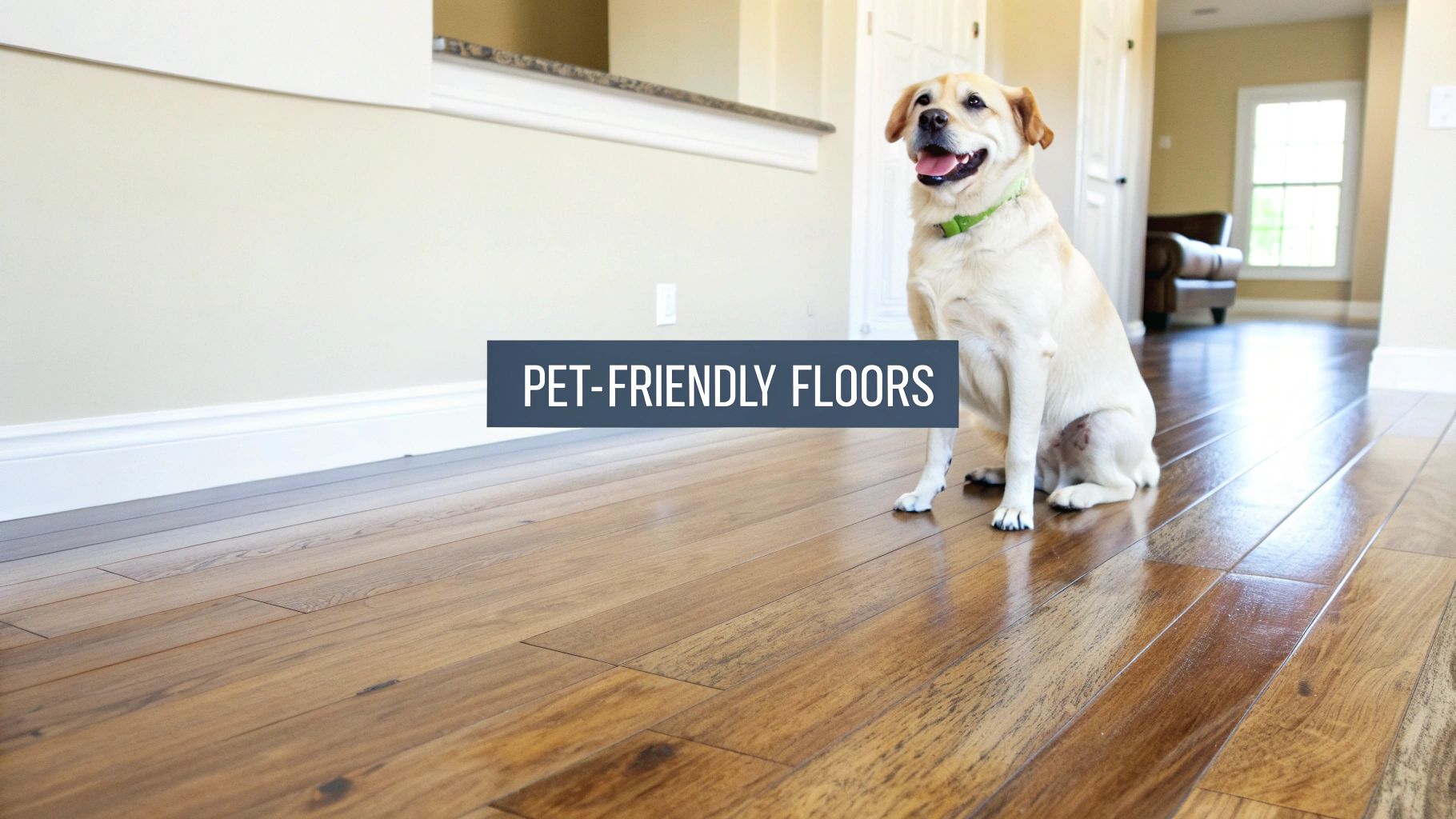
A golden retriever resting on a beautifully finished hardwood floor.

When you have pets, choosing the right finish isn't just a detail—it's the single most important decision you can make to protect your investment. Dogs introduce some unique challenges, from the constant click-clack of nails to the inevitable spills and accidents. A standard, off-the-shelf finish just isn't built for that kind of life.

This guide will walk you through the best options available for hardwood floor refinishing here on Long Island. We'll compare the top contenders so you can find a solution that keeps your floors looking incredible without forcing you to compromise on your pet's safety or your own peace of mind.

Understanding the Demands on Your Floors

The floors in a busy home take a beating, and pets turn that up a notch. Think about protecting the historic red oak floors in a classic Huntington colonial or the wide-plank floors in a modern Setauket home from a rambunctious new puppy—that job calls for something much stronger than a basic polyurethane. The goal is to create a barrier that’s tough enough to handle:

  • Scratches: This is the number one concern for dog owners. Claws can easily etch and dull a softer finish, leaving your floors looking tired and worn.
  • Stains & Moisture: From muddy paws to water bowl splashes, moisture is a constant threat. If it seeps through the finish, it can lead to permanent discoloration and damage to the wood itself.
  • Daily Wear: The paths your pets race down every day become high-traffic zones that can wear down an inferior finish in no time.

A truly durable finish does more than just protect the wood; it makes your life easier. When you have the right protective layer, dirt and grime can't cling to the surface, making it simple to wipe away paw prints and pet hair.

A great way to minimize surface scratches is to keep your dog's nails properly trimmed. Regular visits for professional canine mobile grooming can make a huge difference. This simple preventative step is the perfect partner to a high-quality floor finish.

Modern Solutions for Pet-Friendly Homes

The good news is that finish technology has come a long way. You're no longer stuck with traditional oil-based polyurethanes that take days to cure and fill your home with harsh fumes. At Savera Wood Floor Refinishing, we focus on modern systems that are ideal for households with dogs.

Solutions like our UV-cured finishes are a game-changer. This technology creates an instant, rock-hard protective layer that is simply unmatched in the industry for durability. It means we can complete a hardwood floor refinishing project in your home with almost no disruption, letting you and your pets get back on the floors the very same day.

If you'd like to learn more, feel free to explore our other articles on pet-friendly flooring options.

A Look at Your Hardwood Finish Options

So, what are your choices when it comes to finishing hardwood floors? It's the most important decision you'll make, especially with a dog in the house. You need something that can stand up to the daily chaos of claws, paws, and the occasional accident. The right finish acts as a tough, durable shield for your floors, making your life easier and keeping your home looking its best.

For anyone thinking about hardwood floor refinishing in Setauket or anywhere else on Long Island, this is where the real magic happens. Each finish protects the wood differently, has its own distinct look, and offers a unique level of resilience. Let's break them down.

Surface Finishes: The Polyurethane Shield

Polyurethane is the go-to for most homeowners, and for good reason. It forms a protective, plastic-like layer on top of the wood, sealing it off from the outside world. This makes it an excellent barrier against moisture, whether it's from a spilled water bowl or a potty training mishap.

Polyurethane comes in two main flavors:

  • Oil-Based Polyurethane: This is the classic choice, famous for the warm, amber glow it gives the wood—a look that deepens beautifully over time. It's incredibly durable and scratch-resistant. The downside? The smell during application is intense, it's high in VOCs (volatile organic compounds), and the curing process can take days, sometimes even weeks. That long downtime is a huge headache for pet owners who need their home back to normal fast.

  • Water-Based Polyurethane: The modern successor, water-based poly, dries crystal clear and won't yellow over time, letting the natural color of your wood shine through. It has much lower VOCs and cures far more quickly than its oil-based cousin. Today's high-quality, two-component water-based finishes offer fantastic durability that absolutely rivals the old-school oil products, making them a very popular and practical choice.

Penetrating Finishes: The Natural Feel of Hardwax Oils

Unlike polyurethane that sits on the surface, hardwax oils work by soaking deep into the wood fibers and hardening from within. They essentially become one with the floor. This process creates a stunning, low-sheen look that feels incredibly natural underfoot and really makes the wood's texture and grain pop.

The real superpower of a hardwax oil finish is how easy it is to repair. You can often buff out minor scratches with just a dab of oil, allowing for simple spot repairs without having to refinish the entire room.

But here's the trade-off: this finish doesn't provide the same level of protection against liquids. It forms a weaker barrier, meaning pet accidents can quickly lead to stains if you don't clean them up immediately. While gorgeous, hardwax oils are generally less "dog-proof" than a good polyurethane. You can find more details on various hardwood floor finish types in some of our other guides.

High-Performance Systems: For When You Need Maximum Dog-Proofing

In a home with active dogs, even the best traditional finishes can sometimes fall short. This is where high-performance systems step in, offering a whole new level of protection designed for serious wear and tear.

  • Aluminum Oxide Finishes: You'll typically find this on prefinished flooring that's coated in a factory. Aluminum oxide is an additive mixed into the polyurethane finish that dramatically boosts its resistance to scratches and scuffs. It creates one of the toughest surfaces you can get, but be warned—it can be a real beast to sand and refinish later on.

  • UV-Cured Finishes: This is, hands down, the ultimate solution for pet owners. A UV-cured finish uses a special water-based formula that is hardened and cured instantly by a powerful ultraviolet light. The UV light creates an incredibly dense, cross-linked surface that offers maximum resistance to both scratches and chemicals.

The best part? The instant cure time means zero waiting. You and your pets can be back on your floors the very same day. With zero VOCs emitted after curing, it's the safest, toughest, and most convenient choice for any busy, pet-friendly household.

Comparing The Top Finishes For Homes With Dogs

Choosing the right finish for your hardwood floors when you have dogs is about more than just toughness. It’s a balancing act—you need durability, but also safety for your pets and a realistic maintenance plan. For homeowners planning hardwood floor refinishing in Setauket, picking the right finish means understanding how it will actually perform in a busy house with four-legged family members.

Let's get past the generic pros and cons and dig into how each of these finishes really stands up to the daily chaos of claws, paws, and the occasional accident. This is what truly matters to pet owners.

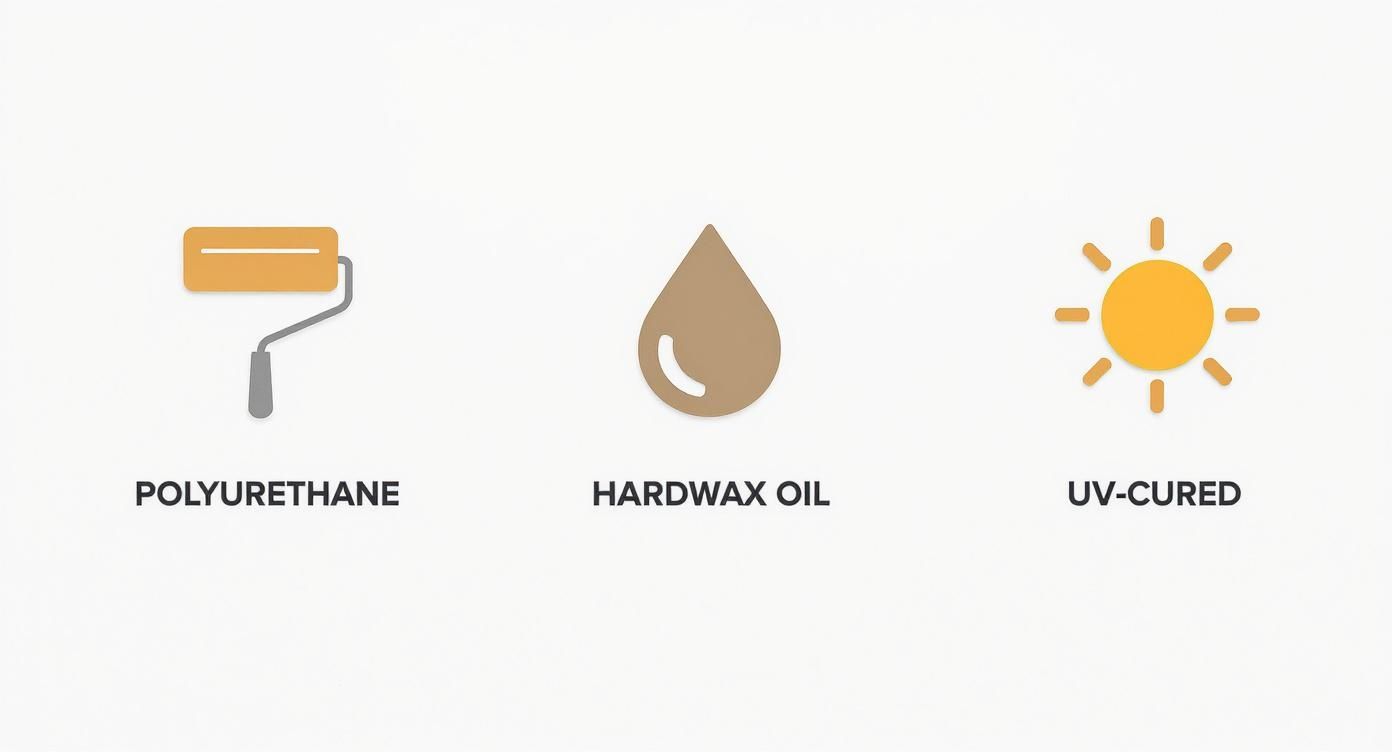
This quick visual guide gives you a snapshot of where each common finish shines.

Infographic about best hardwood floor finish for dogs

As you can see, each finish plays a different role. Polyurethanes create that classic top-coat barrier, hardwax oil is all about repairability, and UV-cured systems offer next-level, instant durability.

Scratch Resistance: A Battle Against Claws

That constant click-clack of dog nails on a freshly finished floor is enough to make any homeowner cringe. Good scratch resistance isn't just about how hard a finish is; it's about its ability to absorb impact and hide those inevitable minor scuffs.

  • Oil-Based Polyurethane: This is the old-school tough guy. It’s known for its hardness and provides good initial scratch resistance. The downside? It gets more brittle with age, which means a sharp claw can leave a distinct, ugly white scratch mark.
  • Water-Based Polyurethane: Don't mistake "water-based" for weak. Modern, two-component water-based finishes are engineered for flexibility. They create a tough shield that’s less prone to showing those white marks because it has a little more give. Premium versions are often fortified with additives that make them incredibly resilient.
  • Hardwax Oils: Let's be honest, this finish offers the least scratch resistance. It’s designed to soak into the wood, not sit on top like a suit of armor. Claws will abrade the surface. The huge trade-off, however, is that you can spot-repair these scratches yourself by simply buffing in a little more oil—something you absolutely cannot do with polyurethane.
  • UV-Cured Finishes: This is, hands down, the champion of scratch resistance. Curing instantly under UV light creates an incredibly dense, cross-linked surface that's a world apart from traditional air-cured finishes. It’s as close to a "dog-proof" floor as you can get.

If you have large, active dogs, the superior scratch resistance of a UV-cured finish is a game-changer. It’s an investment that keeps your floors looking new for far longer.

Stain And Moisture Protection: Handling Accidents

From muddy paws to water bowl slop and the dreaded potty-training mishap, moisture is a constant threat. Your floor's finish needs to act as a seal, buying you precious time to clean up before liquids soak in and cause permanent stains or warping.

  • Polyurethanes (Both Oil and Water-Based): Both are top performers here. They form a non-porous, plastic-like film on the surface of the wood. This seal is excellent at repelling liquids, giving you a critical window to wipe up spills before any real damage is done.
  • Hardwax Oils: This is the weakest option when it comes to moisture. Because it’s a penetrating finish, it leaves the wood pores more open, making it vulnerable to liquids. Pet urine, especially, can cause deep, dark stains almost instantly if it’s not cleaned up immediately.
  • UV-Cured Finishes: Just like the best polyurethanes, UV-cured systems provide exceptional moisture resistance. The ultra-hard, seamless surface they create is a formidable barrier against spills of all kinds.

Pet Safety: VOCs And Cure Times

Your family’s and pet’s health should always come first during a hardwood floor refinishing project. This means paying close attention to the Volatile Organic Compounds (VOCs) released during application and how long it takes for the finish to fully cure and become safe.

  • Oil-Based Polyurethane: This is the worst offender, period. It has very high VOC levels that produce strong, noxious fumes that can linger for weeks. Worse, it can take up to 30 days to fully cure, meaning you have to keep your pets completely off the floors for a month to protect their sensitive respiratory systems.
  • Water-Based Polyurethane: A much healthier option. Modern water-based finishes have low to zero VOCs. They also cure much faster, typically becoming fully hardened and safe within just 3 to 7 days.
  • UV-Cured Finishes: By far the safest and most convenient choice. This finish is 100% cured instantly by the UV light machine. There is zero off-gassing and zero downtime. The moment we walk out the door, your floors are completely safe for pets, kids, and furniture.

To give you a clearer picture, here’s a side-by-side look at how these popular finishes stack up for dog owners.

Hardwood Floor Finish Comparison for Dog Owners

This table compares key features of popular hardwood floor finishes to help homeowners with dogs choose the best option based on durability, safety, and maintenance.

Finish Type Scratch Resistance Stain/Moisture Resistance Pet Safety (VOCs & Cure Time) Maintenance Best Sheen
UV-Cured Finish Excellent – Hardest, most durable option available. Excellent – Forms a seamless, impenetrable barrier. Excellent – Zero VOCs, 100% cured instantly. No downtime. Low maintenance. Clean with approved products. Recoat as needed. Matte or Satin
Water-Based Polyurethane Very Good – Modern 2-component formulas are tough and flexible. Excellent – Forms a strong, non-porous surface film. Good – Low to zero VOCs. Cures in 3–7 days. Low maintenance. Regular cleaning and eventual recoating. Matte or Satin
Oil-Based Polyurethane Good – Hard but can become brittle and show white scratches. Excellent – Creates a highly water-resistant surface. Poor – High VOCs. Takes up to 30 days to fully cure. Low maintenance. Recoating is a major project. Satin
Hardwax Oil Fair – Low resistance, but scratches are easy to spot-repair. Poor – Vulnerable to liquids, especially pet urine. Good – Low to zero VOCs. Cures in 24–72 hours. Higher maintenance. Requires regular re-oiling/buffing. Matte

Ultimately, the goal is to choose a finish that fits your lifestyle. A UV-cured finish offers the ultimate in convenience and durability, while a high-quality water-based polyurethane provides a fantastic, safe alternative.

Maintenance And Long-Term Durability

No matter which finish you choose, its long-term performance in a home with dogs comes down to two things: the quality of the product and how you care for it. Finishes like Aluminum Oxide are often used on prefinished flooring and are known for their incredible durability, with an expected lifespan of 15–20 years.

Sheen also plays a huge role. A matte or satin finish is always a better choice for pet owners than a high-gloss one. Lower sheens are masters of disguise—they do a much better job of hiding minor scratches, scuffs, and paw prints, whereas a glossy floor highlights every single imperfection. For an even deeper dive into this, you can explore our guide comparing oil-based vs. water-based polyurethane finishes. This is why investing in a professional-grade system is so critical for a floor that not only looks beautiful today but stays that way for years to come.

Why Wood Hardness and Sheen Level Matter for Hardwood Floor Refinishing

The finish is your floor’s first line of defense, but the wood itself is the foundation. You can put the toughest finish in the world on a soft wood, but it won't stop deep gouges from happening. That's why picking the right wood species and the right finish sheen is a two-part strategy for building a floor that can actually stand up to your pets.

For anyone planning a hardwood floor refinishing in Setauket, getting this relationship right is the key to being happy with your floors for years to come. A tough finish on a soft wood is a temporary fix. A tough finish on a hard wood? That's a lasting solution.

The Janka Hardness Scale: The Pet Owner's Best Friend

So, how do you know if a wood is tough enough? We use the Janka hardness scale. It’s a straightforward test that measures how much force it takes to press a small steel ball into a piece of wood. The higher the Janka number, the harder the wood—and the better it will resist dents and scratches.

Choosing a wood with a high Janka rating is a must for homes with dogs. For example, Hickory comes in at around 1820, making it one of the most durable domestic hardwoods you can find. It's a fantastic choice for active dogs. Other great options are Hard Maple (around 1450) and White Oak (1360), both of which hold up beautifully to daily pet traffic.

On the other hand, softer woods like American Cherry (950) or Douglas Fir (660) might be beautiful, but they’ll show every single mark from a dropped toy or a dog scrambling to its feet.

Choosing a harder wood species from the start is one of the smartest investments you can make. It provides a more stable and forgiving foundation that works in tandem with your finish to protect against daily life.

By starting with a durable wood, you’re setting your new finish up for success. We see this all the time, especially when we restore historic white oak floors here on Long Island. The wood's natural strength makes our professional finishes perform even better. You can learn more by exploring different hardwood types for floors on our blog.

Why Sheen Is Your Secret Weapon Against Scratches

Once you have a durable wood, your next move is choosing the sheen. This isn't really about durability—it's about camouflage. The glossier the finish, the more light it reflects. That reflection acts like a spotlight, highlighting every tiny scratch, smudge, and piece of pet hair.

This is where lower sheens are a dog owner’s best friend.

  • Matte & Satin Finishes: These are, without a doubt, the best choices for homes with pets. Their low reflectivity scatters light, making it much harder to notice minor surface scuffs and paw prints. They give you a clean, modern look that's also incredibly forgiving.

  • Semi-Gloss & High-Gloss Finishes: While they can look impressive, these high-shine sheens are a nightmare for pet owners. Every little mark is put on full display, meaning you’ll be constantly cleaning to keep the floors from looking messy.

Opting for a matte or satin sheen is a simple choice that makes a massive difference in how your floors look day-to-day. It lets you relax and enjoy your beautiful wood floors without obsessing over every little imperfection your furry family member leaves behind. This decision is a crucial part of any smart hardwood floor refinishing plan for a pet-friendly home.

The Ultimate Solution: UV-Cured Finishes

For dog owners on Long Island, finding a floor finish that's tough, safe, and convenient often feels like an impossible task. After weighing all the options, one technology consistently comes out on top for homes with dogs: the UV-cured finish. It’s the closest thing to a perfect solution, hitting every mark for durability, safety, and speed.

This isn’t just a variation of polyurethane; it's a fundamentally different way of protecting your floors. A UV finish is applied like a high-quality water-based coating, but instead of waiting for it to air-dry, we cure it instantly with a powerful ultraviolet light machine. This process creates an incredibly dense, cross-linked surface that’s built to withstand the daily chaos our pets bring.

The Power of an Instant Cure

The game-changer with a UV-cured finish is its instant cure time. Traditional finishes can take days—or even weeks—to fully harden. That downtime is a huge headache for anyone with a dog, forcing you to either board your pet or crate them for an extended period. It’s stressful for everyone.

UV-curing technology makes that entire problem disappear. The second our UV light passes over the floor, the finish is 100% cured and hardened.

  • No Waiting Around: You can walk on your floors and bring furniture back in right away.
  • Pets Are Welcome Immediately: Your dogs can be back on their favorite spot on the floor the same day we finish. No stress, no disruption.
  • No Lingering Smells: The instant cure stops off-gassing in its tracks. That means no harsh chemical fumes to irritate sensitive noses—human or canine.

This immediate usability makes the entire hardwood floor refinishing in Setauket process incredibly efficient and simple. It’s a benefit we’ve seen countless homeowners in busy Long Island households breathe a sigh of relief over.

Unmatched Durability Against Claws and Scuffs

While convenience is great, the best hardwood floor finish for dogs must be tough enough to handle them. This is where UV-cured systems really shine. The rapid curing process forges a surface that is dramatically harder and more scratch-resistant than any polyurethane that simply air-dries. It’s the same technology used in high-traffic commercial spaces, brought into your home.

This exceptional durability is often boosted with additives like aluminum oxide, creating a microscopic layer of armor. This provides the ultimate defense against the constant scuffing from dog claws, dropped toys, and zoomies, keeping your floors looking beautiful for years, not months.

A UV-cured finish just gives you peace of mind. You no longer have to wince every time your dog scrambles to the door, because you know your floors are built for it.

The Safest Choice for Your Home Environment

Health and safety are paramount, especially with pets who live their lives close to the floor. Because UV finishes cure on the spot, they are a zero-VOC solution once the job is done. No volatile organic compounds are ever released into your home's air.

This guarantees a clean, healthy indoor environment for every member of your family—two-legged and four-legged. Combine this with our professional dust-free sanding system, and the entire project becomes the cleanest and safest way to restore your wood floors.

If you want to take a closer look at the technology, you can revolutionize your floors with instant UV-curable finishes by reading our detailed guide. When it comes to pet-friendly floor protection, UV-curing is simply the best choice out there.

Your Top Questions About Dog-Friendly Finishes Answered

Choosing a finish for your hardwood floors is a big deal. When you have dogs, the stakes are even higher. You're not just picking a color or sheen; you're choosing a shield to protect your investment from the daily chaos of paws and claws. Over the years, we've heard just about every question from homeowners across Long Island during their hardwood floor refinishing projects. Here are the answers to the ones that come up most often.

We want you to feel confident in your decision, so we've laid it all out—clear, straightforward advice to help you get a beautiful, durable floor that your entire family (furry members included) can live on for years to come.

How Often Will I Need to Refinish My Floors with a Dog in the House?

This is the million-dollar question, and the answer comes down to one thing: the quality of the finish you choose. If you go with a standard, off-the-shelf polyurethane, you’re likely looking at a screen and recoat every three to five years. That’s just the reality of dealing with the surface scratches and wear patterns that dogs inevitably create.

But it doesn't have to be that way. A modern, commercial-grade system changes the game completely. Our advanced UV-cured finishes, for example, are built for a level of durability that residential floors rarely see. They can easily last seven to ten years or more before needing any attention. Their incredible scratch resistance means they just hold up better to the daily grind, and a simple cleaning routine is all it takes to keep them looking great.

Are Water-Based or Oil-Based Finishes Safer for My Pets?

When we talk about safety, the only time you really need to worry is during the application and curing phase. Once any professional-grade finish has fully hardened, it's completely inert and safe for pets. Getting to that "fully cured" point, however, is a very different story depending on the finish.

  • Oil-Based Finishes: These are loaded with VOCs (Volatile Organic Compounds), which release those strong, solvent-like fumes that can linger for a long time. The cure time can drag on for days, sometimes even weeks, forcing you to keep your pets (and yourselves) out of the area until it’s safe.
  • Water-Based Finishes: A much better choice for homes with pets. They have very low VOCs and cure much, much faster.
  • UV-Cured Finishes: This is the hands-down winner for safety and convenience. The finish is cured instantly with a special UV light, meaning there are zero lingering odors or VOCs released into your home’s air. The moment we pack up our gear, the floor is 100% cured and safe for your dog to walk on.

What's the Right Way to Clean Hardwood Floors That Dogs Live On?

Even the best hardwood floor finish for dogs needs the right care to last. The secret is to be consistent and gentle.

Your first line of defense is getting rid of the grit. Sweep or vacuum every day, making sure to use a vacuum with a soft-bristle head made for hard floors. This simple step removes the pet hair, dust, and tiny bits of dirt that can act like sandpaper under your dog’s paws.

For a deeper clean, all you need is a pH-neutral hardwood floor cleaner. Lightly mist it onto a microfiber mop—never spray it directly on the floor—and wipe. It’s absolutely critical to avoid steam mops, any kind of vinegar and water solution, or all-purpose chemical cleaners. They can eat away at the finish, leaving your beautiful wood exposed and vulnerable to damage.

Expert Tip: Put high-quality doormats at every entrance and a good waterproof mat under your dog’s water bowl. This is such an easy thing to do, and it stops a huge amount of dirt and moisture before it even has a chance to touch your floors.

Can I Just Add More Coats of Finish to Make My Floors More Dog-Proof?

It’s a logical thought—more layers should mean more protection, right? In reality, the type of finish you’re using matters far more than the number of coats. A single coat of a high-performance, UV-cured finish that's been fortified with an additive like aluminum oxide offers exponentially more scratch resistance than three or four coats of a basic, lower-quality polyurethane.

Our professional process almost always involves a sealer coat followed by two top coats. When we're using a top-tier system like our Platinum Traffic Plus or Diamond Traffic Plus finishes, this combination creates an incredibly tough surface that's more than ready to handle life with pets.


Homeowners on Long Island trust Savera Wood Floor Refinishing to restore the natural beauty of their hardwood floors with our dust-free sanding system and advanced UV-curable finishes. Unlike traditional methods, our UV technology cures instantly, so you can move furniture back the same day with no lingering odor or downtime. Choose the perfect refinishing service to match your needs and home traffic. Our dust-free process ensures a clean, beautiful finish every time.

📞 Phone: 631-866-1972
🌐 Website: saverawoodfloorrefinishing.com
📍 Service Area: Setauket, Poquott, Old Field, Stony Brook, Saint James, and surrounding Long Island towns.